Solar Battery Supplier Ghana: Duty, EasyPass and Landed Cost
EverRay supplies solar modules, hybrid inverters and LiFePO4 battery systems to Ghanaian installers, distributors and industrial buyers — MOQ from one pallet or one unit, 1–2 week dispatch on stock configurations, and two storage projects already delivered inside Ghana: a 30 kW / 100 kWh hybrid system and a 450 kW / 460 kWh commercial system, both 2025. This page is about the part that decides whether your container makes money: what the battery actually costs landed in Tema, what the GSA EasyPass regime now requires before shipment, and how to size for dumsor instead of guessing.
Quick facts for Ghanaian buyers
- MOQ 1 pallet / 1 unit / 1 set
- 1–2 weeks production and dispatch
- 230/400 V, 50 Hz — standard EU configuration, no 60 Hz conversion
- Ghana references: 30 kW/100 kWh and 450 kW/460 kWh
- GSA EasyPass mandatory on HS chapter 85 shipments from 1 July 2026
Why Ghana is a storage market, not just a solar market
Ghana’s problem is not panel price. It is that the grid cannot be relied on to carry a business through the working day, and the equipment that fixes that is a battery, not another row of modules. That single fact shapes the whole buying decision, because the customer is not buying kilowatt-hours of generation — they are buying hours of continuity.
The numbers behind it:
| Indicator | Figure | What it means for your order |
|---|---|---|
| Installed solar capacity | Around 205 MW (2024), against a government target of 400 MW for 2026 | The market is doubling on policy intent, and almost all of that growth needs storage to be useful after 18:00 |
| Supply structure | An estimated 85–95% of batteries are imported; there is no meaningful domestic cell manufacturing, only small pack assembly in Accra and Kumasi | You are competing on sourcing and landed cost, not on local production |
| Embedded generation | Net metering and embedded generation permits are capped at 500 kW per customer | Systems above 500 kW are structured as captive or off-grid — the sizing conversation changes at that line |
| Load shedding | Rotating outages (“dumsor”) remain a live planning assumption; ECG and GRIDCo published rotation timetables through 2026 | Every commercial quote in Ghana is really a backup-hours quote |
| Port enforcement | The Energy Commission tightened surveillance at Tema in 2026 after finding regulated solar imports arriving without licences | Paperwork quality is now a delivery risk, not an administrative detail |
That last row is the reason this page spends more space on documents than on cells. A container of lithium batteries that fails conformity assessment at Tema does not arrive late; it arrives expensive, after storage charges, re-inspection and a second shipment. Buyers who understand the EasyPass sequence before they place the order are the ones who protect their margin.
What a battery really costs landed in Tema, in cedis
Ghanaian retail listings give us a rare gift: a public reference price for exactly the products we ship. In October 2026 local listings showed 5.12 kWh lithium units at about GH¢11,999, 10.24 kWh at GH¢17,999–18,000, 16 kWh at GH¢25,999–27,000, and a complete 44 kWh home backup system at about GH¢75,000. Work backwards from those numbers and you get the importer’s real margin arithmetic.
The table below uses indicative factory bands (not a quotation), a Bank of Ghana reference rate of about GH¢11.65 per US dollar, and shows duty at both of the rates currently in circulation for HS 8507.60 — because the published sources disagree and only GRA plus your clearing agent can settle it for your consignment.
| Configuration | FOB (indicative) | CIF Tema | Duty 5% / 20% | VAT 20% | Cleared cost | In cedis |
|---|---|---|---|---|---|---|
| 51.2 V 100 Ah rack — 5.12 kWh | $614 | $659 | $33 / $132 | $138 / $158 | $901 / $1,020 | GH¢10,500 / 11,880 |
| 51.2 V 314 Ah cabinet — 16.08 kWh | $1,688 | $1,778 | $89 / $356 | $373 / $427 | $2,331 / $2,651 | GH¢27,150 / 30,880 |
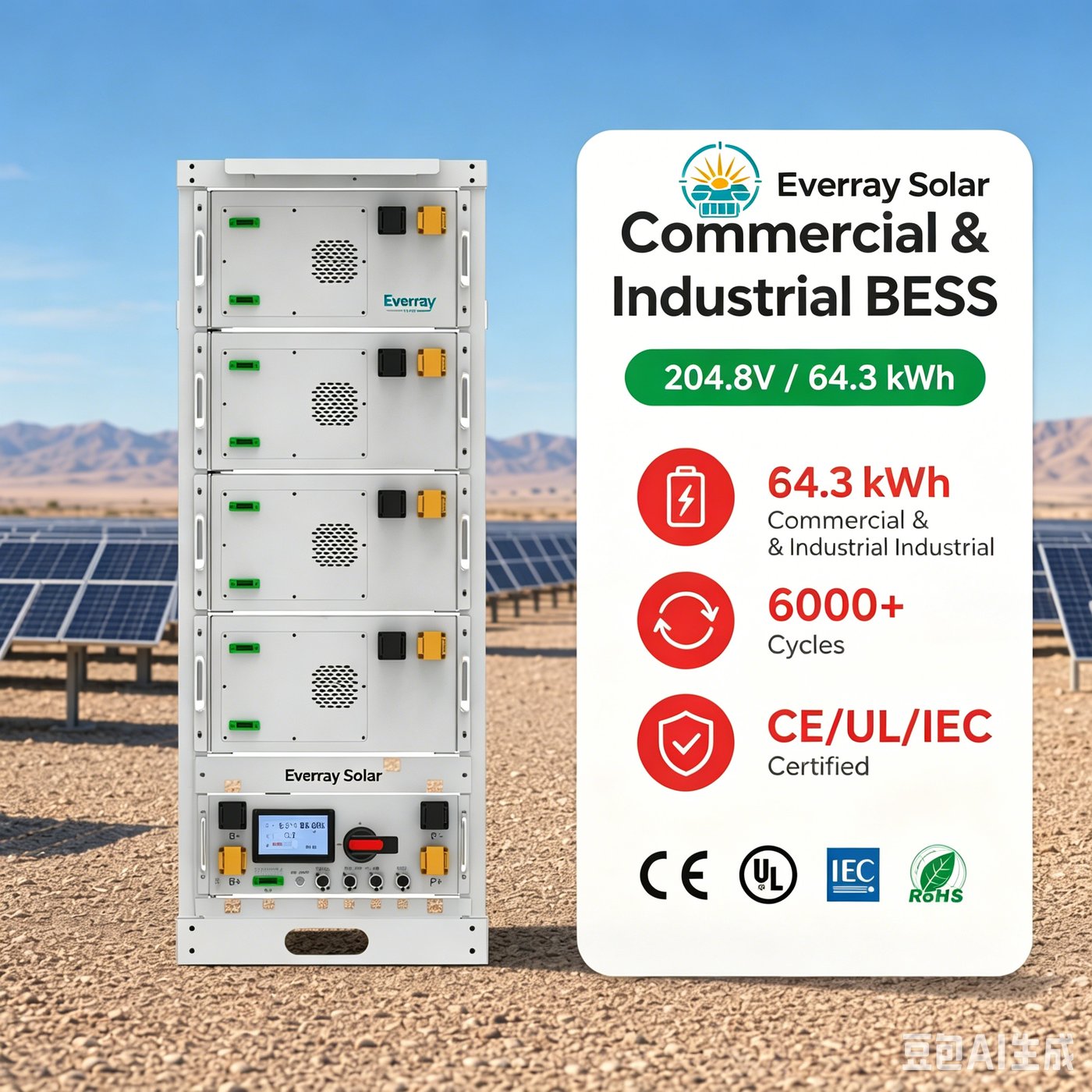
| 30 kW / 64 kWh cabinet | $8,000 | $8,450 | $422 / $1,690 | $1,774 / $2,028 | $10,797 / $12,318 | GH¢125,800 / 143,500 |
| 125 kW / 261 kWh liquid-cooled | $35,235 | $36,435 | $1,822 / $7,287 | $7,651 / $8,744 | $46,228 / $52,786 | GH¢538,600 / 615,000 |
Read the second row carefully. A 16 kWh pack lands at GH¢27,150 with 5% duty, and local retail sits at GH¢25,999–27,000. That near-exact parity is not a coincidence and it is not good news for anyone planning to arbitrage small packs: it tells you the effective tax load on imported 8507.60 in practice is closer to the 5–10% range than the 20% worst case, and it tells you the shelf price of a 5–16 kWh unit is already close to import parity. The margin in Ghana is in volume and in project supply, not in marking up retail cells.
Which is why our Ghana conversations start with the C&I cabinets. A 64 kWh cabinet carries the same paperwork as a pallet of small packs but several times the revenue per shipment, and the customer — a hotel, a clinic, a plastics plant — is buying avoided diesel and avoided downtime rather than comparing shelf prices.
The duty and tax lines, source by source
Ghana’s treatment of solar equipment is not one rule, it is four, and they do not move together:
- Solar modules: generally 0% import duty with VAT exempt treatment — this is why panel prices in Ghana track global markets closely.
- Complete solar home systems / kits: reported at around 5% duty in donor-sector guidance, treated differently from loose components.
- Lithium batteries under HS 8507.60: the split. A 2023 GIZ guidance document states 20% duty with no VAT relief for batteries; trade-data analysis published in 2026 estimates 5–10%. We quote both scenarios and let your broker confirm against the current GRA tariff.
- VAT: since the VAT Act 1151 took effect on 1 January 2026, the standard rate is 15% plus NHIL 2.5% plus GETFund 2.5% — an effective 20% on the duty-paid value. Whether your battery line qualifies for solar exemption is the single highest-value question to put to your clearing agent before you finalise a landed-cost model.
If your consignment is VAT-exempt, take the VAT column out of the table above: that is GH¢1,600 on a 16 kWh pack and GH¢17,700 on a 261 kWh cabinet — usually the difference between a project that clears the internal hurdle rate and one that does not.
GSA EasyPass: what changed on 1 July 2026
Ghana Standards Authority published its EasyPass notice to importers in May 2026, launched the programme on 1 June 2026 and made application mandatory from 1 July 2026, measured by date of shipment. Scope is defined by HS code and includes chapter 85, which covers 8507 — batteries. This is the compliance item most likely to stop a first-time Ghana shipment, and it is filed by the exporter, not by you.
| Step | Who acts | What is required |
|---|---|---|
| Request for Certificate (RFC) | Exporter — EverRay | Filed with the final invoice; a proforma is accepted at the pre-production stage |
| Conformity documents | Exporter — EverRay | Test reports and quality certificates for the exact model being shipped, plus UN38.3 test summary and MSDS for lithium cargo |
| Standards applied | GSA | Hierarchy is Ghanaian, then international, then European, then national, then manufacturer specification |
| Marking | Manufacturer | Labels and instructions in at least English; model, ratings and warnings legible on the unit |
| Control testing | GSA | If conformity documents are missing or unacceptable, testing in an ISO 17025 laboratory applies — at your cost and your schedule |
Two practical consequences. First, UN38.3 and MSDS are shipping documents for Class 9 dangerous goods — they are not conformity documents and they do not substitute for an EasyPass certificate. Keep the two lists separate when you brief your forwarder and your broker. Second, documents only count if they name your model. A generic “our batteries are CE certified” statement is worth nothing at Tema; a test report carrying the model number on the invoice is worth everything.
The second regulation most suppliers ignore: LI 2452
The Energy Commission’s Renewable Energy (Standards and Labelling) (Renewable Energy Batteries) Regulations, 2022 — LI 2452 — came into force on 2 November 2022 with a one-year transition. It applies to renewable energy batteries imported for display, sale or use regardless of size, and it is a minimum performance standard, not a labelling formality. Public summaries are clear on scope and less clear on the model-registration mechanics, so treat this as an open item: confirm with the Energy Commission whether your battery model requires registration before sale, and ask us for the model-specific test pack in the same email. Any supplier who cannot produce model-level test reports at quotation stage is telling you something.
Sizing for dumsor: three worked configurations
The sizing question in Ghana is not “how much solar do I need” but “how many hours of which loads must survive the outage”. The arithmetic is deliberately simple:
Usable kWh = critical load (kW) × hours of autonomy ÷ depth of discharge. With LiFePO4 at 90% DoD and 95% inverter efficiency, divide by about 0.85 and you have the nameplate you must buy.
| Site | Critical load × hours | Nameplate needed | Configuration we would quote |
|---|---|---|---|
| Home or clinic | 3 kW × 6 h | About 21 kWh | One 51.2 V 314 Ah cabinet (16 kWh) plus expansion, or two 5.12 kWh racks for staged budget |
| Hotel or guesthouse | 30 kW × 4 h | About 141 kWh | Two 30 kW / 64 kWh cabinets in parallel (128 kWh), or one 125 kW / 261 kWh cabinet if peak load is higher than 60 kW |
| Factory, cold store or water utility | 200 kW × 2.5 h | About 588 kWh | Two 261 kWh liquid-cooled cabinets, or one 20 ft containerized BESS |
Then convert hours into money with your own numbers, because Ghanaian fuel and tariff figures move and a generic payback claim is worthless to a finance director:
Monthly saving = kWh shifted per day × 30 × (your diesel cost per kWh − your grid or solar cost per kWh). A 64 kWh cabinet cycling 50 kWh a day saves roughly $300 a month at a 20 cent spread and about $525 at 35 cents. Put your real diesel invoice next to that formula and the decision makes itself.
What we supply, and the supply terms
Everything ships 230/400 V, 50 Hz — Ghana uses the standard European configuration, so there is no frequency conversion, no split-phase workaround and no re-rated inverter. That also means the same BOM you approve today can be repeated for Togo, Benin and Nigeria without re-engineering.
| Product line | Range | MOQ | Production and dispatch |
|---|---|---|---|
| Solar modules | 440–735 W, N-type TOPCon and HJT dual glass | 1 pallet | 1–2 weeks |
| Hybrid inverters | 2–150 kW, single and three phase | 1 unit | 1–2 weeks |
| LiFePO4 batteries | 12.8–76.8 V, 100–314 Ah, rack and wall mount | 1 unit | 1–2 weeks |
| Home energy storage | 3–60 kWh, integrated inverter options | 1 set | 1–2 weeks |
| Commercial cabinets | 30 kW–500 kW, liquid-cooled to 261 kWh per cabinet | 1 set | 1–2 weeks |
| Containerized BESS | 20 and 40 ft, 500 kWh to 5 MWh | 1 set | 2–4 weeks |
Lead times above are for standard configurations. Private-label branding, non-standard BMS protocols or bespoke enclosure work extend production to 2–4 weeks, and we will say so before you sign rather than after. All lithium products ship with UN38.3 and MSDS; CE and IEC test reports are supplied per model; the EasyPass request for certificate is filed by us against your invoice.
Ghana references, and what sits behind them
Two systems we can talk about by number:
- 30 kW / 100 kWh hybrid system, 2025 — 52 × 570 W modules, one 30 kW hybrid inverter, 100 kWh lithium battery. This is the configuration most Ghanaian commercial enquiries converge on.
- 450 kW / 460 kWh commercial system, 2025 — 700 × 610 W modules, 450 kW hybrid inverter, 460 kWh lithium battery. Project-scale proof that the same factory supplies beyond cabinet size.
Regionally: a 2 MW / 8 MWh containerized fleet in Zambia, a 50 kW / 75 kWh system in Zambia, and installations in Mali, Madagascar and Côte d’Ivoire. Group-wide, 83 projects in 52 countries, 42.3 MW of solar and over 1 GWh of storage — full capacities are listed on our projects page.
Shipping, payment and paperwork to Tema
We quote FOB, CIF Tema or DDP, with every cost line shown separately so your broker can compare like with like. Sea freight from Shanghai or Ningbo to Tema typically runs 30–38 days port to port; cabinets move as LCL or in a shared container depending on volume, and a single 261 kWh cabinet does not justify a full container on its own.
Ghana requires a local declarant, so clearance is done by your licensed broker — we prepare the commercial invoice, packing list, UN38.3 test summary, MSDS and the EasyPass request for certificate, and we align the invoice description with the HS code you intend to declare. Get that code in writing before production: retrofitting an invoice description after the container has sailed is the most common avoidable cost in this trade.
Payment terms are 30% deposit with balance against the bill of lading for first orders, and we will discuss LC at sight or escrow for container volumes. Distributors ordering repeatedly move to shorter terms after two clean shipments — we would rather earn that than ask for it up front.
If you are comparing us with a local stockist, the comparison that matters is not price per unit but price per delivered kWh inside your customer’s building: their landed cost plus their margin against ours plus freight plus duty. Ask both sides for that number, on the same HS code, on the same day.
Frequently asked questions
What is the import duty on lithium batteries in Ghana?
Sources disagree and you should not plan on a single number. A 2023 GIZ guidance document states 20% duty on batteries with no VAT relief; 2026 trade-data analysis estimates 5–10%. Our landed-cost table shows both. Confirm the rate for HS 8507.60 with the Ghana Revenue Authority and your clearing agent before you commit to a retail price.
Is GSA EasyPass required for battery shipments to Ghana?
Yes. EasyPass became mandatory from 1 July 2026 for shipments in scope, defined by HS code and including chapter 85. The exporter files the Request for Certificate with the invoice and model-level test reports; the Ghana Standards Authority may require ISO 17025 control testing if the documents are missing or unacceptable. We file the RFC as part of every Ghana order.
Do I need a different inverter for Ghana?
No. Ghana runs 230 V single phase and 400 V three phase at 50 Hz, which is the standard European configuration our inverters ship in. The 60 Hz markets in our range are the Philippines, Ecuador and the Bahamas; Ghana is not one of them.
How long does delivery to Tema take?
Production and dispatch are 1–2 weeks for stock configurations, then 30–38 days of sea freight port to port, plus clearance. A first order that must arrive before a committed commissioning date should be placed with 8–10 weeks of float, and we will tell you honestly if your date is not achievable rather than book it and hope.
What is the minimum order for a Ghanaian distributor?
One pallet of modules, one unit of inverters or batteries, one set of home storage or commercial cabinets. There is no container minimum to start, because a distributor validating demand in Accra or Kumasi should test the market with a mixed pallet, not a 40 ft container of one SKU.
Can you size a system for my load profile?
Yes, and it is the fastest way to get a real number. Send the critical load list in kW, the hours each must run through an outage, your peak demand and any existing generator capacity. We return a configuration, a bill of materials and an FOB/CIF price with duty and VAT left visible rather than buried.
Do you have references in Ghana?
Two: a 30 kW / 100 kWh hybrid system delivered in 2025 (52 × 570 W modules, 30 kW hybrid inverter, 100 kWh lithium battery) and a 450 kW / 460 kWh commercial system in the same year (700 × 610 W modules, 450 kW hybrid inverter, 460 kWh battery). Regional references include a 2 MW / 8 MWh containerized fleet in Zambia and installations in Mali, Madagascar and Côte d’Ivoire.
Are you a manufacturer or a trading company?
Both, and we do not hide it: EverRay is our own brand, produced across a vetted manufacturing base with our own engineering and quality control, and we ship as one supplier for modules, inverters, batteries and cabinets. If your procurement rules require an audited factory file, we arrange third-party audits, we host buyer factory visits with our engineers, and we will sign a non-solicitation agreement before any plant is named.
Send your load profile, target commissioning date and the HS code you intend to declare — we will come back with a configuration, a landed cost to Tema with duty and VAT shown as separate lines, and the document pack your broker needs. WhatsApp +86 183-5694-3951 or use the form below.
Get the 2026 EverRay Product Catalogue
25 pages · solar modules 440-735W, hybrid inverters 2-150kW, LiFePO4 batteries, home & C&I energy storage, solar pumps, lighting and PV cleaning