On any given week, thousands of buyers wire deposits to companies they believe are solar factories. A large share of them are not. They are trading companies, assemble-only workshops, or in the worst cases a laptop and a phone number with no workshop behind them at all. The only protection is method: how to verify a solar supplier in China before money moves. The supplier’s website will say Manufacturer, the quotation will carry a factory-style part number, and the certificates will look convincing — none of it proves that the people taking your money control a production line.
This guide is the verification companion to our solar panel supplier selection guide. That article covers how to choose a supplier. This one covers how to verify a solar supplier in China is a real factory — how to prove, before any money moves, that the company you are dealing with actually makes what it sells. It works at three budget levels: free checks you can run in an evening, a structured video audit that costs one scheduled call, and a third-party on-site audit that costs a few hundred dollars. By the end you will know which suppliers survive each level — and what each result means.
How to Verify a Solar Supplier in China: Why “Are You a Factory?” Is the Wrong Question
Ask any Chinese supplier whether they are a factory and the answer will be yes. It is not necessarily a lie in the way you assume. The solar industry’s supply chain runs on layers: cell makers, module assemblers, inverter brands that subcontract assembly, battery pack shops that buy cells and enclosures, and trading companies that own none of the above but employ people who can answer every technical question. Many companies genuinely do some manufacturing — a module trader that laminates nothing but assembles junction boxes, or a battery “factory” that packs purchased cells into purchased cabinets.
The risk to you is not vocabulary. It is what the difference does to five things that decide whether your project succeeds:
| What changes | Real factory | Fake or exaggerated factory claim |
|---|---|---|
| Price floor | No hidden margin; volume discounts come from the line itself | You are paying a margin you cannot see, then negotiating against it blindly |
| Quality control | Flash test, EL imaging and OQC records exist because the line produced the goods | Inspection is outsourced or skipped; defects are discovered by you, at the port |
| Warranty enforcement | The party that made the product fixes it | A middleman relays your claim to a factory you have never contacted, and both blame each other |
| Certification | Certificates are held in the factory’s legal name for the models it builds | Papers are borrowed or edited; the certificate name does not match the invoice |
| Delivery | Lead time reflects the actual order book | Your order queues behind the factory’s real customers, or gets subcontracted to the cheapest bidder |
So the correct question is not “are you a factory?” but “show me evidence that you control production.” The rest of this guide is how to collect that evidence in the right order, cheapest checks first.
Level 1 — Free Checks You Can Run in One Evening
Everything in this level is free and takes ninety minutes. Most fake factories are eliminated here.
The business licence: read it like a document, not a picture
Every registered Chinese company has a business licence with an 18-character Unified Social Credit Code. Ask for a photo of the original licence — not a typed summary — and check four fields:
- Company name. Names containing Trading, Import & Export, or International Trade are usually exactly that. Names containing Technology, New Energy, Electric or a place name plus an industry word are ambiguous and need the next field.
- Scope of business. A genuine manufacturer’s scope includes manufacturing or production terms for the product category — for example research, development, manufacture and sale of lithium-ion batteries. A scope that only lists purchase and sale is a trading registration.
- Registered address. Then look that address up on Google Maps, switching to satellite view. A factory needs land: buildings, yard space, loading areas. A shared office tower address for a company claiming three production lines is a contradiction.
- Registration date versus claimed history. If the website says “15 years of production experience” and the licence was issued in 2024, ask for the predecessor entity’s licence or accept that the history is marketing.
You can cross-check the licence number on public company databases, and a supplier hiding behind a HK-registered shell with no mainland manufacturing entity is telling you where the risk sits.
Export data: production leaves a trail
Real exporters have shipped before. Customs-derived trade data services list shipments by exporter name, product description, destination port and value. Search the exact Chinese entity name from the licence. A module factory claiming ten years of exports with no shipment records under its name is either selling under other entities’ export rights — possible, but then ask which one — or does not exist as claimed. Also check the consignee pattern: a healthy factory ships to many different buyers across years; a shell ships to one or two related names.
The hiring test
Factories hire constantly: operators, QC inspectors, welders, forklift drivers. Search the company name on major Chinese job boards. A “manufacturer” whose only job ads are for international sales staff — often posted with high commission language — has a sales office, not a plant. Job ads also frequently state the real work address, which you can compare against the licence.
Digital footprint consistency
- Website age and history. A one-year-old domain claiming a fifteen-year factory history deserves the licence question from above.
- Factory photography. Reverse-image-search two or three of their best factory photos. Trading companies reuse photos; identical images appearing under other company names answer the question instantly.
- Address on three surfaces. The licence, the website footer and the quotation must show one consistent address. Mismatches between entities are how multi-layer reselling starts.
- ICP filing. A legitimate Chinese manufacturer’s website displays an ICP filing number linked to a mainland entity. No filing plus a .com-only presence does not prove dishonesty, but it removes one layer of verification.
If the company passes Level 1 with clean, consistent evidence, move to Level 2. If anything failed, do not negotiate price to make the doubt go away — doubt does not discount.
Level 2 — The Structured Video Audit
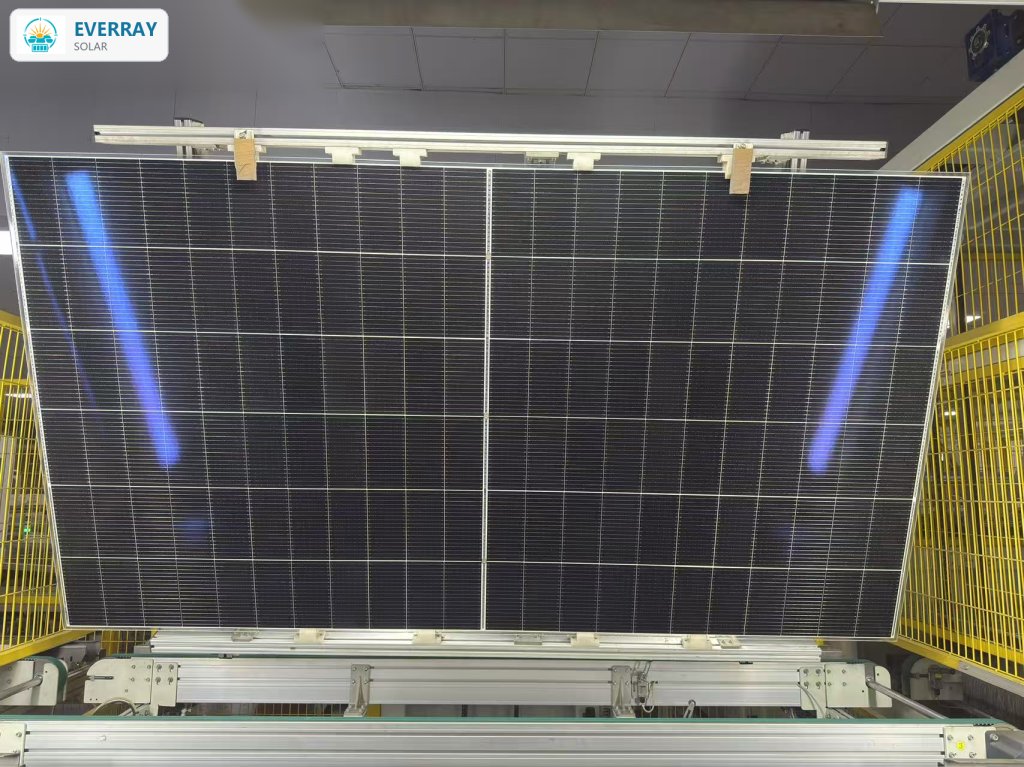
A live video call is the highest-value hour in supplier verification, but only if you run it. An unstructured call is a tour of whatever the supplier wants to show. Structure it as a sequence, and tell them in advance what you will ask to see — honest factories appreciate the efficiency, and the ones with something to hide expose themselves in the scheduling conversation alone.
The walkthrough script
- Start outside. Ask them to walk from the factory gate, past any signage, to the entrance. Building numbers, yard size and neighbouring buildings anchor the plant in physical reality.
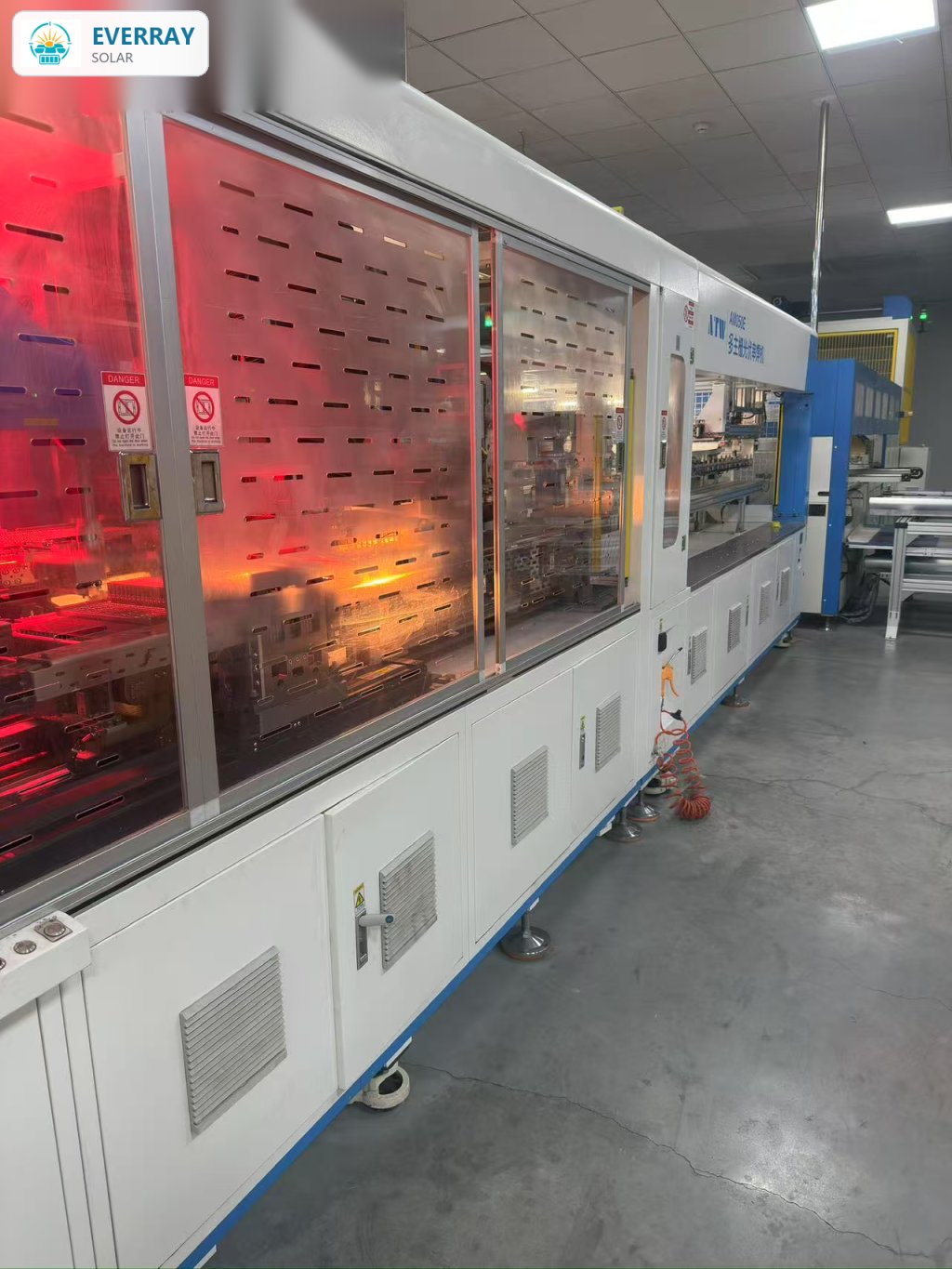
- Ask for a specific production stage, not “the factory”. For modules: stringer, laminator, framing station, flash tester, EL imaging. For batteries: cell grading, stacking or assembly, BMS integration, charge–discharge cycling cabinets. For inverters: SMT lines, potting, burn-in racks. A real plant supervisor can walk to any of these in a minute.
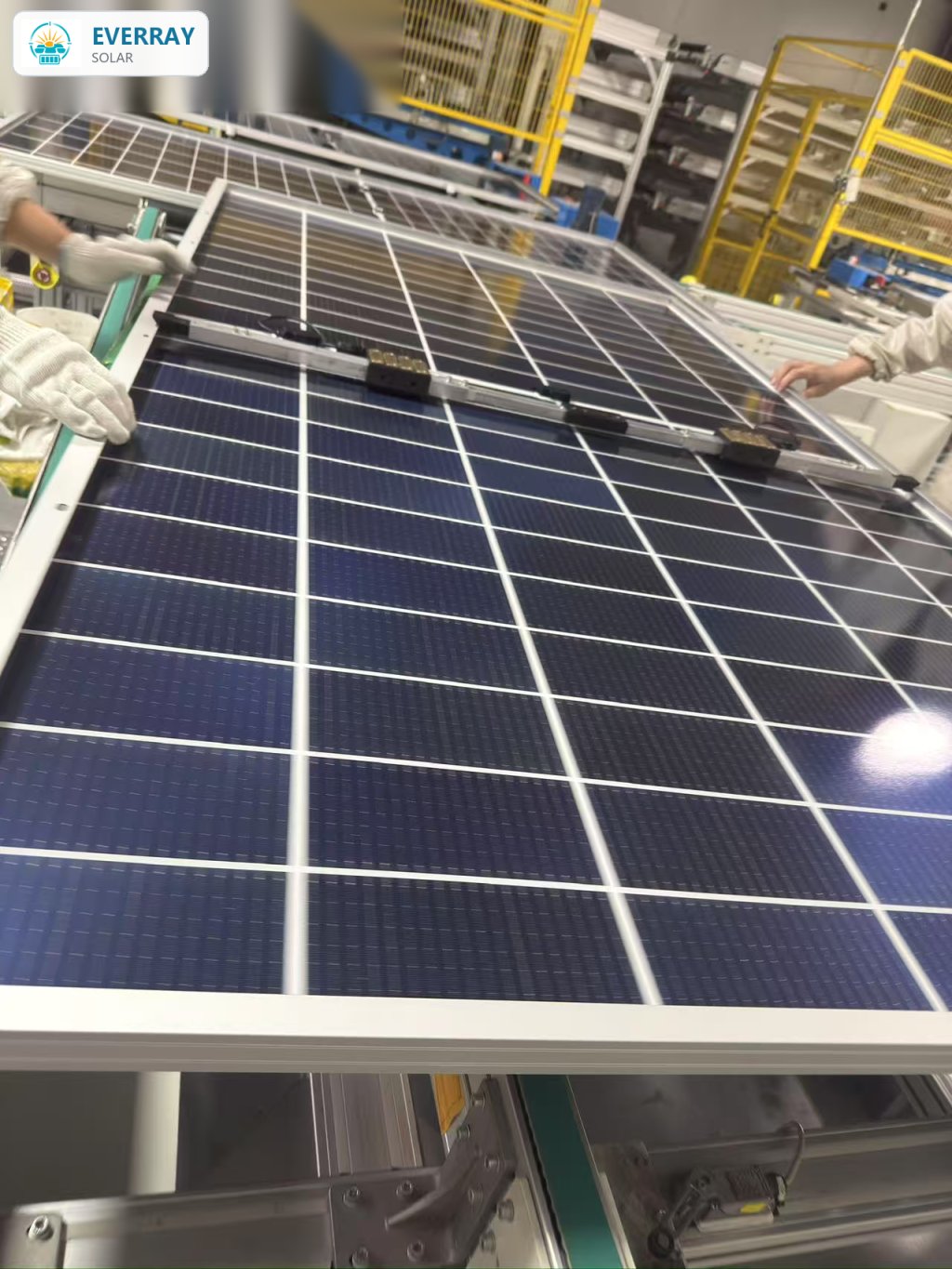
- Find the machines that cannot be faked. A flash tester prints measured wattage per serial number. An EL imaging unit shows cell micro-cracks on screen. Cycling cabinets show dozens of batteries mid-test. These are expensive, specific and hard to borrow for a phone call.
- The paper test. Ask someone to write today’s date, your name, and the company’s full registered name on paper and hold it up inside the workshop. It sounds theatrical and it works: stock footage and borrowed workshops cannot produce your name on demand.
- People, not just machines. A running line has operators. Ask how many people are on shift, then ask the person on camera to hand the phone to a colleague. Silence or a scripted refusal is information.
- Finish in the warehouse. Finished goods, packing line, pallet types, and a glimpse of recent production dates on cartons. A warehouse full of one product supports the claim; a warehouse full of unrelated goods suggests sourcing, not making.
Reading the excuses
| What you hear | What it usually means |
|---|---|
| “Workshop is busy, our video team will send a recorded tour” | Recorded footage is untraceable and usually licensed or borrowed |
| “We cannot show the line due to customer confidentiality” | Real factories show lines daily under NDA norms; confidentiality applies to your product, not the building |
| “Signal is bad inside, we will go outside” — for the whole call | The tour is confined to spaces that survive scrutiny |
| Call scheduled only at night or on weekends | Empty plant after hours; only the office is theirs |
| Production shown, but the video never leaves one small room | A sample or assembly room, not a plant |
One caveat cuts the other way: some excellent manufacturers are simply bad at video calls — time zones, shy engineers, poor English. If a supplier fails the video audit for soft reasons, that is what Level 3 exists for. Failing it for structural reasons — no workshop, no equipment, no staff — is a verdict, not a vibe.
Level 3 — Documents, Samples and the Paid Audit
Documents that tie the factory to your order
- ISO 9001 certificate with scope and address. Check that the certified entity name matches the licence, and that the certified address is the production address, not the sales office. ISO covers the site, so a mismatch means the certificate belongs to someone else.
- Test reports issued in the factory’s name. IEC 61215/61730 reports for modules, IEC 62109 for inverters, IEC 62619 and UN38.3 for batteries should show the manufacturing entity as the report holder. A report issued to a different company is someone else’s report.
- Machinery evidence. Purchase contracts or invoices for major equipment, or at minimum nameplate photographs showing manufacturer, model and serial number. Borrowed plants have borrowed nameplates.
- Staff evidence. A factory of 100 employees exists in social-insurance records. You will not get access, but the question “how many employees are on social insurance under the manufacturing entity?” sorts answers into documented and improvised.
The sample order, done correctly
A sample proves more than any document, but only if it travels the normal path: same product, same packaging, same documentation chain as production goods. Check the carton for the factory’s shipping marks, ask for the flash-test or capacity report matching your sample’s serial number, and confirm the sample’s certificate citations match the quotation. A flawless sample with an empty paperwork trail is a curated sample — it tells you what the best unit looks like, not what the container will contain.
If your plan is to sell under your own brand, verification has an extra layer: the documentation chain must connect the factory’s certificates to your label. Our OEM vs ODM guide for solar buyers covers the brand-authorisation letters and warranty terms to settle before production.
Third-party on-site audit
For any order above a few containers, a paid factory audit is the cheapest insurance in the process. Firms such as SGS, TÜV, Intertek, Bureau Veritas, QIMA and V-Trust offer one-day supplier audits, typically in the range of a few hundred dollars, covering legal existence, premises and equipment match against the product category, staffing, production capacity, quality system documentation and working conditions. You receive a photo-documented report within days. Two rules make it worthwhile: use an auditor with no commercial relationship to the supplier, and define the audit scope around the exact product you are buying — a generic visit to a plant that makes many things proves less than a checklist tied to your modules, inverters or battery racks.
During production, the same firms provide pre-shipment inspection under an agreed AQL sampling plan. The audit proves the factory exists; the inspection proves your container left as specified. Serious buyers schedule both, and put both in the contract — the full sequence from audit to payment terms is laid out in our supplier selection guide.
Real Factory, Assembler or Trader — the Signal Table
After the three levels, your evidence will cluster into one of three profiles. None of them is automatically disqualifying — but the profile must match what you are being sold.
| Evidence | Real factory | Assembler / pack house | Trading company posing as factory |
|---|---|---|---|
| Manufacturing in licence scope | Yes, named for the category | Yes, but narrow (e.g. pack assembly only) | No, purchase-and-sale only |
| Certificate holder name | Their own entity | Their entity for the assembled product; purchased parts hold others’ certs | Another company’s certificates, or edited PDFs |
| Video walkthrough | Full line, on demand | Assembly area only; upstream stages deferred | Declined, recorded footage, or an empty plant |
| Technical answers | Numbers, tolerances, process names | Deep on assembly, vague on cells or chips | Confident adjectives, no process detail |
| Export records | Long, varied consignee history | Shorter, concentrated | None under their entity, or none at all |
| Response to audit request | Welcome it, sometimes ask to schedule | Accept, occasionally negotiate scope | Resist, delay, or offer discounts instead |
One honest note from our side: EverRay Solar is deliberately a sourcing and solution partner — we work with more than twenty audited partner plants rather than owning one line. We publish exactly this distinction, and we answer the audit questions above about our partners rather than pretending to be something else. A trading counterpart can be the right choice for mixed orders — distributors regularly take PV modules, hybrid inverters and LiFePO4 batteries from us on one order precisely because no single factory covers all three. A trading counterpart pretending to be a factory never is. The offence is the pretence, not the structure.
If your sourcing is heading toward a specific product line next, the verification logic above connects directly to the engineering questions worth asking: our guides on choosing commercial and industrial energy storage and on choosing a home energy storage system both include the specification checks to run after the factory check passes. And once quotes are on the table, our FOB vs CIF vs DDP guide shows how to compare them on landed cost.
Red Flags Specific to Factory Claims
- Factory photos with mismatched lighting, seasons or signage — a collage of borrowed plants
- Business licence shown as a screenshot with edited fields, or refusal to show the original photo
- “Factory” address that resolves to a residential building or a serviced office
- Production capacity quoted in round numbers (one gigawatt, 500 containers monthly) with no equipment list behind it
- Certificates whose issuing-body database cannot find the number, or whose model numbers never match the quotation
- Sales team that grows every year while headcount on the production side is never stated
- Pressure to skip verification: “many customers buy without audits” — true, and they are the ones writing the complaint posts
Frequently Asked Questions
How do I verify a solar supplier in China is a real factory?
Run the three levels in order. Free: business licence with manufacturing scope, consistent address across licence, website and quotation, export records under the entity name, and hiring ads for production staff. Then: a structured live video walkthrough ending in the workshop with the paper test. Then: a third-party audit for larger orders. A real factory passes all three with consistent evidence.
How much does a factory audit in China cost?
One-day supplier audits from recognised firms typically cost a few hundred dollars including the report. Pre-shipment inspection is usually priced per man-day and is cheaper still. Against a container of modules, inverters or batteries, the combined cost is a rounding error — and it is the only verification performed by someone standing inside the plant on your behalf.
Can a trading company be a good supplier?
Yes, when the structure matches the promise. A sourcing partner with an audit process, mixed-category capability and documented accountability delivers things a single factory cannot: one order across modules, inverters and storage, one document set, one counterparty for warranty. The problem is only misrepresentation. Verify what they are, then judge the offer.
What if the supplier refuses a video tour?
For a product claim as specific as manufacturing, refusal is close to an answer. Allow for poor English or time-zone awkwardness — offer a scheduled call with an agenda, or move to a paid on-site audit instead. But a company that will not show a production line, on video or through an auditor, while claiming to own one should not receive a deposit.
Do certificates prove the supplier is a factory?
Only partially. Certificates follow the product and the certificate holder’s legal name. A genuine factory holds certificates in its own manufacturing entity name for the models it builds; a reseller forwards someone else’s. Check the holder name on the report against the business licence, and check the model numbers against your quotation — those two matches catch most borrowed-paper claims. The three dummy-proof checks that resolve a certificate number in the issuing body’s public database are set out in our solar certification verification guide.
Is it worth visiting a supplier in China?
For container-scale recurring purchases, yes. Combine a trade fair visit — Canton Fair, SNEC in Shanghai, or the regional battery shows — with one or two unannounced factory visits. Real plants receive visitors during working hours as a matter of routine. Book your own hotel and transport; independence is the point.
What documents should a real factory provide before I pay?
Business licence photo, ISO 9001 certificate with matching scope and address, product test reports with the entity name and model numbers, the bank account whose name matches the licence and the contract, and a written quotation with specification, Incoterm, lead time, warranty terms and the shipment document list. Every one of these is verifiable in the time it takes to read them.
Get a Quote for Your Solar Project
Tell us your destination market and requirement. We reply within 24 hours on business days with specifications, certificates and pricing — no obligation.
Get the 2026 EverRay Product Catalogue
25 pages · solar modules 440-730W, hybrid inverters 2-150kW, LiFePO4 batteries, home & C&I energy storage, solar pumps, lighting and PV cleaning