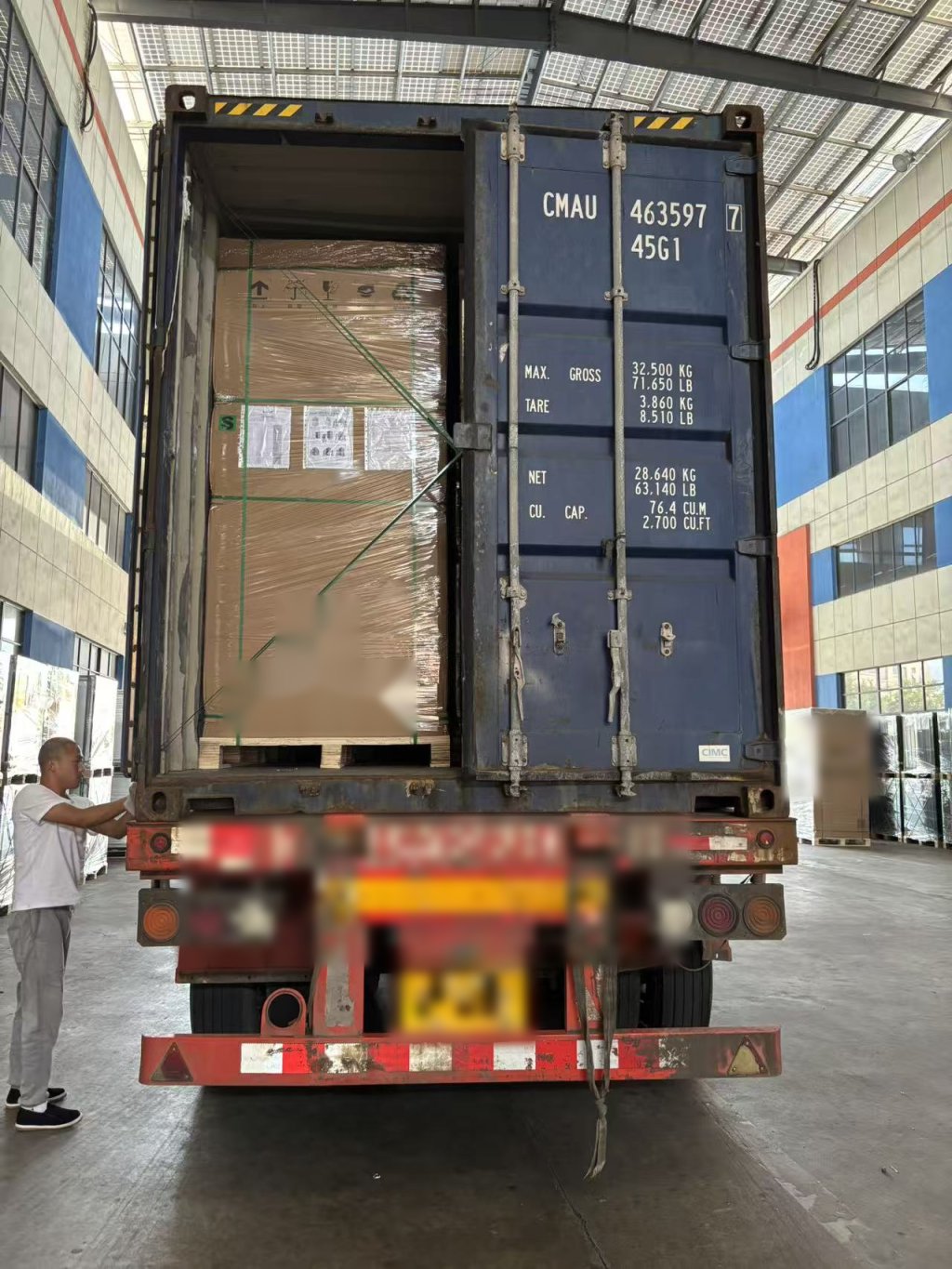
A solar quotation looks simple: price per watt, quantity, total. Then the invoice lands and the number is bigger than the one you approved — because the unit price only covers part of the journey. Who books the vessel, who insures the cargo, who clears customs and who pays duty are not details; they are the difference between a 12% margin and a loss. That is exactly what Incoterms decide, and FOB vs CIF vs DDP is the choice you will face on almost every Chinese solar quote.
This guide translates the three-letter codes on your quotation into plain language, works through a landed-cost comparison line by line, and covers the five Incoterms 2020 details that quietly move cost and risk onto the buyer. It is the shipping companion to our guide to paying a Chinese solar supplier safely — once you know how you will pay, the next question is who owns the cargo at each step of its journey.
Why the Incoterm, Not the Unit Price, Decides Your Real Cost
Two suppliers quote the same 550W solar module. One says USD 0.098 per watt FOB Shanghai, the other USD 0.112 DDP Lyon. The first looks 12% cheaper. By the time the pallets reach your warehouse, the “cheap” quote has attracted ocean freight, marine insurance, port handling, a customs broker, import duty, import VAT administration and an inland truck — costs that were already inside the second number. On container-scale solar orders the two totals routinely land within 1–3% of each other, and sometimes the FOB quote finishes higher.
The lesson is not that FOB is bad. It is that a unit price without a delivery term is not a price at all. You cannot compare quotes, budget a project, or judge a supplier’s margin until every offer is converted to the same basis: total landed cost at your site, with the Incoterms term and named place stated.
FOB vs CIF vs DDP: What Each Term Actually Means
Incoterms 2020 defines eleven terms, but solar buyers meet four in practice. The table below shows where cost, risk and customs responsibility sit for each.
| Term | Who pays main freight & insurance | Where risk passes to you | Who clears import & pays duty | Best for |
|---|---|---|---|---|
| EXW (Ex Works) | You | At the supplier’s premises | You | Buyers with their own freight forwarder and export licence in China |
| FOB (Free On Board) | You | When goods are on board the vessel at the named port | You | The default term for experienced importers who control their own logistics |
| CIF (Cost, Insurance, Freight) | Supplier | Still when goods are on board — not at destination | You | Buyers who want the supplier to arrange shipping but will handle import themselves |
| DDP (Delivered Duty Paid) | Supplier | At the named place in your country, ready to unload | Supplier | First-time importers or buyers without a customs presence in the destination country |
Note the trap in row three. Under CIF you buy a journey, but you do not own the risk of that journey — risk transfers the moment the goods pass the ship’s rail at the origin port. If the container is lost mid-ocean, you are the one claiming on an insurance policy the supplier chose.
The Four Incoterms Chinese Solar Suppliers Actually Quote
EXW is the most supplier-friendly term and rarely the right one for solar. You become responsible for loading at the factory, export documentation, and every step after — most buyers underestimate how much a 40ft container of modules weighs to handle without the factory’s equipment.
FOB is the industry default and the term most quotes are built on. The supplier handles export clearance and delivers the container to the port; from the moment it is on board, everything is yours. If you already work with a freight forwarder and have a customs broker at destination, FOB gives you the most control for the lowest total cost.
CIF suits buyers who want one fewer relationship to manage: the supplier books the vessel and insures the cargo as far as your port. Keep two things in mind — the insurance is only minimum cover, and your exposure starts at origin (see the risks below).
DDP is the only term where the supplier carries the goods all the way to your door, duty paid. For a first order, or for a market where you have no customs entity yet, it removes the most friction. It also removes the most control, and in several jurisdictions it is not as simple as it sounds.
Incoterms 2020: Five Details Buyers Get Wrong
- CIF insurance is minimum cover. CIF requires only Institute Cargo Clauses (C) — a narrow, named-perils policy. If you want all-risk cover you must negotiate it, or buy your own policy and use CFR instead.
- DDP makes the supplier your importer of record. In the EU, import VAT under DDP is paid by the seller and the buyer generally cannot reclaim it. In the United States, a customs bond and a resident importer of record are required, which many foreign sellers cannot provide — so “DDP USA” often becomes DAP with a surprise duty bill. Confirm who is the importer of record in writing before you accept DDP.
- The named place is part of the term. “DDP” alone is not an Incoterms term. Write “DDP Memphis, TN 38118, Incoterms 2020” — an unqualified term is an argument waiting to happen.
- Sea terms are for sea freight. FOB, CFR and CIF apply only to sea and inland-waterway transport. For containerised solar freight handed over at an inland terminal, or for air freight, the correct terms are FCA, CPT and CIP. Under Incoterms 2020, CIP requires all-risk ICC (A) insurance while CIF still requires only ICC (C) — a meaningful difference for high-value batteries.
- Incoterms say nothing about payment, title or warranty. They govern delivery, cost and risk — not when you must pay, when ownership transfers, or who honours a performance guarantee. Those belong in the sales contract and the purchase order.
How to Calculate Landed Cost (With a Worked Example)
Landed cost is the unit price plus every cost required to place the goods in your warehouse, on your dock, ready to install. The formula is the same regardless of term: goods value + freight + insurance + duty and taxes + port and terminal charges + customs clearance + inland delivery. It applies whether you are importing PV modules, inverters or LiFePO4 batteries, and a worked illustration shows why the term matters more than the headline number.
| Cost line (illustrative, USD) | FOB Shanghai | CIF Los Angeles | DDP Los Angeles |
|---|---|---|---|
| Quoted goods value | 60,000 | 63,500 | 71,900 |
| Ocean freight & marine insurance | 3,500 | included | included |
| Import duty (illustrative rate) | 6,000 | 6,000 | included |
| Port and terminal charges | 900 | 300 | included |
| Customs clearance & broker | 500 | 500 | included |
| Inland delivery to site | 1,200 | 1,200 | included |
| Total landed cost | 72,100 | 71,500 | 71,900 |
Three quotes, three unit prices from USD 60,000 to USD 71,900 — and a landed cost that barely moves. Duty rates, freight and VAT change by country and season, so treat the figures as a template rather than a forecast. The method is what matters: build this table for every offer you receive and rank suppliers on the bottom line, never the unit price.
How to Write the Incoterm Into Your Purchase Order
Vague terms cause most shipping disputes, and they are easy to prevent. Three habits remove almost all of the ambiguity.
- State the term, the named place and the year — for example “CIF Los Angeles, Incoterms 2020” or “FCA Ningbo, Incoterms 2020”. Never leave the place or the edition implied.
- Name the importer of record. If you are using DDP, specify who will act as importer of record and who carries the customs bond, and confirm the supplier can legally do it in your country.
- Attach the certification and warranty requirements to the PO. The term decides who moves the goods; it does not decide whose name is on the UL or IEC certificate, or who pays when a batch underperforms. Put both in writing — our certification guide explains what to ask for.
Frequently Asked Questions
Is DDP always the best term for solar buyers?
No. DDP minimises admin, but it also hands your supplier the importer-of-record role, which can cost you the right to reclaim import VAT and is impossible in some countries for a foreign seller. Buyers with their own customs entity usually do better on FOB.
Who pays import duty under CIF?
You do. CIF covers cost, insurance and freight to the destination port only — import duty, VAT and customs clearance are always the buyer’s responsibility under CIF.
Under CIF, when does risk pass to me?
When the goods are on board the vessel at the origin port, not when they arrive. From that point the cargo is your risk, insured at the minimum level the Incoterms require.
Can a Chinese supplier legally sell DDP into my country?
Sometimes. It depends on whether a foreign company can act as importer of record and post a customs bond in your jurisdiction. In the United States this is usually not possible without a resident importer, so many “DDP USA” quotes are in practice DAP.
Does the Incoterm change my certification obligations?
No. Incoterms govern delivery, cost and risk only. Which certificates your market requires, and whose name must appear on them, is a separate matter — see our certifications and compliance page for how we document this.
Get a Landed-Cost Quote for Your Market
Tell us your destination port or city, your order volume and the modules, inverters or batteries you need, and we will return a quote on both FOB and DDP terms so you can compare them on landed cost — not unit price. Start with our 2026 product catalogue to choose your product lines, or send us your requirements and we will respond with specs, delivery terms and pricing for your country.
Get a Quote for Your Solar Project
Tell us your destination market and requirement. We reply within 24 hours on business days with specifications, certificates and pricing — no obligation.
Get the 2026 EverRay Product Catalogue
25 pages · solar modules 440-730W, hybrid inverters 2-150kW, LiFePO4 batteries, home & C&I energy storage, solar pumps, lighting and PV cleaning