Home Energy Storage
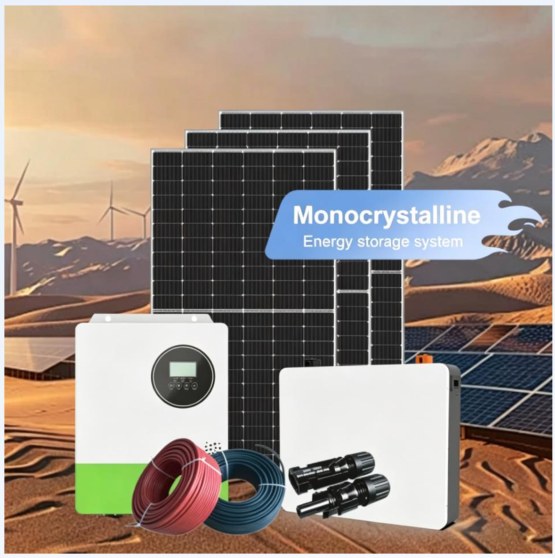
Home Energy Storage Systems from China — 3kWh to 60kWh, Stackable & All-in-One
EverRay home energy storage systems store your solar energy for night use, blackouts and peak-tariff hours — as an off-grid power source or as a grid-tied backup. The lineup runs from compact 3kWh all-in-one cabinets to whole-home 60kWh stacked systems, including ES and US standard rack series. Every system pairs with our hybrid inverters for a fully matched, plug-and-play experience.
Product Range — 3kWh, 6kWh, 10kWh, 15kWh, 30kWh, 45kWh, 60kWh
| Series | Real Configurations | Form Factor | Best For |
|---|---|---|---|
| Vertical Stacked | 6kW+5.13kWh / 6kW+10.24kWh | Floor-standing stacked tower | Homes — clean look, grows module by module |
| ES Standard (Europe) | 3.6kW+7.68kWh / 6kW+10.24kWh / 6kW+19.84kWh / 12kW+32.8kWh | ES standard rack | European homes, installers |
| US Standard | 3.6kW+7.68kWh / 5.8kW+7.68kWh / 7.2kW+10kWh | US standard rack | North & Latin American homes |
| All-in-One Power Cabinet | 3kW+3kWh / 3kW+6kWh / 3kW+9kWh / 12kW+15kWh / 12kW+30kWh / 12kW+45kWh / 12kW+60kWh | Stackable all-in-one cabinet | Villas & small commercial — single-unit simplicity |
All systems use Grade-A LiFePO4 cells with smart BMS. Start at 3kWh or 10kWh and expand module by module as your needs grow — no need to replace the whole system. If you are comparing suppliers, our battery wholesale price breakdown shows what a 10 kWh set should cost per kWh and which lines are negotiable.
MOQ, Lead Time and Ordering
| Item | Minimum Order | Lead Time |
|---|---|---|
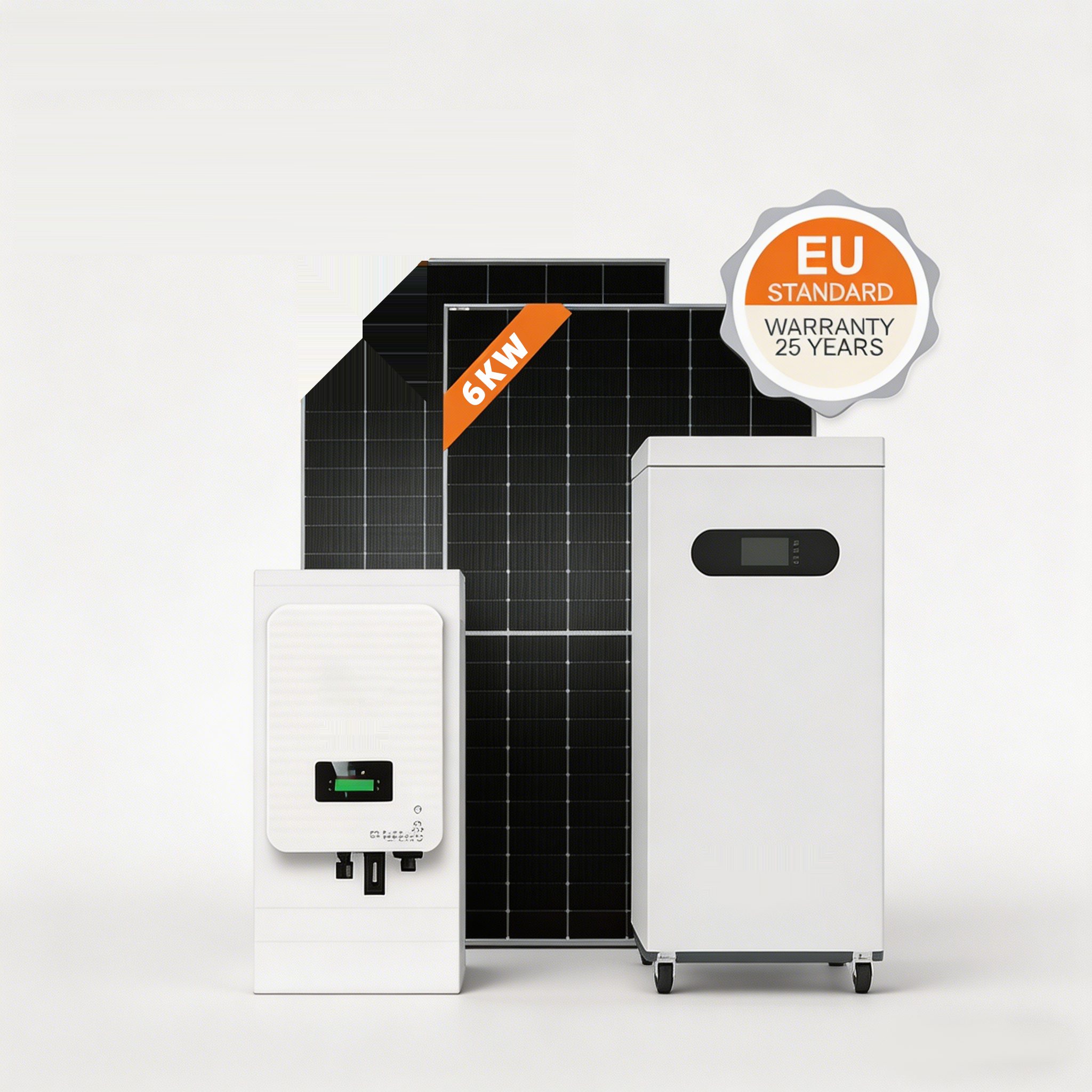
| Home energy storage systems — stacked, rack and all-in-one | 1 set | 1–2 weeks |
One complete set is the minimum order. Each set ships as a matched inverter and battery package, so there is no cross-brand compatibility work on site. Lead time is 1–2 weeks from order confirmation for standard configurations, and OEM branding is available on request.
What a Home ESS Does for Your Customers
- Backup power — automatic switchover keeps lights, fridge, internet and essential loads alive during outages
- Solar self-consumption — store daytime solar for evening use instead of exporting at low feed-in rates
- Peak shaving — charge at low tariffs, discharge during expensive peak hours where time-of-use pricing applies
- Off-grid living — combined with solar, run homes, farms and cabins with zero grid dependence
- Energy independence — dramatically reduce dependence on the grid or generators
Why Source Home ESS from EverRay
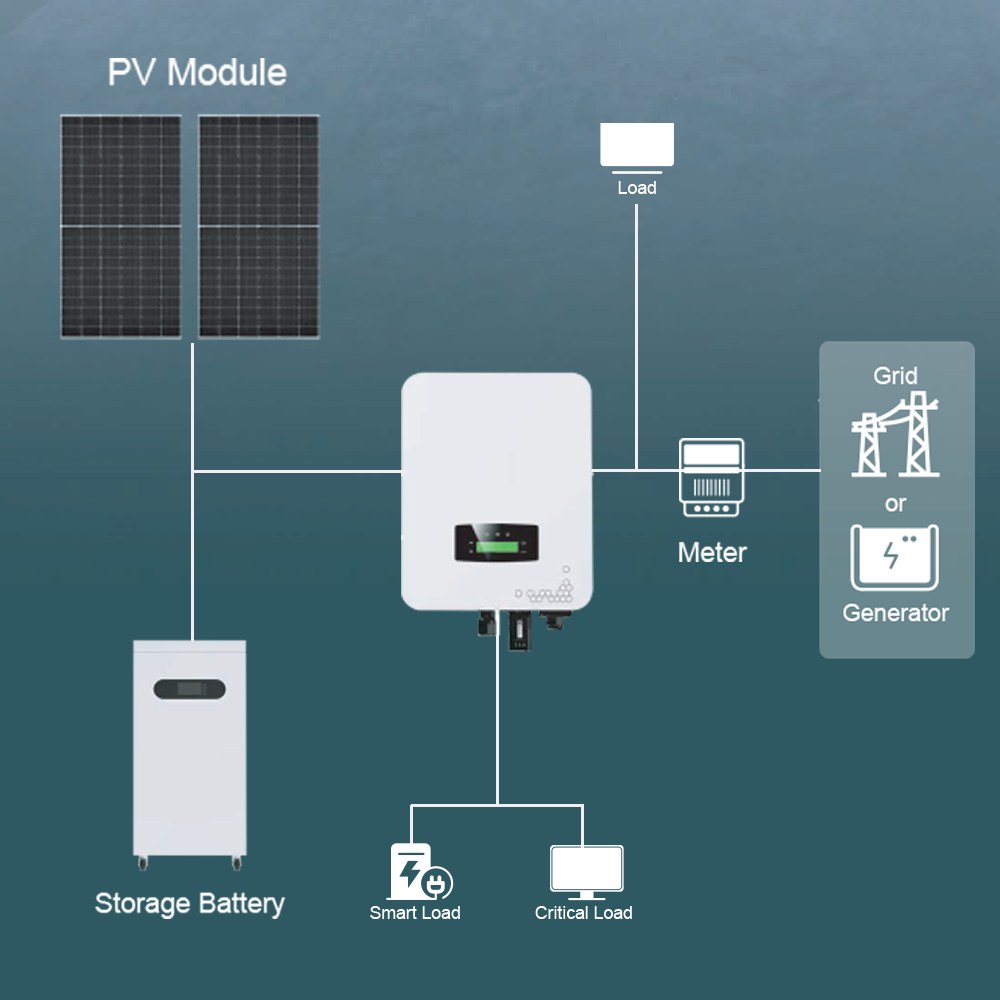
- Complete matched systems — modules + inverter + battery supplied and tested as one package
- Audited supply chain — Grade-A LiFePO4 cells from vetted factories, smart BMS in every module
- Field-proven worldwide — residential storage projects running in Europe, Africa, the Middle East and Southeast Asia
- Container-optimized packing — mixed loading of ESS, modules and inverters reduces your freight cost
- Pre-shipment testing — capacity, communication and switchover verified before every shipment
Buyers sourcing under their own brand should read our all-in-one home storage system OEM guide before choosing between a finished unit and a white-label build.
Reference Projects
From 5kW home hybrid systems in Serbia and Germany to 2MW ESS installations in the Maldives — our residential and commercial storage references span 20+ countries. Ask us for a project list in your market.
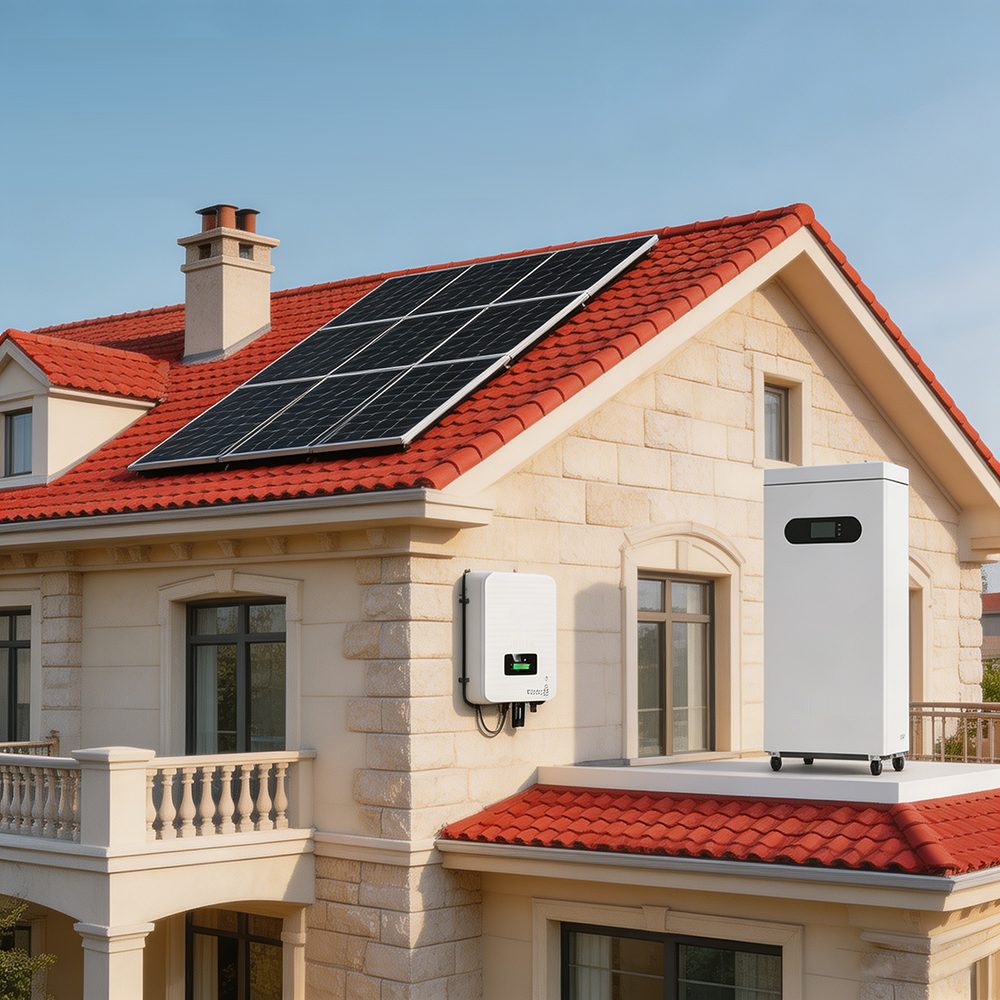
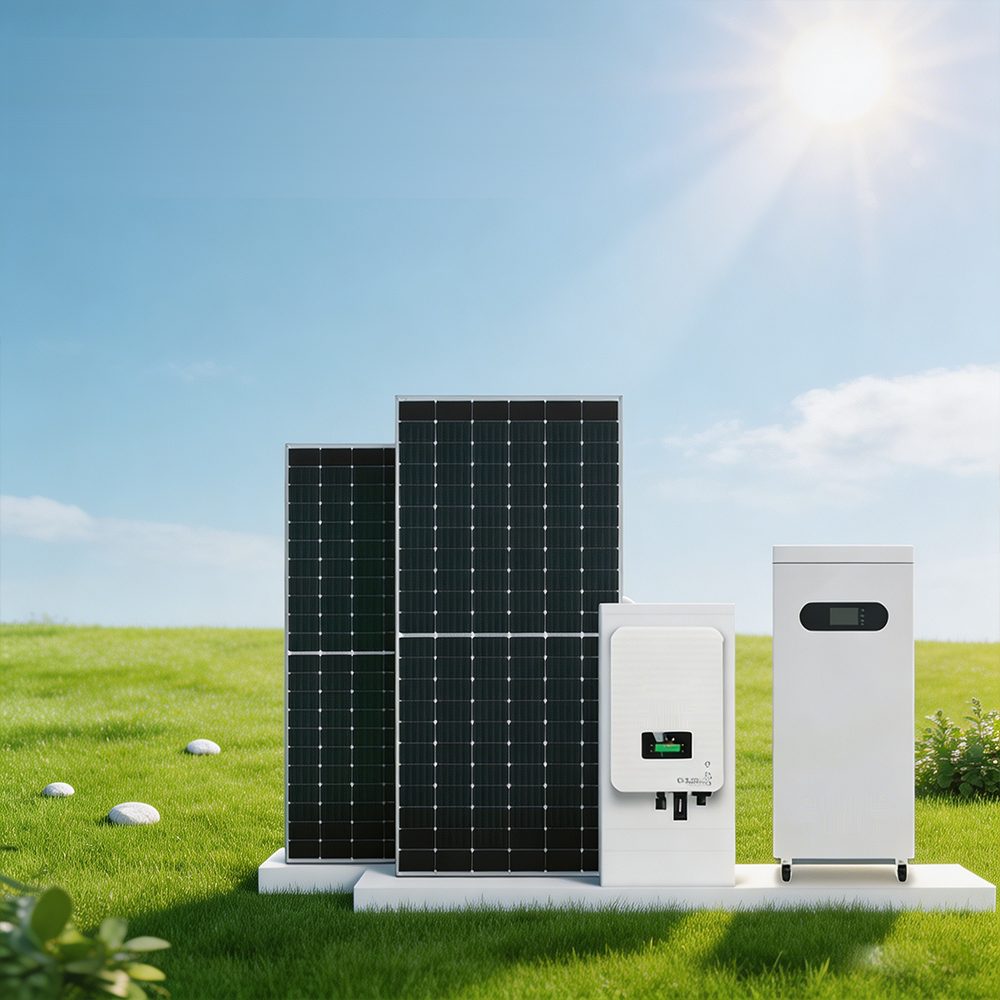
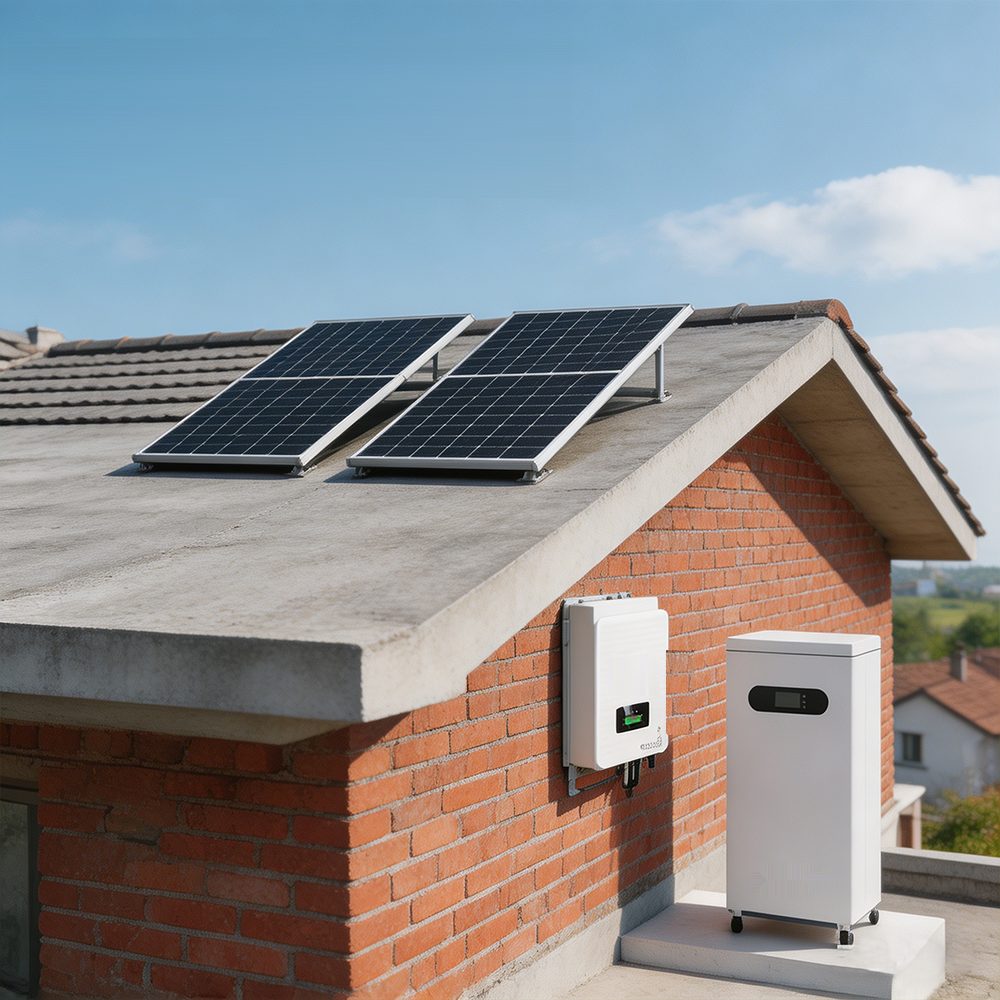
Typical 6kW / 16kWh residential installations:
How to Size a Home Energy Storage System
Sizing comes down to three numbers: nightly consumption, the loads you want to keep alive during an outage, and how many hours of autonomy you need. Residential systems are usually sized between 5kWh and 15kWh, with larger homes stepping up to 30kWh or 60kWh.
| Household type | Nightly use | Recommended capacity | What it covers |
|---|---|---|---|
| Apartment, small home | 3-5kWh | 5kWh | Lights, fridge, internet, phone charging |
| Family home, no air conditioning | 6-9kWh | 10kWh | Full evening plus overnight |
| Family home with air conditioning | 12-18kWh | 15-20kWh | Overnight with AC running |
| Large villa, full backup | 25kWh and above | 30-60kWh | Whole-home independence for 1-2 days |
Home energy storage sizing is not only about kWh. Check the inverter’s continuous and peak output against your largest single load — air conditioner, water pump or well pump — and confirm the usable depth of discharge. Our LiFePO4 modules run above 90% usable depth, so a 10kWh nameplate delivers roughly 9kWh of real energy, against about half that from a lead-acid battery of the same rating. For a step-by-step walkthrough of load profiling, see our guide on how to choose a home energy storage system.
Household, Home and Residential Energy Storage — the Same Product
Buyers in Europe usually write household energy storage system, North and South American buyers say home battery storage or residential energy storage system, and distributors across Asia and the Middle East search for energy storage solutions for homes. It is one product under three names, and our catalogue uses all of them so you can quote whichever wording your market recognises.
What genuinely differs is the electrical standard. European installations normally specify the ES standard rack with 230V single-phase output, while North and South American projects require the US standard rack with 120/240V split-phase output. Both are built in the same production batch, so a distributor can stock a single standard and still fill a mixed container.
Application Range: Where Residential Storage Pays Back
- Grid-tied homes on time-of-use tariffs — charge on off-peak power or daytime solar, discharge during the expensive peak
- Weak or unreliable grids — automatic switchover keeps essential loads running through frequent outages
- Off-grid homes, farms and cabins — combined with modules and a hybrid inverter for full independence
- Markets with poor feed-in tariffs — store solar instead of exporting it for almost nothing
- Villas, guesthouses and small workshops — 12kW all-in-one cabinets cover loads a single-phase home unit cannot
The application range goes well beyond the family house: the same cabinets run holiday villas, telecom shelters, rural clinics, agricultural sheds and small retail sites. If the load stays under 12kW and there is a roof or ground array available, a home ESS cabinet is usually the cheapest route to adding storage.
How to Compare Home Energy Storage Systems
Five specifications decide the real cost per usable kWh, rather than the sticker price:
- Cell grade and cycle life — Grade-A LiFePO4 rated 6,000+ cycles, against B-grade cells that fade within two years
- Usable depth of discharge — above 90% for LiFePO4, roughly 50% for lead-acid at the same nameplate rating
- Inverter compatibility — standard CAN/RS485 communication, against a proprietary protocol that locks you to one vendor
- Scalability — whether a single module can be added years later, and whether cabinets support parallel expansion
- Documentation — datasheets, IEC or UL test reports and a written warranty, typically 5 years for cabinets and 10 years for cells
A comparison made purely on price per kWh always favours the lightest cabinet — which is usually the one that fails first in the field.
Quality, Catalogue and Documentation
Before confirming a household energy storage system order, ask any supplier for the same four things: a datasheet per SKU, the cell test report behind the cycle-life claim, the warranty document with its terms written out, and the shipping classification (UN38.3 and MSDS) for the battery modules. A supplier who cannot produce them quickly is reselling rather than controlling the build.
We supply the full residential energy storage system catalogue with datasheets and test reports on request, and every shipment is capacity-tested, communication-tested and switchover-tested before it leaves the factory.
Frequently Asked Questions
How much capacity does a typical home need — 5kWh, 10kWh or 15kWh?
Most households start between 5kWh and 15kWh depending on nightly consumption and backup requirements. A 10kWh system typically covers an evening of lights, fridge, TV, internet and moderate cooking for a family home; homes with air conditioning or full-backup needs step up to 15kWh–30kWh. Send us the load list and we size the system free of charge.
Can the system expand later?
Yes. The stackable series and all-in-one cabinets are modular — start at 3kWh or 10kWh and add battery modules as your needs grow, without replacing the whole system.
Does it work with inverters from other brands?
Our batteries use standard CAN/RS485 communication and work with major inverter brands. For guaranteed compatibility and single-vendor support, we recommend pairing with EverRay hybrid inverters, and the battery cells come from the same LiFePO4 battery line used across our product range.
Are household energy storage systems and residential energy storage systems the same thing?
Yes. Household, home and residential energy storage describe the same product category, and only the naming convention differs by market. What you should confirm is the electrical standard: 230V single-phase for European grids, or 120/240V split-phase for North and South American grids.
How should I compare two suppliers quoting the same 10kWh system?
Compare usable kWh rather than nameplate kWh, the cycle life at a stated depth of discharge, and whether the BMS talks over standard CAN/RS485. Then check the paperwork: cells tested against IEC or UL standards, a dated warranty, and a datasheet you can forward straight to your installer. A 10kWh cabinet delivering 9kWh usable at 6,000 cycles is not comparable to one delivering 7kWh at 3,000 cycles.
What is the application range of one of these systems?
Anything with a load under 12kW and an available solar array: family homes, holiday villas, farms, telecom shelters, rural clinics and small retail sites. For loads above 12kW, or for sites needing three-phase output at scale, move up to our commercial and industrial energy storage system range — a 30kW / 64kWh configuration is the usual first step for shops, small hotels and workshops.
Where can I see the full catalogue and price list?
Request the residential energy storage system catalogue and current price list. Send your market, target capacity range and expected annual volume, and we will reply with the catalogue, datasheets and a quotation within 24 hours.
Get Your Home ESS Quotation in 24 Hours
Tell us the household load profile, backup needs and target market — our engineers will configure the right system and send a quotation with datasheets.
📱 WhatsApp / Phone: +86 183 5694 3951 | 📧 Email: info@everraysolar.com
Buyer’s guides: Home energy storage buying guide · Supplier assessment scorecard · 48V vs high voltage battery · Become a solar distributor
Or fill in the form below and our team will reply within 24 hours.
Frequently Asked Questions
1What size home battery system do I need?
As a guide: 5–10kWh covers evening use for most homes, 10–30kWh suits larger homes and partial off-grid use, and 30–60kWh supports whole-home backup including EV charging. We size the system from your daily consumption profile.
2Are your home storage systems expandable?
Yes. Our modular stacked systems scale from 3kWh to 60kWh, so you can start with a smaller capacity and add battery modules later without replacing the inverter.
3Can your home battery work with an existing solar system?
Yes. Both AC-coupled retrofits (for existing grid-tie PV systems) and DC-coupled configurations are supported, so you do not need to replace your current panels or inverter.
4What certification do the home battery systems carry?
CE and IEC 62619 for Europe, UL 9540 with UL 1973 cells for North America, and UN38.3 for transport. Full test reports are available on request.
5What is the warranty on a home energy storage system?
10 years on the LiFePO4 battery modules and 5 years on the electronics, with guaranteed cycle life and capacity retention stated in writing.
Still have a question about this product line? Ask our engineers → or message us on WhatsApp: +86 183 5694 3951
Get the 2026 EverRay Product Catalogue
25 pages · solar modules 440-735W, hybrid inverters 2-150kW, LiFePO4 batteries, home & C&I energy storage, solar pumps, lighting and PV cleaning