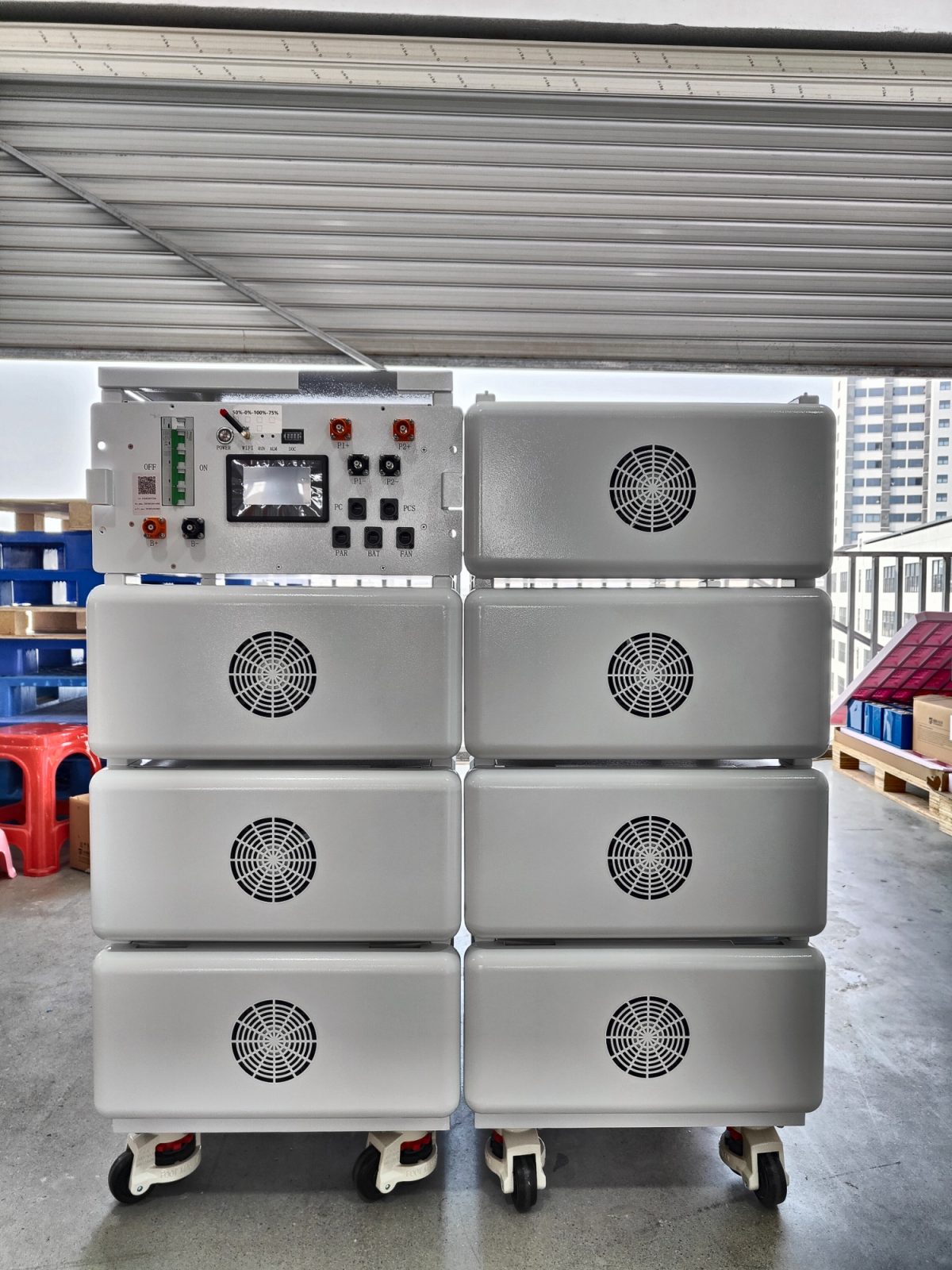
In 2026 a grade-A LiFePO4 solar battery wholesales at roughly USD 65–90 per kWh as bare prismatic cells, USD 105–145 per kWh as a finished 51.2V rack pack, and USD 90–140 per kWh at container scale — all FOB China. Put the same 5.12 kWh rack on a US shelf and it retails at USD 250–400 per kWh, because 25% Section 301 duty lands before a distributor margin does.
So when two suppliers quote “the same” 10 kWh battery and the numbers differ by 40%, the difference is almost never negotiation skill. It is cell grade, BMS specification, certification coverage and freight terms. This guide takes a wholesale battery price apart line by line: the 2026 bands, the five costs inside every $/kWh figure, the price breaks that are real, and the four lines that only appear after you have paid.
2026 wholesale price bands, by product type
The table below is compiled from China export quotes and public market references in October 2026. Treat it as a sanity check, not a price list — every band moves with cell grade, BMS, certification package and Incoterm.
| Product | Typical wholesale band, FOB China | What the price includes |
|---|---|---|
| LFP prismatic cells, 280–320Ah | USD 65–90 / kWh | Bare cells, no BMS, no enclosure, no certification |
| 12.8V 100Ah pack (1.28 kWh) | USD 120–165 / kWh | BMS, ABS case, small-format cells |
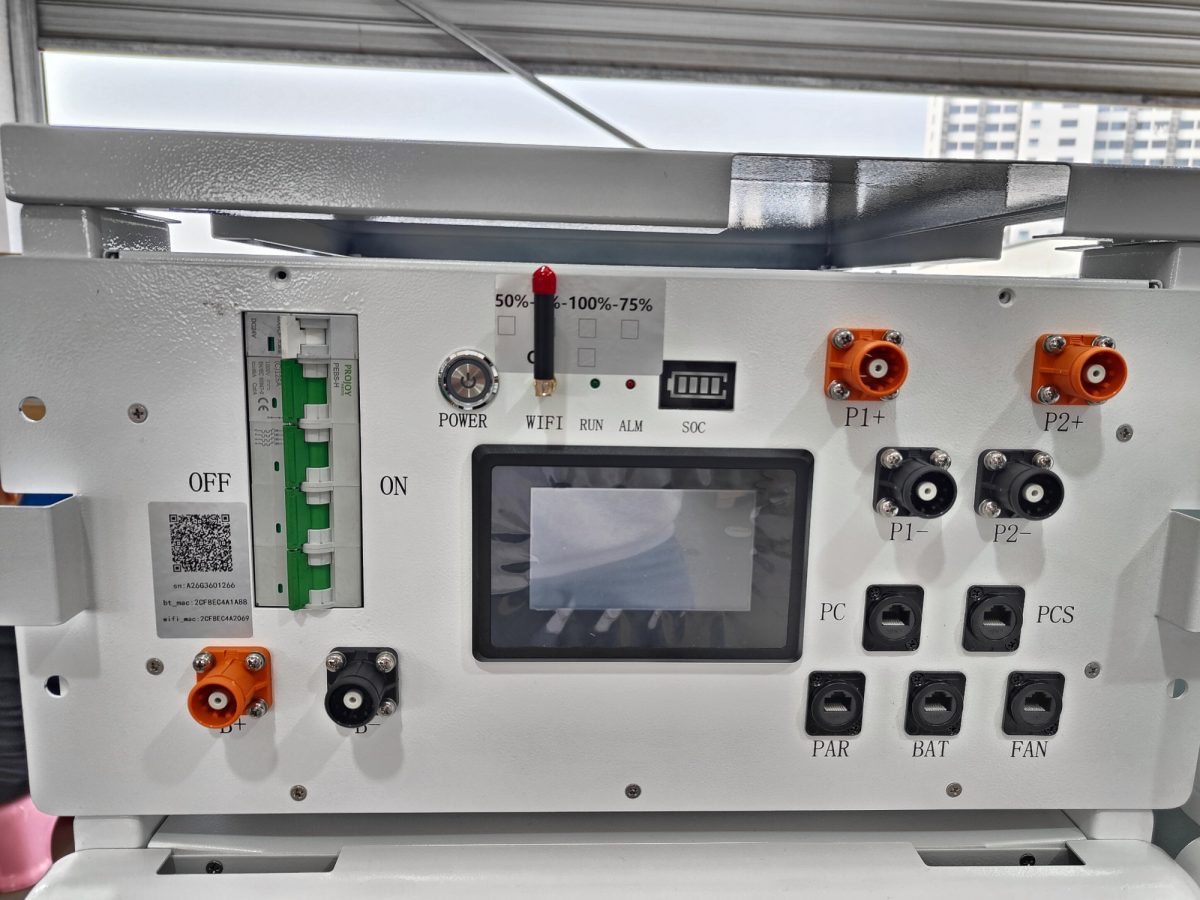
| 51.2V 100Ah rack pack (5.12 kWh) | USD 105–145 / kWh | BMS, rack case, CAN / RS485, breaker |
| 51.2V 300–314Ah movable (15–16 kWh) | USD 95–130 / kWh | BMS, casters, display, high-capacity cells |
| Home ESS 10–20 kWh, inverter included | USD 150–230 / kWh | Hybrid inverter, battery, cabinet, system test |
| C&I cabinet 100–261 kWh | USD 110–160 / kWh | Cooling, EMS, fire suppression, UL9540 package |
| 20ft / 40ft container BESS | USD 90–140 / kWh | PCS, EMS, HVAC, suppression, transport frame |
| US retail, same 5.12 kWh rack | USD 250–400 / kWh | After 25% Section 301 duty, DG freight and margin |
Two things stand out. First, the spread inside each line is wide enough that “cheapest quote” and “cheapest battery” are different questions. Second, price per kWh falls as you move up in size — not because the factory likes big orders more, but because assembly, testing and documentation cost the same whether the unit holds 1.28 kWh or 32 kWh. That single fact explains most of the price breaks buyers are told about.
If you are specifying a residential system rather than comparing cell prices, our home energy storage system guide starts from daily kWh and works down to capacity, power rating and inverter matching.
What European distributor shelves actually charge (September 2026 index)
The sun.store Battery Index tracks real listed prices across European distributor platforms. September 2026 readings: home-storage LV batteries average €94.4/kWh; HV performance tier (Deye, Dyness, Growatt, Pylontech) €154.1/kWh; HV premium ≤20 kWh €315.3/kWh. On the commercial side, 20–60 kWh systems held at €209.7/kWh and 60–120 kWh at €199.2/kWh — and every residential tier rose month-on-month (LV +7.0%, HV performance +10.0%).
Two practical conclusions. First, a 60–120 kWh C&I battery listed near €199/kWh in Europe is the anchor your buyers already have in their head; an FOB quote in the $110–160/kWh band leaves visible margin for freight, duties and the installer — print the comparison on your own quotation and it sells itself. Second, European shelf prices are rising while cell costs fall, which means the distributor margin is made in the arbitrage between FOB China and landed EU — for a quarter or two, until every competitor’s stock catches up.
Country-level pages with local tax and duty arithmetic: the UK 0% VAT window and G98/G99, Ecuador’s 15 December 2026 deadline, Philippines duty, VAT and BPS paperwork, Bahamas URCA tariffs and Bulgaria’s balancing market, plus Ghana’s EasyPass regime and cedi landed cost.
The five lines inside every $/kWh price
A finished battery is not a cell with a sticker. On a USD 120/kWh rack pack, the money roughly breaks down like this:
- Cells — 55–65%. The only line that scales with energy. Cell maker, capacity and grade drive it, and it is the line a supplier can quietly downgrade without changing the datasheet headline.
- BMS — 8–12%. Active balancing, temperature sensors, breaker, CAN / RS485 protocol, inverter compatibility list. A BMS that costs USD 8 instead of USD 25 usually lacks active balancing and one temperature sensor per module.
- Enclosure, busbars, assembly — 10–15%. Steel thickness, powder coating, terminal plating, torque-controlled assembly. This is where a 43 kg pack quietly becomes a 36 kg pack.
- Testing, certification, documentation — 4–8%. Capacity test per unit, UN38.3 test summary, MSDS, IEC or UL paperwork. Certification is charged once, documentation per shipment.
- Margin, packing, inland logistics — 8–12%. UN cartons, Class 9 labels, palletising, trucking to port.
Only the first line is energy. Everything else is fixed cost per unit — which is why a 15 kWh rack and a 5 kWh rack from the same line do not differ by 3× in price.
Why two quotes for the same kWh differ by 40%
Run the same specification past five Chinese suppliers and you will get five prices. The gap comes from six places, in this order of impact:
| Variable | Price effect | How to check it before you pay |
|---|---|---|
| Cell grade | Grade B or re-used cells cut 20–30% | Ask for the cell maker, model and a per-batch capacity test report |
| Cycle life basis | Quoting 6,000 cycles without naming depth of discharge can double the usable life claim | Require “6,000 cycles at 80% DoD, 25°C, 0.5C” |
| BMS specification | Passive vs active balancing, 1 vs 4 temperature sensors: 5–8% | Ask for the BMS model and its inverter compatibility list |
| Certification coverage | “Company is certified” vs “this model is certified”: 3–6% and a customs risk | Ask for the certificate number and the model list attached to it |
| Warranty reserve | A real 10-year warranty costs 2–4% of the price | Read who pays return freight and what the cycle cap is |
| Packing and DG handling | UN cartons and Class 9 marking: 1–3% | Ask for the packing instruction number and the SOC limit at shipment |
None of these are hidden in a legitimate quote — they are simply not volunteered. The buyers who get consistent pricing are the ones who send a written specification instead of asking “what is your best price for 10 kWh”. The same discipline that works when you compare LiFePO4 batteries works when you compare quotes.
Price breaks that are real, and ones that are not
Wholesale battery pricing does step down with volume, but the steps are smaller than most buyers expect, and they come from logistics rather than generosity.
| Order size | Realistic discount vs single unit | What actually changes |
|---|---|---|
| 1 unit | List price | Express or air freight, full documentation, highest cost per kWh |
| 1 pallet (20–24 packs) | 3–6% | Sea LCL, shared DG booking, pallet packing |
| 5–10 CBM LCL | 5–8% | Consolidated container, lower freight per kWh |
| Full 20ft or 40HQ | 8–15% | Dedicated DG booking, factory production slot |
| Annual framework | 10–18% plus cell price lock | Scheduled releases, lithium carbonate hedge |
What is not real: a 30–40% discount for a single pallet. Battery margins are nowhere near that wide. When a quote lands far below the band in the first table, the discount has been taken out of the cell grade, the BMS or the certification — you will find out at year three, not at the port.
Landed cost: four lines that are not on the FOB quote
- Dangerous goods freight. Lithium batteries above 100Wh travel by sea, not air. Expect a Class 9 surcharge, a separate booking and a longer cut-off than general cargo. Get the freight line quoted separately so you can compare suppliers on the same basis.
- Duty and tax. US importers pay 25% Section 301 plus 3.4% MFN — about 28.4% on the declared value. The EU is 2.7% plus VAT. On a USD 120/kWh pack, US duty alone adds USD 34/kWh, which is why FOB, CIF and DDP quotes are not comparable without unpacking them.
- Market access paperwork. CE marking, registration and — from 2027 — the EU battery passport add roughly USD 5–10/kWh for Europe-bound stock. Budget it now rather than discovering it at customs.
- Warranty and spares reserve. A serious 10-year warranty is not free. Carry 2–4% of order value, and confirm who pays return freight for a failed module.
How to read a battery quotation, line by line
Eight lines separate a quote you can compare from one you cannot. If a supplier cannot answer all eight in writing, the price is not yet a price.
| Line | What a complete quote states | Why it matters |
|---|---|---|
| Cell | Maker, model, capacity, grade, test report | 60% of the cost sits here |
| Cycle life | Cycles at a stated DoD and temperature | The same cell can be quoted as 3,500 or 8,000 cycles |
| BMS | Protocol, balancing type, sensor count, breaker | Decides whether your inverter talks to it |
| Certification | Standard, certificate number, covered models | The certificate must name your model, not just the factory |
| Warranty | Years, cycle cap, freight responsibility | A 10-year warranty capped at 3,000 cycles is a 5-year warranty |
| Packing | UN carton, Class 9 label, SOC at shipment | Port rejection is expensive and always the buyer’s problem |
| Incoterm | FOB / CIF / DDP with a named port | DDP hides duty inside the unit price |
| Payment | TT split or LC, and the cost of each | Your capital cost is part of the landed price |
Six red flags in a battery quote
- Price below cell cost. Under about USD 60/kWh for a finished pack, the cells are re-used, grade B, or the capacity is overstated.
- “Grade A” with no test report. Grade is a measurement, not an adjective.
- Cycle life with no DoD. The number is meaningless without depth of discharge, temperature and C-rate.
- Company certificate, model not listed. Works fine until a customs officer or an insurer asks.
- Warranty that excludes return freight. Sending a 43 kg pack back to China costs more than the pack.
- Sample from a different line. Ask for the serial numbers of the sample and the mass-production batch to match.
What EverRay quotes, and what we do not
We quote against a specification, not against a headline. What we publish up front is the part most suppliers leave to the negotiation:
- MOQ 1 unit — one battery, one inverter or one complete ESS set. No container requirement to start.
- Lead time 1–2 weeks for standard models, counted from order confirmation.
- 12.8V to 51.2V, 100Ah to 628Ah, 1.28 kWh to 32.2 kWh per unit, with a 6000+ cycle design life at 80% depth of discharge.
- UN38.3 test summary, MSDS and packing documentation with every shipment — the paperwork that decides whether your container clears.
- Matched systems — our batteries, our hybrid inverters and our home ESS are tested together, so BMS protocol compatibility is our problem, not yours.
- Scale when you need it — the same cells move into C&I cabinets from 64 kWh to 1.72 MWh, including the 30kW / 64kWh starter system.
What we do not publish is a per-kWh list price, because a real number depends on cell grade, BMS protocol, destination and Incoterm. Send capacity, voltage, inverter model and destination port, and the quote comes back itemised against those eight lines above.
Frequently Asked Questions
What is the wholesale price of a 48V 100Ah lithium battery? A 51.2V 100Ah pack holds 5.12 kWh and wholesales at roughly USD 105–145/kWh FOB China, so USD 540–740 per unit. Below USD 500 usually means grade B cells or a smaller BMS.
Why does the same battery cost USD 1,400 in the US? A 28.4% duty on the declared value adds about USD 34/kWh, dangerous goods freight adds more, and the distributor carries a ten-year warranty reserve. FOB China and US retail are two different products in two different risk pools.
Is a cheaper battery always grade B? No. Cheaper can mean a smaller BMS, thinner busbars, no per-unit capacity test or no certification. But once a finished pack drops below the cost of its own cells, it is not a bargain, it is a different product.
What is the minimum order for a wholesale battery? At EverRay it is one unit, for batteries, inverters and complete storage systems alike. Many Chinese suppliers ask for 5–10 units before they will quote, which is worth knowing when you compare lead times.
Does a full container really cut the price? By 8–15% against a single unit, yes — but most of that comes from freight per kWh, not from the factory. On low-value batteries, duty and freight can outweigh the volume discount entirely.
How long does delivery take? Production is 1–2 weeks for standard models. Sea transit is typically 18–25 days to Gulf ports, 30–35 days to Northern Europe, and 14–18 days to the US West Coast, plus customs clearance at destination.
Get an itemised battery quotation
Send the eight lines you need priced — model, quantity, BMS protocol, certification market, Incoterm and destination port — and you will get a quotation that can be compared line by line instead of a single number. Catalogues, UN38.3 summaries and reference projects are available on request.
If you buy at wholesale volume to resell — as an installer, wholesaler or EPC — our solar distributor program covers tiered pricing across all eight product lines, MOQ from one pallet or one unit, and 1–2 week lead times.
Buying into the Philippines? Landed cost is not the FOB number — 12% VAT, BPS clearance and DDP delivery to Manila or Cebu are set out on our Philippines solar battery price list.
Get a Quote for Your Solar Project
Tell us your destination market and requirement. We reply within 24 hours on business days with specifications, certificates and pricing — no obligation.
Get the 2026 EverRay Product Catalogue
25 pages · solar modules 440-735W, hybrid inverters 2-150kW, LiFePO4 batteries, home & C&I energy storage, solar pumps, lighting and PV cleaning