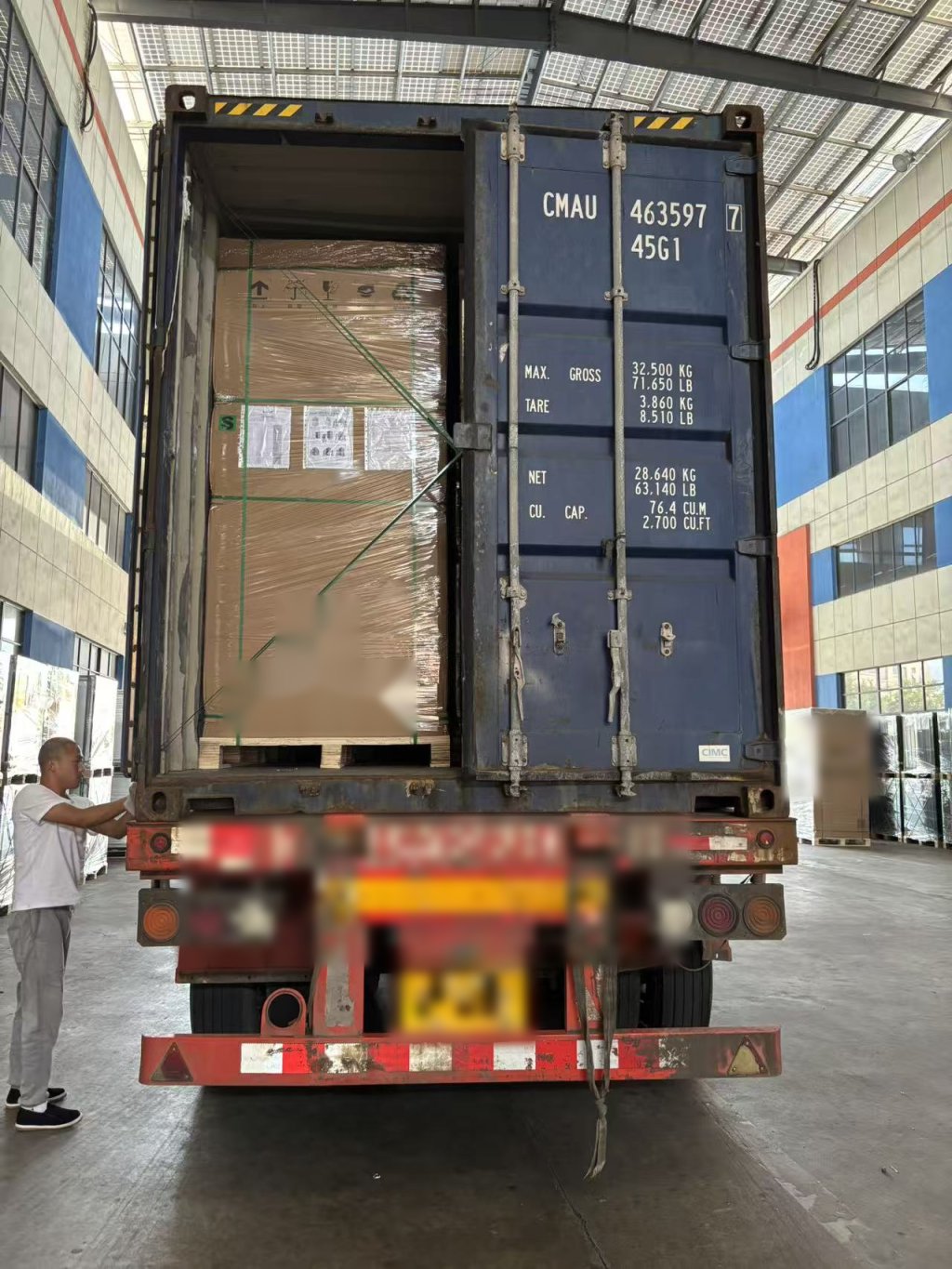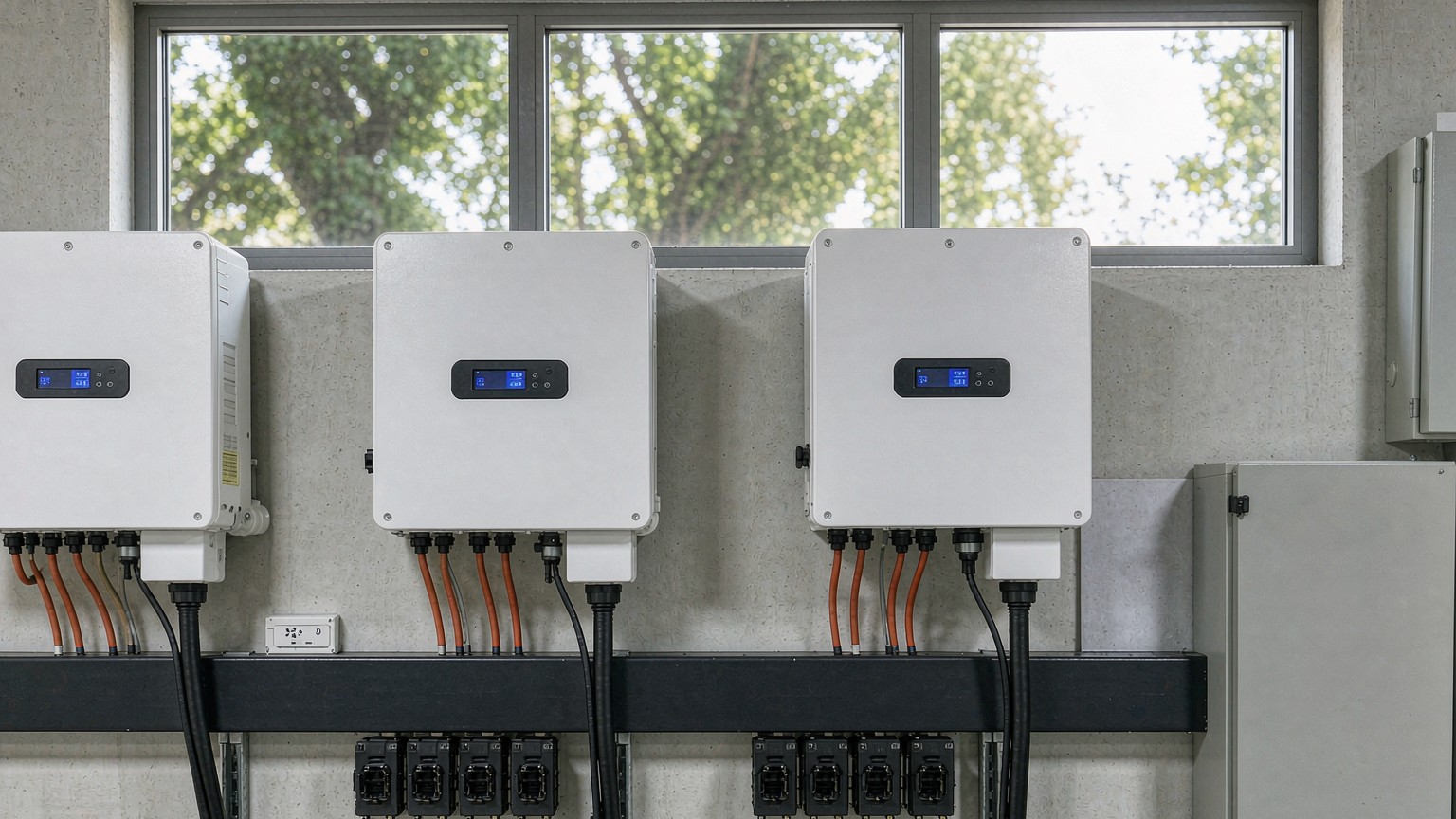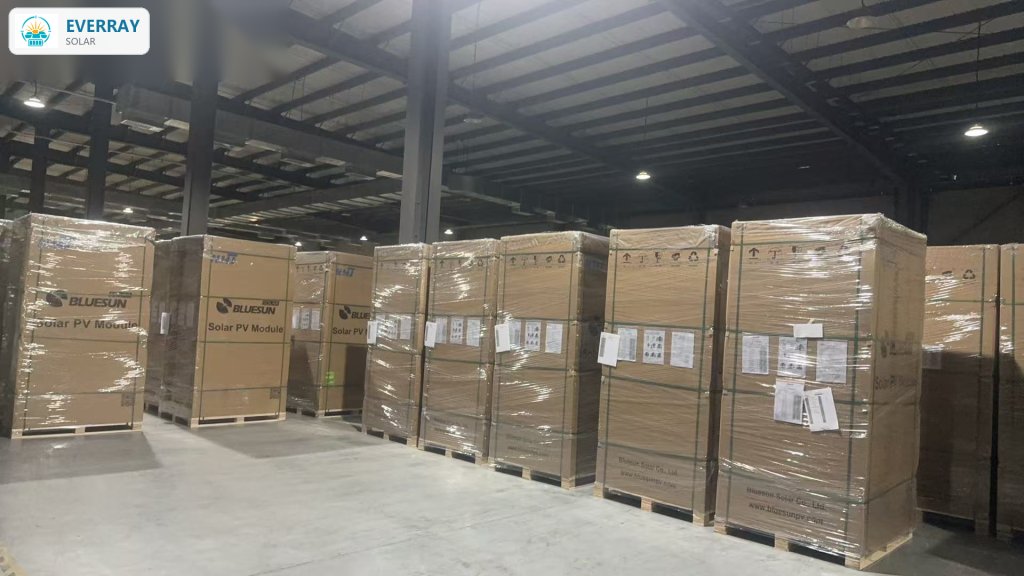
Buying solar equipment from China is not difficult. Buying it from the right Chinese company is — and the difference only shows up eighteen months later, in claim ratios, in whether spare parts arrive, and in whether anyone still answers your email. This guide is written for distributors, EPC contractors and project developers who already know roughly what they want to buy. It walks through the eight checks that separate a solar panel supplier in China worth a repeat order from one worth avoiding, and it ends with the exact RFQ template we recommend sending before you negotiate a single price.
The short version: verify the legal entity, verify the certificates model by model, verify the production behind the brand, then test the commercial terms. Everything else is marketing.
Why China Still Sets the Price of Solar
Almost every solar project in the world is priced against Chinese supply. China holds the dominant share of global wafer, cell and module capacity, and that same industrial depth now extends into hybrid inverters, LiFePO4 cells and containerised battery storage. For a distributor or an EPC, this leads to two conclusions.
First, if you are not buying from China, you are paying a premium your competitors are not. Second, because the market is deep and crowded, the spread between suppliers is far wider than the spread between prices. The worst and the best quotation for the same 550 W panel often differ by less than ten percent on price — and by ten years on usable life, warranty response and resale reputation.
That is why supplier selection is a technical exercise rather than a purchasing exercise. The checklist below is the order in which experienced buyers actually work. Price comes fourth, not first — and a price is meaningless without its delivery term, which our FOB vs CIF vs DDP guide explains.
Factory, Trading Company or Sourcing Partner — What Actually Changes for You
The first thing to establish is not “are they good?” but “what are they?” These three structures behave very differently once a project goes wrong.
| Model | What it really is | Strengths | Where it bites you |
|---|---|---|---|
| Factory | Owns one or two production lines, sells only its own output | Lowest unit cost at volume, direct control of quality, easy to audit | Narrow product range, so a mixed project becomes three suppliers and three sets of paperwork; less flexible on small or custom orders |
| Trading company | Buys from factories and resells; often no production of its own | Wide catalogue, fast response, willing to handle small orders | Margin stacked on top of factory price, thin technical depth, weak leverage when you need a warranty claim enforced |
| Sourcing partner | Works with a network of vetted factories and takes responsibility for the whole specification | One order, one set of documents, one point of accountability across PV, inverters and storage; can match the technology to the project instead of to a single catalogue | Only as good as its audit process — ask for it in writing and test it with a small order first |
None of the three is automatically better. A factory is the right answer when you are buying one product at volume and you have your own engineering team. A sourcing partner is the right answer when you are assembling a system, importing into a market with its own certification rules, or you simply do not want to manage four suppliers in three time zones. What you must avoid is being told you are dealing with one model while actually dealing with another — which is why step one is legal verification.
One further decision interacts with this choice: what goes on the label. If you plan to sell under your own brand, our OEM vs ODM guide for solar buyers explains how private labelling changes MOQ, lead time, certification and warranty — before you commit to either route.
Step 1 — Verify the Legal Entity Before You Discuss Price
A legitimate Chinese exporter is easy to verify in about twenty minutes. Ask for the business licence and check four things:
- Registered name matches everything. The name on the licence, the name on the website, the name on the proforma invoice and the name on the bank account must be the same legal entity. Any mismatch is a warning, not a technicality.
- Unified Social Credit Code. Every Chinese company has an 18-character code. Ask for it, and ask for the licence image, not a typed-out version.
- Scope of business. Confirm the licence actually covers the goods being sold to you, including import and export rights.
- Registered capital and address. A company registered two months ago with minimal capital and a virtual office address is not necessarily fraudulent, but it is not a supplier you want your first container riding on.
The bank account test
This single check prevents most cross-border payment fraud: the bank account name must be the company name on the contract. If the bank details show a personal name, a third-party company, a currency-exchange service or a Hong Kong shell that does not appear in your contract, stop and ask for a written explanation on company letterhead. Legitimate suppliers will provide it without hesitation. Fraudulent ones will create urgency instead.
The digital footprint test
Open the website and look for the things a real exporter has: a physical address, a landline and a mobile number, a business email on the company domain rather than a free mailbox, named staff, dated factory photography, and product pages with real specifications rather than stock renderings. Then search the company name alongside the words complaint, scam and review, check whether they exist on LinkedIn, and check whether their address resolves to an actual industrial or office location. A supplier with no trace anywhere online in 2026 is not a boutique — they are unverifiable.
Step 2 — Read the Certificates Like a Buyer, Not a Browser
Every Chinese supplier will tell you their products are “CE certified”. What matters is which certificate, for which model, issued by whom, and whether the number can be checked. Certification follows the product, not the company. For a market-by-market breakdown of which certificate you actually need, see our CE vs UL vs IEC certification guide.
| Product | Ask for | What it actually proves |
|---|---|---|
| PV modules | IEC 61215 (design qualification) and IEC 61730 (safety), issued by TÜV, Intertek, SGS or CSA; plus the factory’s internal flash-test and EL records | That the module family has passed thermal cycling, humidity freeze and mechanical load testing — not that your specific pallet will match its nameplate |
| Hybrid inverters | IEC 62109-1 / -2 for safety, plus the grid-code certificate for your market: VDE-AR-N 4105 or EN 50549 for Europe, AS/NZS 4777.2 for Australia, UL 1741 for North America | That the unit may be legally connected to the grid you are installing it on. A safety certificate alone does not make it compliant |
| LiFePO4 cells and modules | IEC 62619, UN38.3 for transport, UL 1973 where the destination requires it, MSDS and a test summary | Cell-level safety and transport legality — the two things customs and insurers ask about first |
| Battery storage systems | UL 9540 for the complete system and UL 9540A thermal-runaway test data, or IEC 62933 for other markets | That the assembled cabinet or container has been evaluated as a system, not merely as a collection of compliant parts |
How to check a certificate in three minutes
Take the certificate number and the issuing body, then look it up on the issuing body’s own database rather than on a PDF you were sent. Confirm three things: the model number on the certificate matches the model number on your quotation, the certificate has not expired, and the issuing laboratory is a recognised one. Then ask one extra question: can you send the full test report, not just the certificate cover page? Suppliers who own the product answer immediately. Resellers who are passing along a document they do not understand usually go quiet.
For storage in particular, insist that the certification applies to the exact cabinet or container configuration you are ordering. A 100 kWh cabinet and a 500 kWh container rarely share one certificate, even when they share a manufacturer.
Step 3 — Ask for Production Evidence, Not Factory Photos
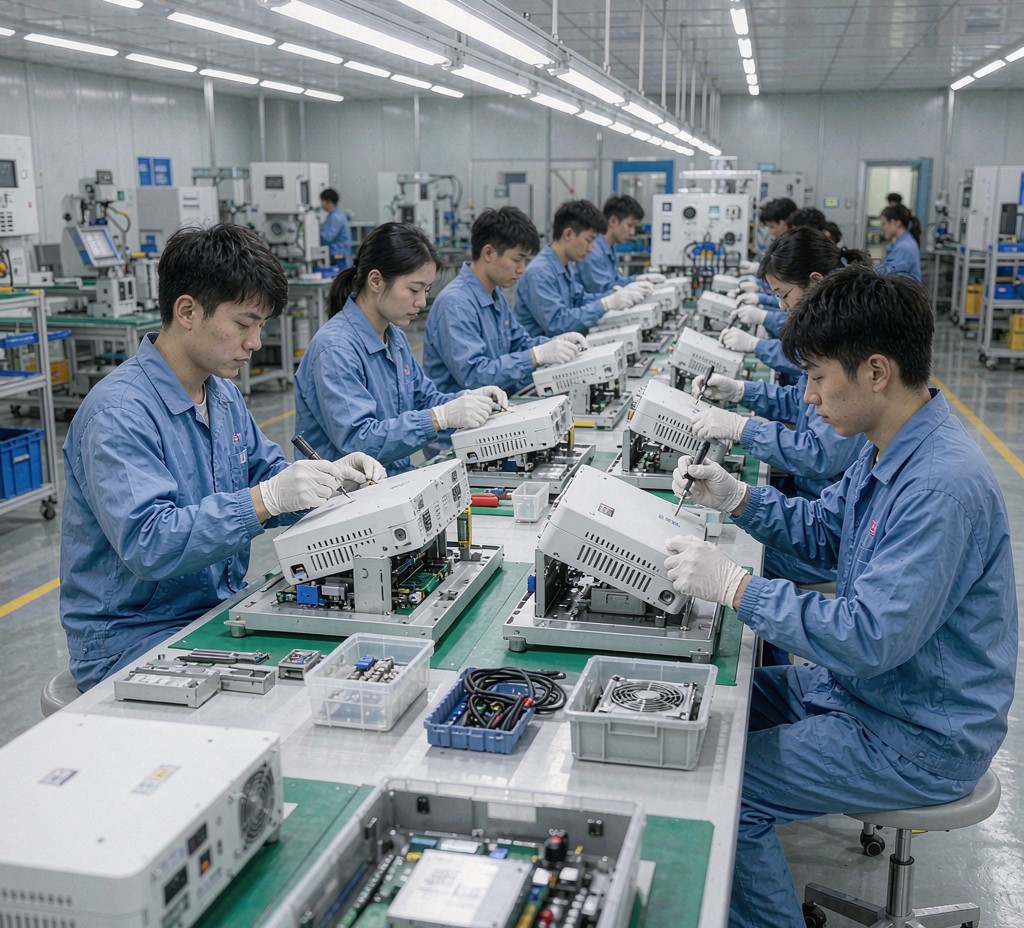
Every catalogue contains a photograph of a tidy production line. What you want is evidence that the line is theirs and that it is running your product. Ask for:
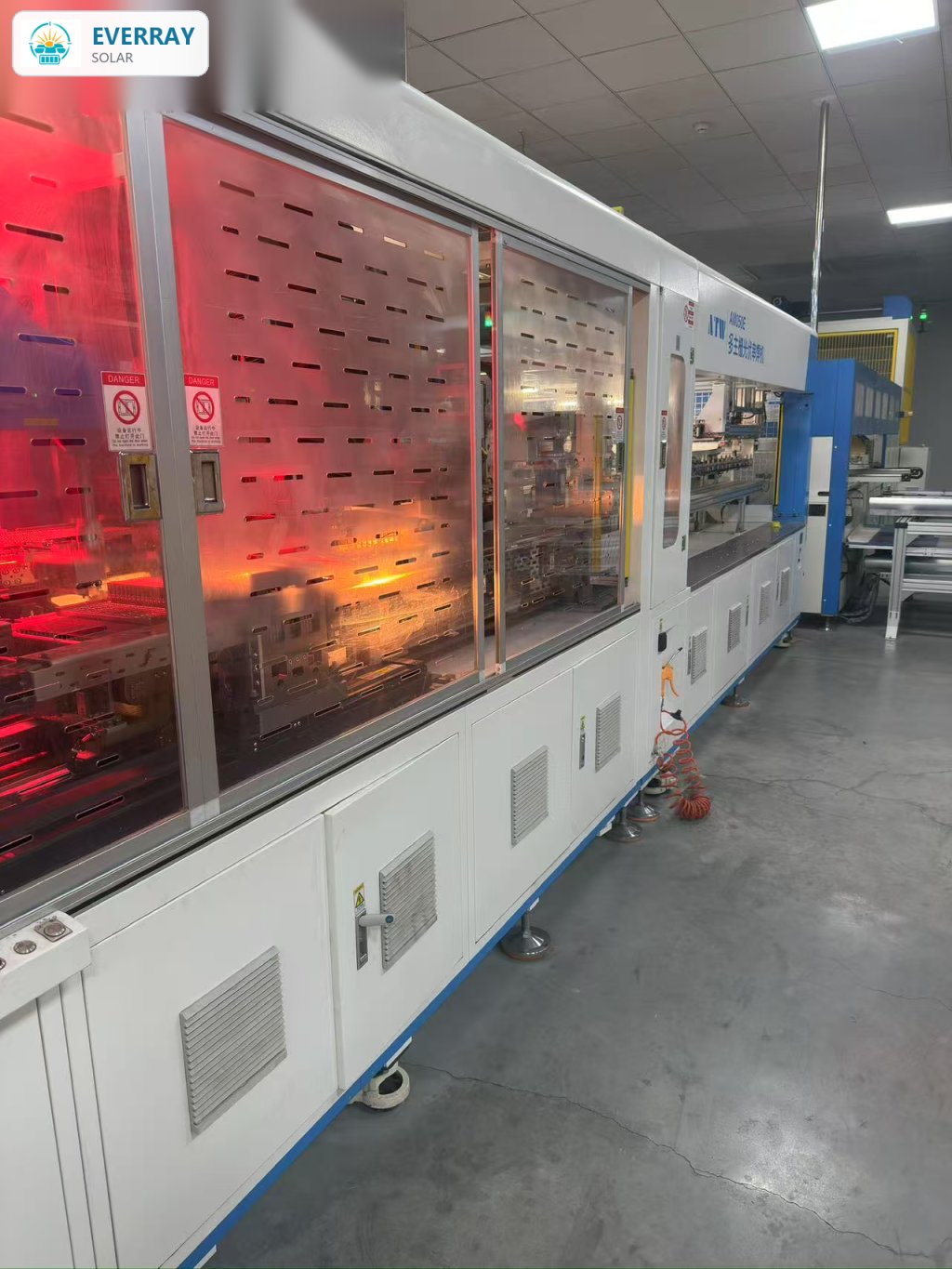
- A live video call walking through the plant, unscripted, with the camera pointed at the equipment and the date visible on someone’s screen
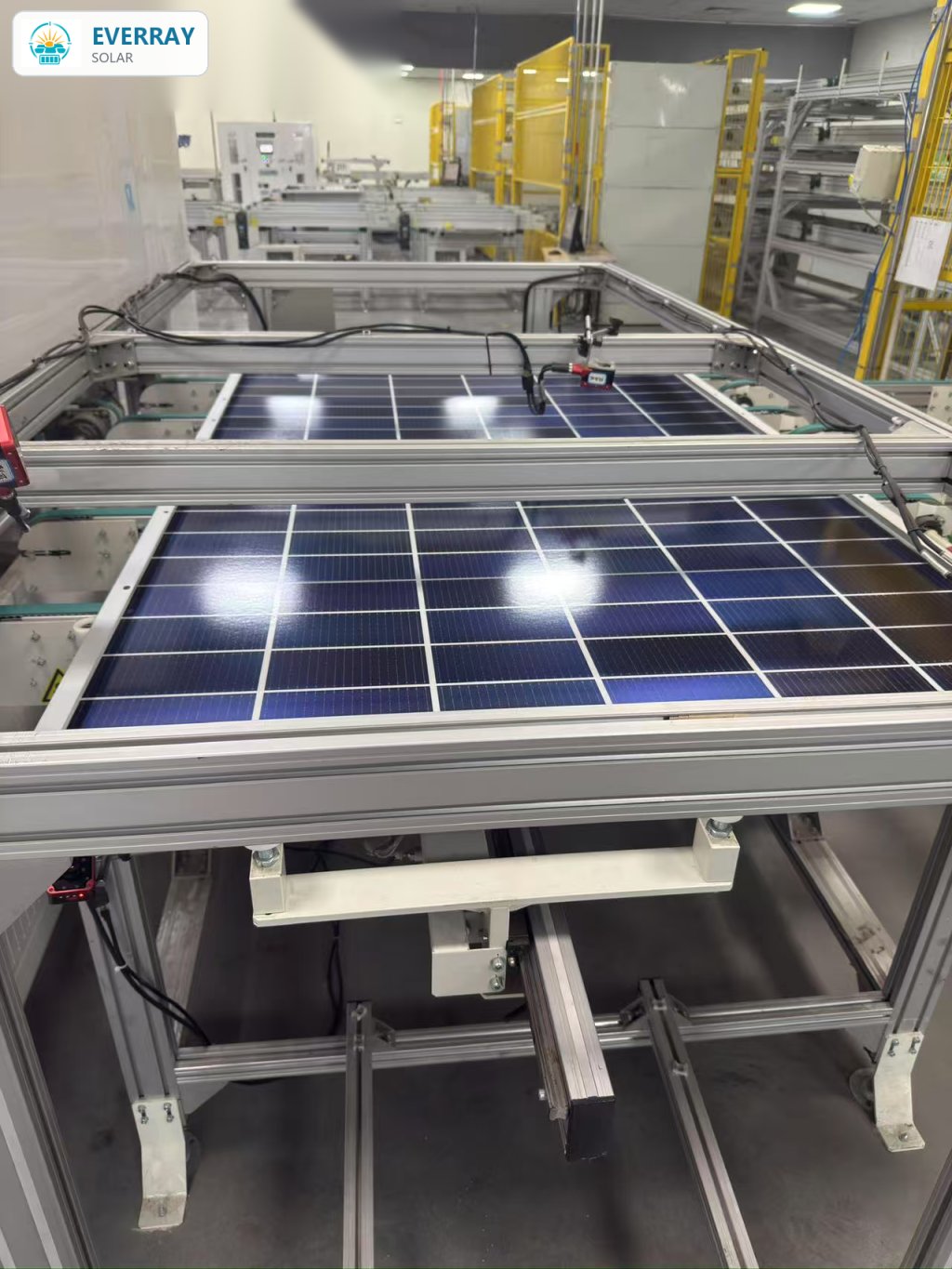
- The flash-test station and the electroluminescence (EL) imaging unit — if they cannot show both, they are not testing modules
- IQC and OQC records: incoming inspection of cells, outgoing inspection of finished goods
- Monthly output figures and a realistic lead time, expressed in weeks, with the current order book taken into account
- The name of the cell supplier, and whether the cells are A-grade, B-grade or reclaimed
If you are buying through a sourcing partner, ask the same questions about the factories behind them, and ask how those factories were audited. A partner who cannot explain their audit criteria is a broker with better branding. You can see an example of the level of detail to expect on our own factory tour page, which documents the production and inspection stages we work through with our partner plants.
Step 4 — Eight Technical Questions That Reveal Real Depth
You do not need to be an engineer to grade a supplier’s engineering. Ask these eight questions and listen to how the answers are given. A supplier with depth answers in numbers, tolerances and standards. A reseller answers in adjectives.
- What is the power tolerance on your modules, and is it positive-only? A serious module supplier quotes zero to +5 W, with matching cells within a pallet. “Within industry standard” is not an answer.
- Which cell technology do you recommend for my project, and why? PERC, TOPCon and HJT have different temperature coefficients, degradation curves and price points. A supplier who recommends the same panel for a desert utility project and a coastal rooftop is selling, not specifying.
- What is the annual degradation figure in your performance warranty, and how is it measured? The difference between 0.45 % and 0.55 % per year compounds into real money over twenty-five years.
- For hybrid inverters: what is the MPPT voltage window, the overload capability, and can it be paralleled? These three answers determine whether the unit fits a real site or only a datasheet.
- For batteries: which BMS do you use, what is the continuous C-rate, and what happens at 45 °C ambient? Thermal management is where cheap storage fails first.
- How do you handle mismatched or faulty units inside a container? The correct answer is a documented RMA process with a stated response time, not “no problem, we will send replacement with next order”.
- Who signs the compliance declaration for my market, and what documents will I receive for customs and grid connection? Ask for the list in writing: invoice, packing list, bill of lading, certificate of origin, CE declaration, test reports, MSDS.
- Can I speak to two existing customers in my region? Any supplier with years of export experience can name references. Refusal is an answer.
The three product lines above are the ones buyers most often get wrong. If you want the deeper engineering background, we have published separate guides on sizing a hybrid inverter and on choosing LiFePO4 batteries, and the same verification logic applies to commercial and industrial storage systems.
Step 5 — Samples, Flash Data and Pre-Shipment Inspection
Never scale from a quotation to a container without an intermediate step. The cheapest insurance available is a sample order plus a third-party inspection, and it should cost a small fraction of the container value.
- Buy a sample, and buy it through the normal channel — same product, same packaging, same documentation. Samples pulled from a special reserve tell you nothing.
- Request the flash-test report for your panels. It gives the measured wattage per serial number. Compare it against nameplate and against the tolerance promised.
- Ask for EL images of the modules in your order. Micro-cracks and dead fingers that never appear in a visual inspection show up immediately under electroluminescence.
- Commission a pre-shipment inspection through SGS, Bureau Veritas, TÜV or Intertek. Agree the sampling plan and the acceptance criteria before production, not after, and put the AQL in the contract.
- Specify packaging in writing. Pallet type, corner protection, desiccant, lashing and container loading plan. Transit damage is almost always a packaging specification failure, and it is argued about after arrival.
For storage products, add two items to the inspection scope: a capacity and efficiency check on a sample unit, and a check that the BMS firmware version and communication protocol match what was quoted.
Step 6 — Incoterms and the Real Landed Cost
Price comparisons are only meaningful at the same Incoterm. A supplier quoting DDP will always look expensive against one quoting EXW, and a supplier quoting FOB Shenzhen is not comparable to one quoting FOB Ningbo unless you know your inland and port costs.
| Term | Supplier handles | You handle | Use it when |
|---|---|---|---|
| EXW | Nothing beyond making the goods available at their premises | Inland haulage, export clearance, freight, insurance, duty | You already have a freight forwarder in China and buy at volume |
| FOB | Inland transport and export customs clearance to the named port | Ocean freight, insurance, import clearance, duty | The default for most first-time and mid-volume importers |
| CIF | Freight and insurance to the destination port | Import clearance, duty, inland delivery | You want a single landed number and are not freight-rate sensitive |
| DDP | Everything, including duty, to the named address | Nothing | Small projects, samples, or markets where you have no customs setup |
Then build the landed cost properly: goods value, freight, insurance, duty, destination-market certification or re-testing, port charges on both ends, inland delivery, and the cost of capital while the container is at sea. Buyers who skip the last two items are regularly surprised that the “cheapest” quote was the most expensive order. Sea freight from China typically runs four to six weeks to European ports and three to five weeks to the US west coast, with battery shipments subject to additional carrier restrictions and documentation.
Step 7 — Payment Terms That Protect Both Sides
Payment structure is the clearest signal of how a supplier behaves when something goes wrong.
- 30 % deposit plus 70 % against the bill of lading copy is the industry norm for container orders. It gives the supplier working capital and gives you leverage until the goods are on the water.
- Letter of credit at sight is appropriate for large or first-time orders, and any exporter with real volume will accept it. A supplier who refuses an L/C from a reputable bank is telling you something.
- Escrow or a platform trade-assurance service is a sensible compromise for a first trial order.
- Refuse full advance payment unless you are buying a sample, and never pay a personal account, a currency-exchange agent or an account whose name differs from your contract.
Also put the penalty and remedy clauses in the contract, not in an email thread: late-delivery compensation, the inspection standard, the warranty terms, the governing law and the dispute route. Suppliers who will not sign a reasoned contract are not suppliers you want at scale.
Step 8 — Warranty, Spare Parts and Who Answers in Year Five
Warranty is where cheap purchases become expensive. Separate the two warranties you are actually being given: the product warranty on materials and workmanship, and the performance warranty on output degradation. Then ask the questions that decide whether either is usable.
- Who pays the freight on a warranty replacement? A ten-year warranty that requires you to air-freight a battery back to China at your own cost is a warranty in name only.
- What is the documented claim procedure and the response time? Ask for the actual form and the internal SLA.
- Are spare parts held in stock, and for how long after the model is discontinued?
- Is there a service partner in your region, or must every intervention be handled remotely?
- What evidence do they require for a claim? Knowing this in advance lets you collect it correctly instead of arguing later.
For context on what reasonable looks like: our commercial and industrial storage systems carry UL 9540 compliance and a ten-year battery warranty, our liquid-cooled ESS cabinets carry a five-year system warranty, and every product is supplied with CE, IEC or UL documentation as applicable to the destination market. Those numbers are not the highest in the industry and they are not the lowest — they are the ones we can honour and administer.
Red Flags: Twelve Signals to Walk Away
Individually, none of these proves fraud. Together, two or three in the same conversation is a pattern.
| Signal | Why it matters |
|---|---|
| Price far below every other quote for the same specification | Either B-grade cells, thinner frames, unverified capacity, or a number that will change after you commit |
| Bank account name differs from the contract | The single most common pattern in cross-border payment fraud |
| No business licence, or a licence that does not match the website | The entity you are paying may not be the entity you are dealing with |
| Certificate model numbers do not match the quoted model | You are buying an uncertified product with a certified product’s paperwork |
| Refusal of a live video walkthrough | There may be no production line to show |
| Only a free email address and a mobile number, no company domain | No fixed legal footprint |
| Pressure to pay today for a “price that expires tonight” | Urgency is a fraud technique, not a sales technique |
| Vague answers on cell grade, BMS or warranty procedure | Shallow engineering behind a confident front |
| No reference customers, or references that cannot be contacted | No track record to verify |
| Refusal to accept an L/C or escrow on a first order | They need your money before you have leverage |
| Specifications that change between the datasheet and the order confirmation | Deliberate scope erosion, usually discovered after arrival |
| Website with no physical address, no legal imprint and no named people | A trading front, not a company |
The RFQ Template That Gets You Comparable Quotes
Send the same text to every supplier, and insist that replies follow the same structure. Comparable answers are worth more than fast ones. Copy and adapt this:
- Product and model, with the exact specification: power class, cell technology, frame, glass, junction box, connector type
- Certification required for my market, with the standard number
- Quantity for the first order and the expected annual volume
- Required Incoterm and destination port or address
- Packaging requirement and container loading plan
- Delivery lead time in weeks, from deposit
- Payment terms offered, and whether an L/C at sight is accepted
- Product warranty and performance warranty in years, with the claim procedure
- The documents that will accompany shipment, listed explicitly
- Two reference customers in my region, with contact details
Suppliers who answer all ten become your shortlist. Suppliers who answer six and attach a price list, twice, do not.
How We Work With Distributors and EPC Contractors
EverRay Solar is the export brand of Hefei Henghui New Energy Co., Ltd, founded in 2021 and based in Hefei, China. We are a sourcing and solution partner rather than a single factory: we work with a network of more than twenty audited partner plants and match each project to the right cell chemistry, inverter platform and enclosure instead of pushing one production line’s catalogue.
That structure matters most when your order crosses product categories. A distributor building a residential package can take PV modules from 440 W to 735 W, hybrid inverters from 2 kW to 60 kW including North American NEMA 4X models, LiFePO4 battery modules from 12.8 V to 51.2 V and home energy storage systems from 3 kWh to 60 kWh on one order, one set of documents and one point of accountability. An EPC working on larger sites can do the same with commercial and industrial storage from 100 kWh cabinets to 1.72 MWh containers, plus solar water pumping systems, solar lighting, PV cleaning equipment and EV charging.
What we provide beyond the goods is the part most buyers undervalue: free system sizing, tender documentation support, compliance paperwork matched to your destination market, and DDP delivery to project sites. Our largest reference project is a 500 MW / 1 GWh energy storage installation in Colombia, with additional deployments across Europe, Africa, the Middle East, Latin America and Southeast Asia. References and reference letters are available on request during the tender stage. You can see our full range on the products overview or read more about how we work.
Frequently Asked Questions
How do I know a Chinese solar supplier is genuine?
Verify four things in writing: the business licence with its 18-character Unified Social Credit Code, a bank account whose name matches the contract, certificates whose model numbers match your quotation, and at least two reference customers you can contact. Then place a small trial order before scaling. Genuine suppliers pass all four without friction; fraudulent ones create urgency around one of them.
Is it cheaper to buy from a factory or a trading company?
At high volume on a single product, a factory is usually cheaper because no intermediary margin is stacked on the price. On mixed orders, a sourcing partner often ends up equal or cheaper once you count three sets of freight, three sets of customs paperwork and the internal cost of managing three suppliers. Compare landed cost, not unit price.
Which certifications should I require for solar panels?
IEC 61215 for design qualification and IEC 61730 for safety, issued by a recognised body such as TÜV, Intertek, SGS or CSA. For inverters, add the grid-code certificate for your country — IEC 62109 alone does not make a unit legal to connect. For storage, ask for UL 9540 system certification and UL 9540A data where your market requires it, or IEC 62619 and IEC 62933 elsewhere.
What deposit and payment terms are normal?
Thirty percent deposit and seventy percent against the bill of lading copy is standard for container orders. Larger or first-time orders are often settled by irrevocable letter of credit at sight. Full advance payment, personal bank accounts and accounts whose name differs from the contract are all reasons to stop.
Can I combine panels, inverters and batteries in one order?
Yes, and it is one of the practical advantages of working with a sourcing partner rather than a single factory — one commercial invoice, one bill of lading, one compliance document set, and one shipment to clear. It also simplifies after-sales, because warranty claims across product lines are handled by one counterparty.
How long does shipping from China take?
Sea freight typically runs three to five weeks to the US west coast and four to six weeks to European ports, port to port. Add production lead time, inland transport on both ends and customs clearance. Battery shipments need additional carrier approval and documentation, so build in a buffer for storage orders.
Do you accept small trial orders?
Yes. We would rather run a small first order and earn the container than start with a container and discover a mismatch. Tell us your target specification and market and we will quote a trial quantity alongside the production quantity so you can see both economics.
What happens if the panels underperform after arrival?
Claims are settled against the flash-test data and the warranty terms in the contract, which is why we recommend agreeing the inspection standard and the claim evidence list before production. In practice, most disputes are resolved by comparing measured output against the flash-test report for the same serial numbers, which is also why that report should always be requested with the shipment.
Get a Quote for Your Solar Project
Tell us your destination market and requirement. We reply within 24 hours on business days with specifications, certificates and pricing — no obligation.
Get the 2026 EverRay Product Catalogue
25 pages · solar modules 440-730W, hybrid inverters 2-150kW, LiFePO4 batteries, home & C&I energy storage, solar pumps, lighting and PV cleaning