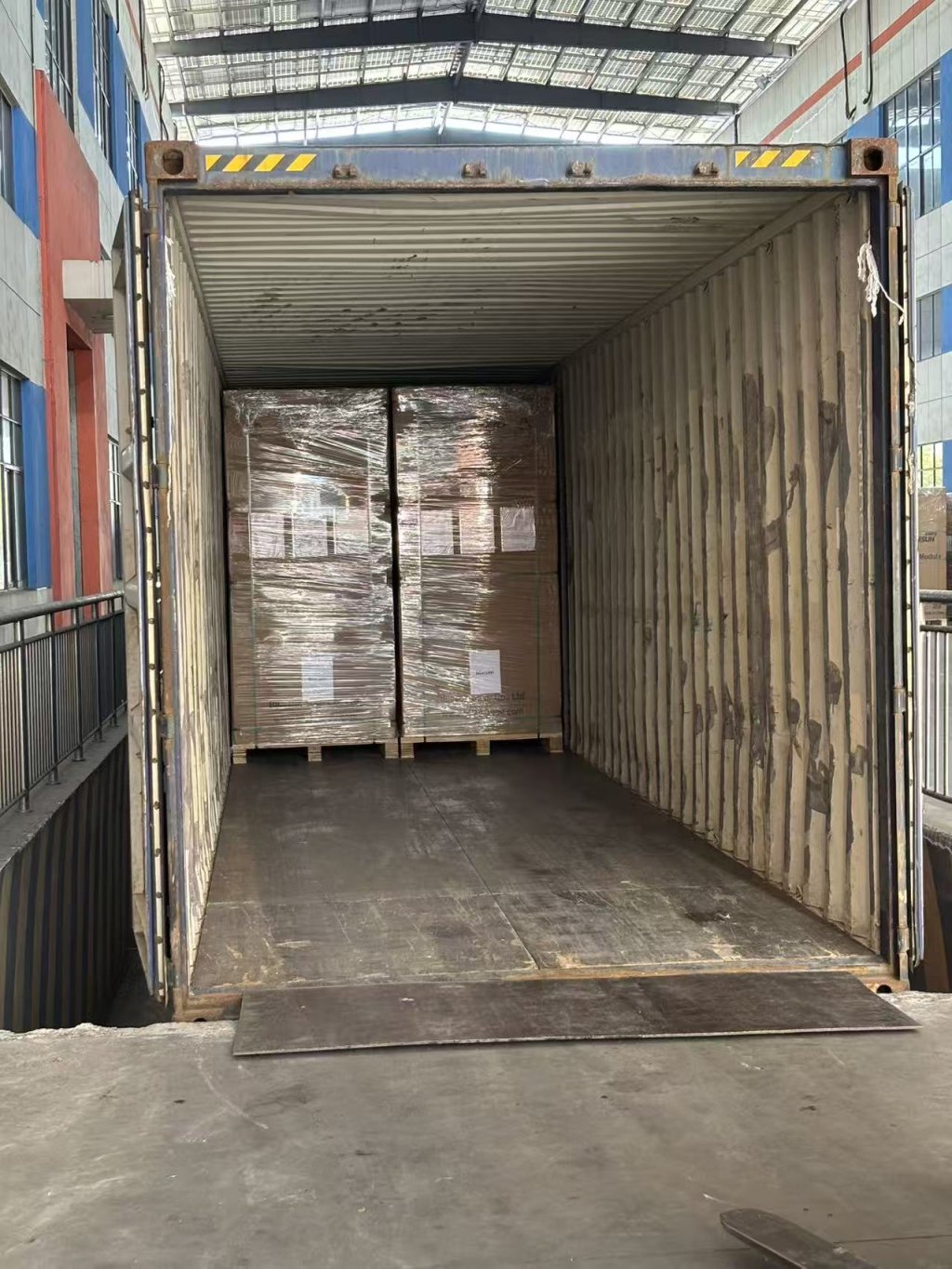
Solar Battery Supplier Honduras: Duty-Free Residential, 60 Hz Stock, MOQ 1
EverRay supplies solar modules, hybrid inverters, LiFePO4 batteries and containerised energy storage to Honduran distributors, installers and industrial buyers — MOQ from one pallet or one unit, 1–2 week lead time on stock configurations, DDP to Puerto Cortés and inland delivery to San Pedro Sula and Tegucigalpa.
Quick facts for Honduran buyers
- MOQ 1 pallet / 1 unit
- 1–2 weeks lead time
- DDP Puerto Cortés
Honduras changed on 30 September 2026. Decree 198-2026, the Energy Justice Law, was published in La Gaceta that day and it did three things a battery buyer needs to know: it froze the electricity tariff for six months, it wrote energy storage into the electricity market as a recognised activity, and it exempted residential solar systems — panels, inverters and batteries — from sales tax and customs duties on import.
That last clause is the one that moves product. It is also the one most suppliers will misquote to you, so this page separates what the law says from what is still waiting on secondary regulation.
Below: what the decree actually changed, what the residential exemption covers and does not, the tariff arithmetic behind a payback, the 60 Hz and voltage facts for Honduras, our MOQ and lead time, and what your shipment will face at the port.
What Decree 198-2026 Changed, in One Table
The Energy Justice Law was approved by Congress on 31 August 2026 with 78 of 128 votes, signed by President Nasry Asfura on 29 September, and published in La Gaceta on 30 September 2026. It is the largest structural reform of the Honduran electricity sector since the 2013 General Electricity Industry Law.
| Item | What the law says | What it means for a buyer |
|---|---|---|
| Residential solar imports | Panels, inverters and batteries for family housing are exempt from ISV (sales tax), customs duties and other taxes on import or acquisition | The landed cost of a residential kit drops by the duty plus 15% ISV. Confirm the implementing rule before you price a container. |
| Tariff freeze | No increase in the applied ENEE tariff for six months from entry into force; Congress may extend by six more | Residential prices hold to roughly end-March 2027. Deferred increases are carried forward, not cancelled. |
| Energy storage | Standalone BESS, hybrid plants and a new “generador-almacenador” (generator-storage) agent are recognised in the market structure | Storage stops being an unclassified attachment to a PV plant. Capacity compensation mechanisms are still to be written. |
| Capacity price | Interim capacity price set at USD 8.78 per kW-month for all technologies until CREE approves a definitive methodology | A reference number you can put in a financial model today — interim, not bankable. |
| ENEE restructuring | ENEE becomes a state parent with three subsidiaries (generation, transmission, distribution), each capitalised at L150 million (about USD 5.6 million) | Counterparty and contracting structure will change. Watch who signs the interconnect agreement. |
| Market operator | A new System and Market Operator (OSM) replaces the current ODS association; CREE gains budget and regulatory independence | Tender rules and dispatch rules are being rewritten in parallel. |
| Procurement | Distributors must cover demand through long-term international public tenders supervised by CREE; the process must begin within 180 days | Utility-scale storage opportunities open from roughly Q2 2027. |
| Levies | FOSODE (Social Fund for Electricity Development) adds 1% of end-user sales, on top of CREE and OSM charges | A small permanent adder to the delivered tariff — model it, do not ignore it. |
The Residential Exemption: What It Covers, and the Two Things It Does Not
Read the clause carefully, because two limits decide whether it is worth anything to you.
It covers family housing, not commercial property. The text exempts systems intended for residential use. A hotel, a cold store, a maquila or an office building is not family housing, and the commercial channel still pays duty and ISV on the same equipment. If your order book is mixed, split the shipments and split the paperwork — do not declare a commercial job under a residential exemption and hope.
It is a law without its implementing rules. Customs treatment is executed by SAR at the border, and the procedure that tells a broker which tariff code and which exemption certificate to use is secondary regulation. Until that exists, a broker may still assess duty on a residential container and tell you to reclaim it. That is a cash-flow problem, not a tax problem, but it is real, and anyone quoting you a landed cost today that already deducts the exemption is guessing.
What we do about it: every Honduras quotation we issue shows the duty line and the ISV line separately, so you can see exactly what the exemption would remove and what you are financing while the rules are pending. If the exemption lands, your cost falls by the amount printed on that line. If it is delayed a quarter, you are not repricing the whole deal.
One more distinction worth holding: for a registered importer, ISV is creditable, so 15% ISV is working capital rather than a cost. Duty is the number that hits the P&L. When you compare two suppliers who both say “duty paid”, ask which one is showing you the duty separately.
The Tariff Arithmetic: Why a Battery Pays Back Now
The CREE schedule in force for October to December 2026 sets the residential block at L5.0031 per kWh (about USD 0.19) for the first 50 kWh and L6.5102 per kWh (about USD 0.24) for everything above it, with a fixed charge of L59.74 per month. The system average is L6.02 per kWh, about USD 0.22 at 26.85 lempiras to the dollar.
Those are the numbers the freeze protects — and the freeze is exactly why the storage case does not depend on tariffs going up. Look at the quarter before it: CREE raised the average tariff 12.48% for July to September 2026, from L5.32 to L5.98, and attributed it to bunker fuel costing 51.92% more than forecast and diesel 74.21% more, with thermal plants supplying about 44% of the country’s power. Press reporting after the freeze put the next quarterly adjustment at 17% or more. The freeze moves that cost to the Treasury and carries it forward with possible interest. It does not delete it.
So the arithmetic to run is not “will the tariff rise” but “what does a kWh cost me at the margin today”.
| Case | Assumption | Annual value | Simple payback |
|---|---|---|---|
| Residential, 10 kWh usable, one cycle a day | 300 cycles a year at the L6.5102 marginal block, about USD 0.24 | About USD 720 a year, plus the outage hours it covers | Driven by backup value and tariff block, not by export credits |
| Commercial, 100 kW / 215 kWh cabinet | 190 kWh usable, 300 cycles a year, medium-voltage avoided cost of USD 0.16–0.19 | About USD 9,100–10,800 a year | Roughly 3–4 years on equipment, before installation |
| Industrial, 500 kW / 1,044 kWh (four 125 kW / 261 kWh units) | 940 kWh usable, 300 cycles a year, same avoided cost | About USD 45,000–53,600 a year | Roughly 3–4 years on equipment, before installation |
Two honest caveats. Medium-voltage industrial tariffs in Honduras are lower than the residential block, so do not model an industrial battery at USD 0.24 — use your own tariff sheet. And if your site has a demand charge with a ratchet clause, the battery earns more than energy arbitrage alone; that is a sizing conversation, not a brochure claim.
Storage Is Now a Market Participant: What That Changes for EPCs and Developers
Before 30 September 2026, a stand-alone battery in Honduras had no defined place in the market. The Energy Justice Law creates one: storage is recognised as an activity, hybrid plants with storage are recognised, and a generator-storage agent category is introduced so that a battery can hold a commercial position rather than sit behind a meter.
The law also contemplates compensation for available capacity and participation in ancillary services. None of that is operational yet — the mechanisms sit in secondary regulation that CREE has not issued. The interim capacity price of USD 8.78 per kW-month is the only published reference, and it is explicitly interim.
Practical read for a developer: the direction is now legislated, the revenue stack is not. Build the project on self-consumption economics you can defend, treat capacity payments as upside, and do not sign a PPA that assumes a capacity mechanism which does not yet exist.
The 60 Hz Check Before You Order
Honduras runs a 60 Hz grid. Residential service is typically 120/240 V split-phase and commercial service is typically 240 V or 480 V three-phase. A 50 Hz European-specification inverter will not commission, and a 230 V single-phase unit wired into a 120/240 V split-phase service is a rework, not a firmware setting.
We ship 60 Hz configurations as standard for Honduras, and the quotation states frequency and voltage explicitly on the datasheet rather than in an email. Three things to confirm at site before the order is released:
- Frequency and voltage on the actual service, from the meter label or the utility connection, not from a colleague’s memory.
- Service type — split-phase 120/240 V, or three-phase 240/480 V — because it decides whether you need a single-phase or three-phase hybrid and whether a neutral is present.
- Grid-tie permission — whether the site is applying for export approval or staying zero-export. Zero-export is faster and, under the current rules, usually the right first step.
MOQ, Lead Time and Price Bands
| Product line | Range | MOQ | Lead time |
|---|---|---|---|
| Solar modules | 440–735 W | 1 pallet | 1–2 weeks |
| Hybrid inverters | 2–150 kW, single and three phase, 60 Hz | 1 unit | 1–2 weeks |
| LiFePO4 batteries | 12.8–76.8 V, 100–628 Ah, rack and wall mount | 1 unit | 1–2 weeks |
| Home energy storage | 3–60 kWh | 1 set | 1–2 weeks |
| Commercial and industrial ESS | 30 kW–500 kW, liquid-cooled 261 kWh cabinets and containers | 1 set | 1–2 weeks |
| Solar pumping | 0.37–11 kW | 1 set | 1–2 weeks |
Indicator bands for planning, not a quotation: LiFePO4 cells trade at roughly USD 65–90 per kWh, 48 V 100 Ah rack batteries at USD 105–145, and C&I cabinets at USD 110–160 per kWh. Send a load profile or a bill and you get a real number with the duty line broken out.
Shipping to Puerto Cortés: Documents, and the Two Numbers We Will Not Invent
Puerto Cortés handles the container traffic; San Lorenzo and Henecán serve the Pacific side, and La Ceiba and Roatán take smaller consignments. Inland delivery to San Pedro Sula is same-day from the port, Tegucigalpa the next day.
The document pack we ship with every order: commercial invoice, packing list, bill of lading, certificate of origin, UN38.3 test summary for the lithium cells, MSDS, and the IEC or UL certificate for the exact model on the invoice. Batteries move as Class 9 dangerous goods, so the carrier needs the UN38.3 summary before it will confirm the booking — that is the document that delays shipments when it is missing.
Two numbers we deliberately do not print on this page: the exact duty rate your HS line will attract, and the precise date the residential exemption becomes operative at the border. The first depends on the tariff classification your broker files and on whether the goods are split across codes; the second depends on secondary regulation that has not been published. Any supplier who gives you both with confidence is either guessing or quoting someone else’s guess. Ask us and we will tell you what we know, what we are checking, and who to ask at SAR.
Two Sizing Examples
Home, 5 kW hybrid plus 10 kWh. A household consuming 350–450 kWh a month sits mostly in the L6.5102 block. A 10 kWh usable battery cycling once a day shifts about 300 kWh a month out of that block, and carries the fridge, lights, router and a fan through the outages that the tariff reform does not fix. This is the volume product in Honduras and the one the exemption targets.
Cold store or factory, 100 kW / 215 kWh. Size the power to the peak you want to cap, not to the monthly kWh. Pull 15-minute interval data for a representative month; the peak that sets your bill is usually a 15–30 minute event, and a battery sized to average load will miss it. A 215 kWh cabinet with 100 kW discharge covers a 100 kW shave for just over two hours — enough for the morning pull-down and the evening peak in most cold-chain operations.
What We Can and Cannot Reference in Honduras
We do not have a commissioned Honduras project to show you, and we are not going to dress up a neighbouring country’s installation as one. What we do have in the region: a 700 kW plant in Guatemala, a 100 kW / 143 kWh system in Panama, a 60 kW / 143 kWh system in Cuba, and a 150 kW / 286 kWh hybrid in Ecuador delivered in 2026. Commissioning reports and site contacts available under NDA.
If a supplier shows you a Honduras reference on your first call, ask for the commissioning date, the site, and permission to call the owner. The answer tells you more than the photograph.
How You Verify Us Without Taking Our Word for It
Three routes, all of which we will put in writing:
- Third-party audit, factory anonymised. We commission an inspection through an international body and give you the report with the plant identified by code, not by name.
- Your own inspector. Send SGS, BV or TÜV. The plant name is disclosed to the auditor under confidentiality, and the report comes to you.
- Come and see it. Our engineers accompany you, both sides sign an NDA, and no direct contact details change hands on site.
Certification on the models we quote: CE and IEC for inverters and batteries, UL 9540 for the C&I cabinets where the model carries it, IEC 61215 and 61730 for modules. Warranty: 5 years on liquid-cooled ESS, 10 years on C&I batteries, 15 years product and 30 years power on modules.
Solar Battery Honduras — FAQ
Is solar equipment really duty-free in Honduras now?
For residential systems, yes in law: Decree 198-2026 exempts panels, inverters and batteries intended for family housing from ISV, customs duties and other import taxes. The implementing procedure at the border is secondary regulation and was not published when this page was written. Commercial and industrial systems are not covered. Ask for the duty line separately on any quotation so you can see what the exemption is worth.
What is the minimum order for Honduras?
One pallet of modules, one inverter, one battery, or one complete C&I set. A trial shipment is the normal first order — we would rather prove the documentation on a small container than lose a year on a large one.
What is the lead time?
1–2 weeks for standard configurations, from order confirmation to dispatch. Custom labelling and OEM packaging add 2–4 weeks. Sea freight to Puerto Cortés is typically 30–40 days from South China.
Do your inverters work on a 60 Hz Honduran grid?
Yes. Honduras is 60 Hz with 120/240 V split-phase residential service and 240 V or 480 V three-phase commercial service. We ship 60 Hz units as standard for Honduras and print the frequency and voltage on the datasheet. Confirm your service type before release.
Does the tariff freeze kill the battery business case?
No, and it was never the case. The freeze holds the residential block at L5.0031 and L6.5102 per kWh for six months; the deferred increases are carried forward with possible interest rather than cancelled, and the quarter before the freeze saw a 12.48% rise driven by bunker and diesel costs. A battery is justified against today’s marginal rate and the outage hours it covers.
Can a stand-alone battery earn capacity payments in Honduras?
Not yet. The law recognises storage and creates a generator-storage agent category, and it sets an interim capacity price of USD 8.78 per kW-month, but the compensation mechanisms depend on secondary regulation CREE has not issued. Model self-consumption; treat capacity revenue as upside.
Can you deliver DDP to Puerto Cortés or Tegucigalpa?
Yes, DDP to Puerto Cortés, San Pedro Sula and Tegucigalpa, with duty and ISV shown as separate lines. We do not bury tax inside a DDP price, because the whole point of the 2026 exemption is that you can see it.
Who manufactures the equipment?
EverRay is an integrated manufacturer and trading house: our own product engineering and quality control, production across a vetted partner plant network in China, and one accountable supplier for modules, inverters, batteries, ESS and pumping. Plant identity is disclosed to your auditor under NDA, not published.
Next step: send us your load profile and get a DDP quote within 24 hours → | WhatsApp: +86 183-5694-3951 | Email: info@everraysolar.com
Buyer’s guides: Become a solar distributor · Solar battery wholesale price 2026 · 48 V vs high-voltage battery · Solar battery Ecuador — Decree 32 deadline · Projects in 52 countries
Or fill in the form below and our team will reply within 24 hours.
Get the 2026 EverRay Product Catalogue
25 pages · solar modules 440-735W, hybrid inverters 2-150kW, LiFePO4 batteries, home & C&I energy storage, solar pumps, lighting and PV cleaning