On an island, electricity is not a utility bill — it is a logistics operation. Fuel arrives by ship, generators run below their efficient band most of the day, and a single missed delivery can shut down desalination, air conditioning and cold rooms at the same time. The World Bank put the Maldives’ generation cost at US$0.19–0.33 per kWh for the most efficient generators and up to US$0.69 per kWh on remote outer islands in its 2026 energy sector assessment, against a global average of roughly US$0.10. More than 85% of that electricity still comes from imported diesel.
That gap is why solar-plus-storage has moved from a sustainability gesture to a financial decision on resort islands, and why the systems being specified now are not domestic kits. This guide covers what a solar–diesel hybrid microgrid actually contains, why adding PV without a battery rarely works on a small diesel grid, how to size each block, what fails in tropical marine conditions, and reference systems already running in the Maldives and the Philippines.
Why island electricity costs three to five times the mainland
Four cost layers stack on top of the fuel price before the kWh reaches a socket. First, fuel logistics: diesel is shipped in, offloaded through small harbours, and stored on site in tanks that must be inspected and topped up on a schedule that weather can break. Second, scale: an island load of 800–2,500 kW cannot use the efficient 5–20 MW turbines that mainland utilities rely on, so generation happens on small diesel gensets with worse specific fuel consumption. Third, part-load operation: island demand swings hard between midday air-conditioning peaks and a near-empty 3 a.m. load, and gensets that run at 20–30% of rating burn almost as much fuel per kWh as at full load. Fourth, fuel price exposure: everything is bought in dollars and delivered by ship, so a freight spike or a currency move lands directly on the operating statement.
For a resort, add one more factor that rarely appears in engineering models: the cost of a bad kWh. A voltage dip that resets kitchen equipment, a chiller that trips, an unplanned outage during dinner service — those cost far more than the fuel saved by running the plant thinner. This is why island systems are judged on reliability first and cost second, and why the diesel plant is almost never removed entirely.
The three costs that never appear in the diesel price
Owners comparing “diesel at US$0.42/kWh” against “solar at US$0.15/kWh” usually underestimate the diesel side. The real number includes:
- Fuel freight and handling premium — typically US$0.10–0.25 per litre above the regional bulk price once barge, dhoni transfer, drum handling and shrinkage are counted.
- Maintenance at low load — wet stacking, injector fouling and turbo glazing appear when a genset runs below roughly 40–50% of rating for long periods. Top-end overhauls arrive years earlier than the service manual promises.
- Spinning reserve — to survive the loss of the largest unit, a second genset must run partly loaded at all times, burning fuel to produce nothing.
A hybrid system attacks all three simultaneously: the battery carries the spinning reserve, the gensets run at their efficient band or switch off, and every kWh served by PV is a litre that never boards a ship.
What a solar–diesel hybrid microgrid actually contains
Four blocks, one controller. The architecture is standard; the engineering is in the interfaces.
| Block | Job on an island grid | Typical sizing rule |
|---|---|---|
| PV array | Daytime energy, reduces fuel burn while the sun is up | 30–60% of daytime load without storage; 60–120% with a grid-forming battery |
| Battery + bidirectional inverter | Shift solar into the evening peak, provide spinning reserve, form voltage and frequency when the diesel is off | 2–4 hours of average load for a first phase |
| Diesel gensets | Backup, night base load in phase one, fast recovery after cloud events | Keep N+1; never size below the largest single motor start |
| EMS / microgrid controller | Decides every 100–500 ms which source serves the load, limits PV ramp, starts and stops gensets, enforces minimum load | Must speak to the genset controllers, not just the inverters |
The controller is where most projects fail. A system that only curtails PV and never talks to the diesel plant cannot switch a genset off, so the fuel saving stops at whatever the battery can absorb. Ask any supplier what protocol they use to command the gensets, and whether they have commissioned a site where the diesel actually stops.
Why you cannot bolt PV onto a diesel grid without a battery
On a large interconnected grid, renewables can reach 30–40% penetration because there are hundreds of machines sharing the balancing job. On an island with two or three gensets, the limits arrive much earlier:
- Minimum load — a 250 kW genset cannot run stably at 12% loading. Once PV covers most of the daytime load, the genset falls into the wet-stacking zone or must be shut down, and something else has to hold the grid.
- Reverse power — if PV output exceeds site load, power flows back into the genset. Most diesel controllers treat this as a fault and trip. The result is a blackout caused by too much sunshine.
- Ramp rate — a cumulus cloud can remove 70% of PV output in under a minute. Diesel can pick up load, but not instantly, and not without frequency excursion.
- No inertia — inverters do not provide rotating mass unless they are specifically built to emulate it. Frequency on a small grid moves fast.
A battery solves all four at once, which is why hybrid systems on islands are specified as PV + storage + diesel rather than PV + diesel.
Grid-forming batteries: what “the diesel can switch off” really means
A grid-following inverter copies the voltage and frequency it sees. A grid-forming inverter creates them. When the battery inverter runs in grid-forming mode — often described as virtual synchronous machine or VSG control — it becomes the reference for the island, and the diesel gensets can shut down completely during high-solar hours instead of idling at minimum load.
That single capability changes the economics. Idling two gensets at 25% load for eight hours a day can consume 15–25% of the site’s daily fuel while producing very little energy. A grid-forming battery removes that, and it also allows a 100% renewable window during the middle of the day — the operating mode that resort owners care about most, because it is silent.
Two conditions matter when specifying it: the inverter must be certified for parallel grid-forming operation (not all hybrid inverters are), and the changeover between diesel-on and diesel-off must be bumpless. Ask for the commissioning report from a site where the transition happens daily, not a demonstration on a bench.
Three architecture tiers by resort or island size
| Tier and site profile | Typical configuration | Fuel cut |
|---|---|---|
| Small — guesthouse island, dive centre, 60–150 kW peak | 50–125 kWp PV, 64–215 kWh LFP, 1–2 parallel hybrid inverters, gensets retained | 35–50% |
| Medium — 100–250 room resort, 150–500 kW peak | 250–600 kWp PV, 385–1,000 kWh LFP, grid-forming inverters, EMS with genset control | 50–70% |
| Large — full island grid with desalination, 500 kW–2 MW peak | 1–3 MWp PV, 1–3 MWh storage, containerised cabinets, SCADA-level EMS | 60–80% |
Almost every island project starts at the bottom tier and expands. Design the first phase so the second phase is an addition rather than a replacement: same battery voltage platform, spare MPPT capacity in the inverter, and an EMS licensed for the final capacity rather than the initial one.
Worked example: a 200-room resort island
Assumptions are deliberately conservative and stated so you can substitute your own numbers.
| Parameter | Value |
|---|---|
| Peak demand | 220 kW |
| Daily energy | 2,400 kWh |
| Existing plant | 2 × 250 kW diesel, one unit always running as spinning reserve |
| Specific fuel consumption | 0.30 L per kWh generated |
| Delivered fuel cost | US$1.10 per litre (bulk plus island freight and handling) |
| Annual fuel spend | 2,400 × 0.30 × 365 × 1.10 ≈ US$289,000 |
Proposed phase one: 300 kWp PV, 500 kWh LFP storage, grid-forming inverters, EMS with genset start/stop. In Maldives conditions a well-oriented fixed array yields roughly 1,400–1,500 kWh per kWp per year, so 300 kWp produces about 1,150 kWh on an average day.
| Before | After phase one |
|---|---|
| Diesel serves 2,400 kWh/day | PV supplies 1,150 kWh; battery shifts about 350 kWh into the evening peak; diesel serves roughly 1,250 kWh/day |
| Fuel: 720 L/day | Fuel: about 405 L/day including part-load penalty |
| Annual fuel: US$289,000 | Annual fuel: about US$163,000 — saving US$126,000/year |
| Both gensets run all day | One genset off for 7–9 hours daily; overhaul interval extended accordingly |
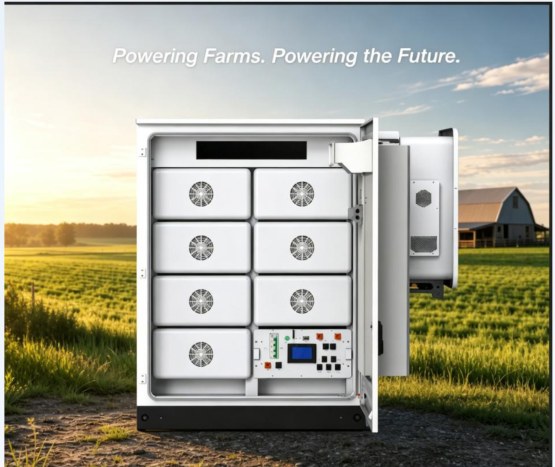
Phase-one capex, including marine freight and island installation, typically lands at US$330,000–420,000 for this configuration depending on mounting (ground, rooftop or floating) and on how much of the existing switchgear can be reused. Simple payback therefore sits at 2.6–3.3 years before any maintenance savings, and shorter if diesel is being bought at the top of its historical range. Systems of this size are usually procured as 30 kW / 64 kWh or 50 kW / 128 kWh building blocks paralleled together, which keeps spare-part inventory small and lets the resort expand without a redesign.
Sizing rules of thumb that hold up on real islands
- Start from the evening peak, not the daily total. The battery exists to serve the hours when PV is gone. Two to four hours of average load is the first-phase sweet spot; more than six hours rarely pays back on a grid-connected island.
- Cap PV at what the site can consume or store. Without export capability, PV beyond about 120% of daytime load is curtailed energy, not savings.
- Keep the largest genset for motor starts. The battery covers small transients; the genset still handles the 90 kW chiller start unless the inverter is explicitly rated for it.
- Size the inverter for surge, not for continuous. Chillers, pumps and compressors draw five to seven times rated current for a few seconds. A 30 kW inverter that cannot carry a 150 kW surge for 10 seconds is the wrong product, whatever the datasheet’s continuous rating says.
- Leave 20% MPPT headroom. Array expansion is nearly always the next request, and it is free at design stage.
What actually fails in tropical marine conditions
Most hybrid microgrid failures on islands are not power-electronics failures. They are enclosure, corrosion and service-logistics failures.
- Salt fog and corrosion. Specify C5-M rated coatings and stainless fasteners for anything within a few hundred metres of the shoreline; standard IP54 steel cabinets rust through at the seams within two to three years.
- Temperature derating. A cabinet rated 100 kW at 25°C delivers noticeably less at 45°C ambient in direct sun. Ask for the derating curve, not just the headline rating, and insist on shading or a ventilated enclosure.
- Condensation. Daily temperature swings inside unventilated cabinets produce internal condensation that shorts control boards. Look for anti-condensation heaters or sealed designs with pressure equalisation valves.
- Service distance. A technician flight and a boat ride cost more than the failed part. Remote diagnostics, Modbus register maps and a local spare-parts kit matter more on an island than a marginally better efficiency figure.
- Warranty logistics. Clarify in writing who pays return freight for a warranty module. Sea freight both ways can exceed the value of the component.
Reference systems in the Maldives and the Philippines
The configuration described above is not theoretical. Systems of this type are already operating in the markets where island economics are most acute, and the full reference list with capacities and commissioning years is on our project reference page:
- Sint Eustatius, Caribbean Netherlands — 500 kW / 1.29 MWh (2025) — 1,140 × 570 W modules, a 500 kW inverter and 1,290 kWh of lithium storage on a diesel-served Caribbean island, the configuration closest to the worked example above.
- Maldives, 1 MW / 748.9 kWh (2025) — 1,829 × 560 W modules, two 500 kW hybrid inverters and 748.9 kWh of LFP storage, commissioned on a resort island.
- Maldives, 50 kW / 90 kWh (2025) — 90 × 550 W modules with an 80 kWh lithium bank, the small-tier configuration used for guesthouse islands and dive operations.
- Philippines, 100 kW / 385 kWh (2026) — 180 × 650 W modules, two 50 kW hybrid inverters and 385 kWh of storage, a mid-tier system for an island-adjacent commercial site.
Alongside these, publicly documented projects confirm the direction of the market: the Taj Coral Reef resort in the Maldives runs a 1,058 kWp PV array with 810 kW / 1,223 kWh of storage in grid-forming mode, and multiple Philippine island resorts now operate 125 kW / 241 kWh all-in-one cabinets. The technology has moved past pilot stage; what separates projects now is sizing discipline and commissioning quality.
What to send us for a sized proposal
Four numbers and one photo. Peak demand in kW, daily energy in kWh, the largest motor or chiller start in kW, and the hours of backup the resort needs during a genset outage. The photo is the diesel plant nameplate or the monthly fuel log — either one tells us more about real operating hours than a year of estimates.
From those we return: array size, storage capacity, inverter count with surge ratings, a single-line diagram, the expected fuel displacement in litres per year, and a payback calculation on your own fuel price. Systems from 30 kW / 64 kWh building blocks up to 1 MW containerised configurations, production lead time one to two weeks, minimum order one set. Related reading: 30 kW three-phase hybrid inverter, 50 kW hybrid inverter for cold storage and island sites, and commercial and industrial energy storage systems.
Frequently asked questions
Can an island resort run entirely on solar and batteries?
Technically yes for defined windows, and many resorts now run 100% renewable for six to nine hours in the middle of the day. Running 24/7 without any generator requires enough storage for two to three consecutive cloudy days, which multiplies capacity four to six times and rarely pays back. The economic optimum is 50–80% diesel displacement with the gensets retained as backup.
How much diesel can a hybrid system actually displace?
For a first-phase system with battery storage and a proper EMS, 50–70% is realistic on a resort with a strong daytime load. Without grid-forming capability or without genset start/stop control, the figure drops to 25–35% because the diesel keeps idling at minimum load through the solar window.
What battery size does a 200-room resort need?
Budget 2–4 hours of average load for phase one — typically 400–800 kWh for a site consuming 2,000–3,000 kWh per day. The exact figure depends on the evening peak shape and on whether the battery is also expected to carry spinning reserve, which adds roughly the rating of the largest genset for 15–30 minutes.
Will running generators at low load damage them?
Yes. Sustained operation below about 40–50% of rating causes wet stacking, injector fouling and turbo glazing, and shortens overhaul intervals significantly. That is precisely why a hybrid control strategy must either load the genset into its efficient band or shut it down — idling it at 20% while the battery discharges is worse than either option.
What protection rating and corrosion class are needed for island installations?
IP54 minimum for outdoor cabinets, IP55 preferred, with C5-M corrosion protection and stainless-steel fasteners for coastal sites. Ask for the salt-spray test duration in hours rather than a claim of “anti-corrosion”, and confirm the cabinet’s derating curve at 45°C ambient.
How is a system shipped to an island, and how long does it take?
Production runs one to two weeks from confirmed order. Equipment ships as standard 20GP or 40HQ containers to the main port, then moves to the island by dhoni or landing craft; batteries travel as Class 9 dangerous goods with UN 38.3 test summaries, MSDS and a DG declaration prepared before booking. Modular 30 kW / 64 kWh blocks are used specifically because they can be handled without heavy lifting equipment at the jetty.
Get a Quote for Your Solar Project
Tell us your destination market and requirement. We reply within 24 hours on business days with specifications, certificates and pricing — no obligation.
Get the 2026 EverRay Product Catalogue
25 pages · solar modules 440-735W, hybrid inverters 2-150kW, LiFePO4 batteries, home & C&I energy storage, solar pumps, lighting and PV cleaning