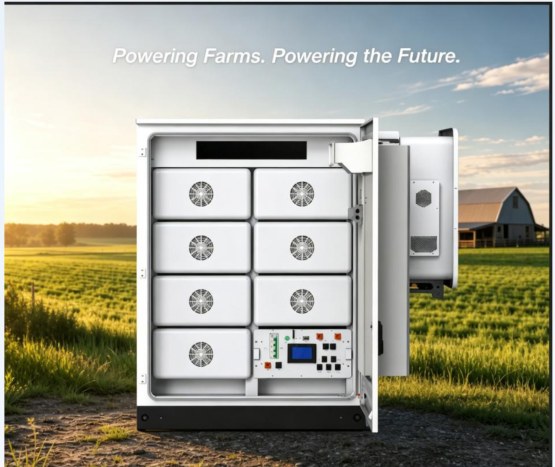
A 30kW / 64kWh battery system is the smallest configuration that still behaves like commercial storage rather than a big home battery. It sits behind a 30kW three-phase hybrid inverter, stores 64kWh of LiFePO4, and covers the gap that most small sites actually have: a two-to-three hour evening peak, a demand charge that punishes one bad half-hour, or a grid that drops often enough to cost you production.
It is also the size where buyers make the most expensive mistakes, because 30kW and 64kWh describe two different things and the sales conversation usually blurs them. This guide separates the two, shows what 64kWh does for a small factory, a hotel and a resort, and gives the arithmetic you need before you ask for a quotation.
Short answer: a 30kW battery storage system pairs a 30kW three-phase hybrid inverter with a 64kWh LiFePO4 rack. At full 30kW output it runs 2.1 hours; on the 8–12kW evening load that most small factories and hotels actually carry, it covers 5–8 hours. Commercial cabinets ship from China at USD 110–160 per kWh FOB — a 64kWh system with the inverter included sits at the top of that band because volume is low. Minimum order 1 set, lead time 1–2 weeks for standard configuration.
| 30kW battery storage | Specification |
|---|---|
| Rated power | 30kW continuous, three-phase, 100% unbalanced output, parallel to 300kW |
| Usable energy | 64kWh (204.8V / 314Ah high-voltage rack, 64.3kWh nominal) |
| Runtime at full load | 2.1 hours at 30kW; 4.3 hours at 15kW; 8.5 hours at 7.5kW |
| Price band | USD 110–160 per kWh FOB for C&I cabinets; 64kWh with inverter at the top of the band |
| Minimum order | 1 set |
| Lead time | 1–2 weeks, standard configuration |
| Best fit | Small factory, hotel, resort or cold store with a 2–3 hour evening peak |
What 30kW and 64kWh actually mean
30kW is the inverter rating — the maximum power the system can push into your building or draw from the grid at any instant. 64kWh is the battery capacity — the total energy it can store. Divide one by the other and you get 2.1 hours: at full 30kW output the battery is empty in just over two hours.
Two numbers follow from that, and both matter commercially:
- Usable energy is not 64kWh. At 90% depth of discharge and roughly 95% round-trip efficiency, a 64kWh system delivers around 52–55kWh to your loads. Size your peak window on the lower number.
- The discharge rate is gentle. 30kW on 64kWh is about 0.47C — well inside the comfortable range for LFP, which is why this configuration holds its cycle life instead of cooking itself in year two.
What is inside the package
| Element | Specification |
|---|---|
| Inverter | 30kW three-phase hybrid, 3 MPPT, 150–850V PV window, 98.5% max efficiency, 100% unbalanced output, parallel up to 10 units (300kW) |
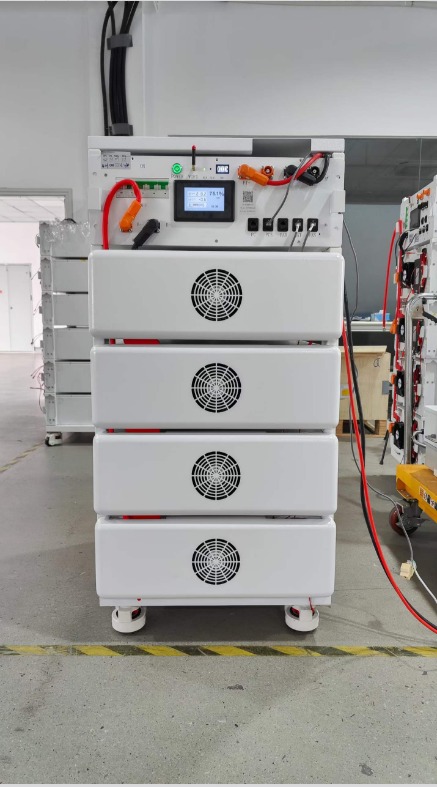
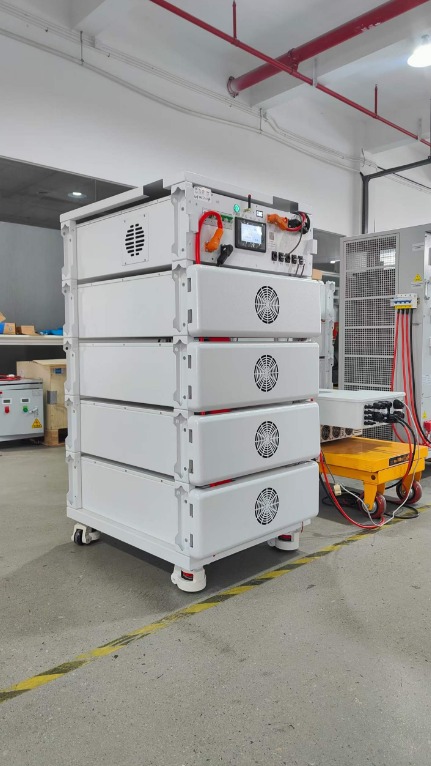
| Battery | 64kWh LiFePO4, 204.8V / 314Ah high-voltage rack (four 51.2V modules in series, 64.3kWh actual), ≥10,000 cycles, integrated BMS |
| Enclosure | IP65 inverter, cabinet or rack installation; air-cooled by default |
| Control | EMS with time-of-use scheduling, peak shaving and backup modes; Wi-Fi / 4G remote monitoring |
| Warranty | 5 years + 5 years extended on the battery, 10-year design life |
The system runs on the 30kW three-phase hybrid platform (EVR-H30K, also supplied as the Deye SUN-30K-SG02HP3-EU-AM3) with high-voltage LFP racks from 64kWh to 225kWh on the same inverter.
Who this size fits — and who it does not
| Site | Typical peak | What 64kWh buys you | Verdict |
|---|---|---|---|
| Small factory, one or two shifts | 60–120kW | Shaves 25–30kW off the monthly peak for 2 hours; carries the critical line through short outages | Strong fit |
| Hotel, 40–80 rooms | 40–70kW | Evening peak shifted, lifts, corridor lighting and cold room backed up for 4–6 hours | Strong fit |
| Resort or lodge, weak grid | 30–60kW | Two to four hours of diesel-free evening supply; pairs well with 20–30kW of PV | Strong fit |
| Cold storage warehouse | 80–150kW | Compressor surge exceeds 30kW; needs 50kW or 100kW class | Too small |
| Restaurant or retail unit | 15–30kW | Oversized unless outages are frequent; 32–48kWh is usually enough | Probably oversized |
Three worked examples
The numbers below are illustrative, built on stated tariffs so you can substitute your own. They are not quotations.
1. Injection-moulding workshop, 80kW peak
The site runs two shifts, peaks at 80kW between 18:00 and 21:00, and pays a demand charge of $12 per kW per month plus $0.14/kWh. A 30kW system shaving the evening peak cuts billed demand by 30kW:
- Demand charge: 30kW × $12 = $360 per month
- Time-of-use arbitrage: ~55kWh per day shifted from $0.18 peak to $0.09 off-peak, 26 days = ~$129 per month
- Total benefit around $490 per month, $5,900 per year
Against a delivered system cost in the mid-teens of thousands of dollars, payback lands around 2.5–3.5 years before any incentive. The same battery also carries the control room, lighting and one production line through a grid dip, which is the argument that usually closes the decision.
2. 60-room hotel
Peak is 45–55kW in the evening: air conditioning, kitchen, laundry, lifts. Sixty-four kilowatt-hours covers roughly one hour at full peak, or — more usefully — 20kW for three hours, which is exactly the evening shape. On the backup side the same system runs corridors, lifts, front desk, kitchen cold room and the server rack for four to six hours.
The financial case is weaker than the factory case in pure demand-charge terms, usually three to five years. What changes the decision is what an outage costs a hotel: rooms refunded, guests relocated, reviews written. That number never appears on the electricity bill, but it is the one general managers recognise.
3. Island resort running diesel
Diesel at $0.35–0.50/kWh changes the arithmetic completely. If the genset carries 40kWh of evening load that the battery and 25kW of PV can cover, the saving is $14–20 per day before maintenance and fuel logistics. Over a year that is $5,000–7,000, plus fewer generator running hours and less fuel handling on site.
Here the 30kW inverter matters as much as the battery: it is the piece that lets PV, battery and genset coordinate without a second control cabinet. For the full architecture of such a system — grid-forming batteries, genset minimum load and phase sizing — see solar diesel hybrid microgrid for island resorts.
64kWh battery or a diesel generator?
For a hotel or resort that already owns a genset, the honest answer is usually “both, with different jobs”. A generator is cheap per kW and expensive per kWh; a battery is the reverse.
| 30kW / 64kWh battery | 60kVA diesel genset | |
|---|---|---|
| Response | Milliseconds, silent, no start cycle | 10–30 seconds to take load |
| Running cost | Off-peak electricity, roughly 85–90% round-trip efficiency | Fuel plus servicing; partial-load running is inefficient and wears the engine |
| Daily duty | Designed for two cycles a day, every day | Happier at 70–80% load for limited hours |
| Maintenance | Monitoring, occasional firmware and inspection | Oil, filters, coolant, injectors, fuel polishing |
| Noise and emissions | None on site | Needs acoustic enclosure and exhaust routing |
| Best role | Peak shaving, solar shifting, short outages | Multi-day autonomy, heavy motor starting |
The workable pattern for most resorts is a battery covering the evening peak and the first hours of an outage, with the genset picking up if the outage runs past four hours. That combination cuts diesel hours by 60–80% without giving up multi-day resilience — and it keeps the generator in the load range where it is actually efficient.
Sizing arithmetic you can do before you call anyone
- Find your maximum demand in kW — it is on the utility bill, or on the meter if you have interval data. This is what a demand charge is based on, and it is what the shaving logic targets.
- Find the load in your peak window — the three or four hours where the bill is highest. Multiply average kW in that window by hours; that is the kWh you need to move.
- Add the backup requirement — critical kW × hours of autonomy. Do not include the whole building; include what cannot stop.
- Compare with usable capacity — 64kWh nominal gives roughly 52–55kWh usable. If your peak window needs more, either shave a narrower window or move to the 80–128kWh racks on the same inverter.
- Check the surge — motors, compressors and pumps draw three to five times rated current at start. A 30kW inverter carries them only with soft starters or staggered starts.
If you want the longer version of this method, including how capacity, PCS rating and cooling interact in bigger systems, see our C&I storage sizing and cost guide.
Site requirements people forget
- Heat. The racks are air-cooled. Keep them in a ventilated room below 40°C; in a 45°C plant room, cycle life falls away quickly. Above that, specify the liquid-cooled cabinet instead.
- Clearance. Allow 800mm in front of the cabinet for service and airflow, and never box it into a corner behind stored goods.
- Separate backup panel. Decide which circuits are backed up and put them on their own distribution board. Retrofitting this later costs more than doing it during installation.
- Neutral and grounding. Three-phase four-wire 400V, with the neutral sized for unbalanced load — the inverter can run 100% unbalanced, but the wiring has to support it.
- Commissioning time. Two to four hours for a single cabinet, plus a full charge-discharge cycle to confirm capacity.
Five mistakes that ruin a 64kWh project
- Sizing on kWh and ignoring kW. A site that needs 45kW at peak cannot be served by a 30kW inverter, however many kWh it stores.
- Assuming 64kWh is 64kWh. Depth of discharge, efficiency and end-of-life capacity all reduce what you can actually use. Plan on 52–55kWh.
- Forgetting motor surge. The compressor that starts every twenty minutes is the load that trips the inverter, not the average.
- Backing up the whole building. The fastest way to double the quote and halve the payback. Back up the critical panel only.
- Installing in a hot plant room. Air-cooled racks in 45°C ambient will not deliver their cycle life, and no warranty argument will fix a design mistake.
When 64kWh is not enough
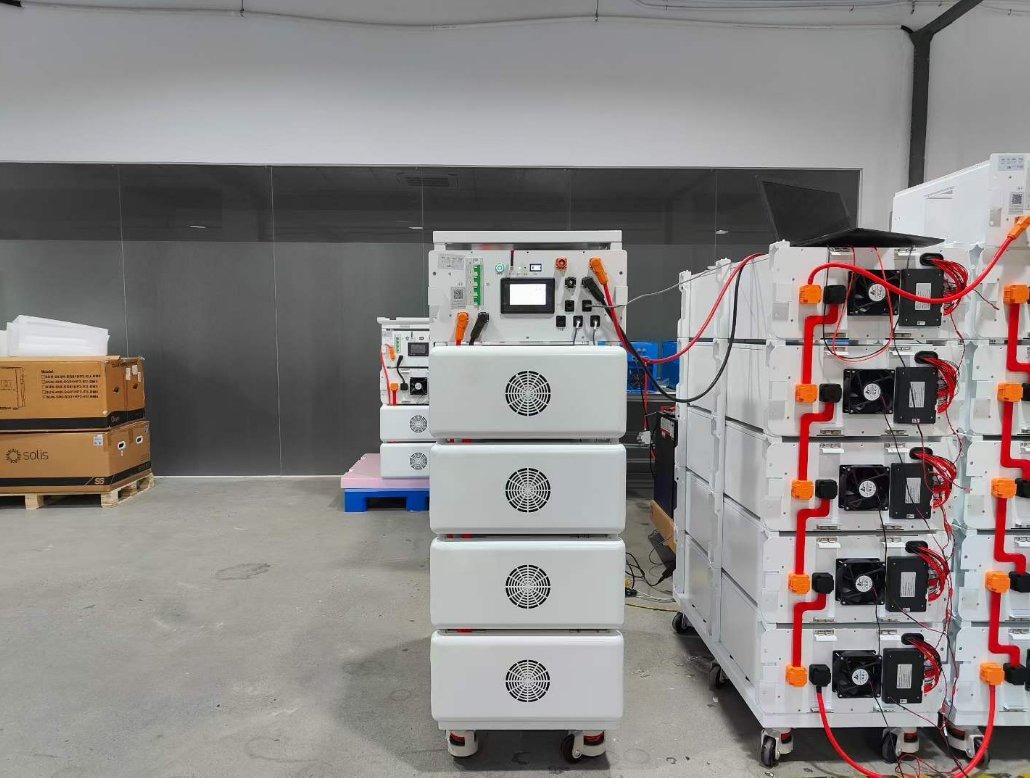
Two clear signals: your peak window needs more than 55kWh of usable energy, or your maximum demand is well above 30kW. In both cases the same inverter platform accepts larger racks up to 225kWh, and above that the commercial and industrial energy storage range moves to 100–261kWh cabinets and containerised systems. For sites around 60kW peak, the 60kW three-phase system is usually the better starting point.
From 64kWh to 500kWh: the C&I capacity ladder
Most buyers arrive asking for "a 100kWh to 500kWh C&I energy storage system" without knowing which rung they need. The ladder below maps daily consumption and peak demand to a typical configuration — use it to sanity-check any quote you receive, ours included. If you are still weighing form factors, our C&I storage selection guide walks through the load data and tariff structure to collect before you compare cabinets.
| Daily consumption | Peak demand | Typical configuration | Form factor |
|---|---|---|---|
| 150–250 kWh | 20–40 kW | 30kW / 64kWh | Wall or floor cabinet |
| 250–450 kWh | 40–60 kW | 50kW / 100kWh | Rack cabinet |
| 450–900 kWh | 60–120 kW | 100kW / 215–261kWh | Liquid-cooled cabinet |
| 900–2,000 kWh | 120–300 kW | 250kW / 500kWh+ | Containerized or multi-cabinet |
Two rules keep the ladder honest. First, size on the peak you actually hit, not the sum of nameplate loads — nameplate totals overstate demand by 30–50% in most factories. Second, battery capacity is not usable capacity: at 90% depth of discharge a 64kWh pack delivers about 58kWh, so round up when the shaving window is longer than two hours. All tiers ship as one set with a 1–2 week lead time, and the same inverter platform carries from the 64kWh starter unit to the 500kWh container — so a site can grow without changing the control layer. Compare configurations on the C&I energy storage page, or send your bill for a sized proposal.
Frequently asked questions
How long will a 30kW / 64kWh system run my site? At full 30kW output, just over two hours. At a realistic evening load of 10–15kW, five to six hours. The number that matters is your critical load, not the inverter rating.
Can it run air conditioning? Yes, with soft starters and staged starts. A 30kW inverter will not start three large compressors simultaneously, and no honest supplier will tell you otherwise.
Can I expand it later? Yes. Up to ten inverters parallel on one system (300kW), and the battery side scales from 64kWh to 225kWh on the same inverter.
Is 64kWh enough for a 100-room hotel? Usually not on peak alone — a hotel that size often peaks at 80–120kW. It is enough for backup of critical circuits, and for peak shaving if the shaved window is narrow. Sizing on the bill settles it.
Grid-tied, off-grid or both? Both. The platform runs grid-tied with backup, or off-grid with a generator, and switches automatically. Tell us which mode you need at quotation stage because the wiring and the EMS profile differ.
What warranty comes with it? Five years plus a five-year extension on the battery, with a ten-year design life at the specified cycle count. Test data for your batch ships with the packing list.
Send us one month of electricity bill and your critical load list and we will return a sized configuration with the shaving arithmetic and a payback estimate within 48 hours — including the honest case where 64kWh is too small. Talk to our storage engineers, or see the full platform on the C&I energy storage page.
Get a Quote for Your Solar Project
Tell us your destination market and requirement. We reply within 24 hours on business days with specifications, certificates and pricing — no obligation.
Get the 2026 EverRay Product Catalogue
25 pages · solar modules 440-735W, hybrid inverters 2-150kW, LiFePO4 batteries, home & C&I energy storage, solar pumps, lighting and PV cleaning