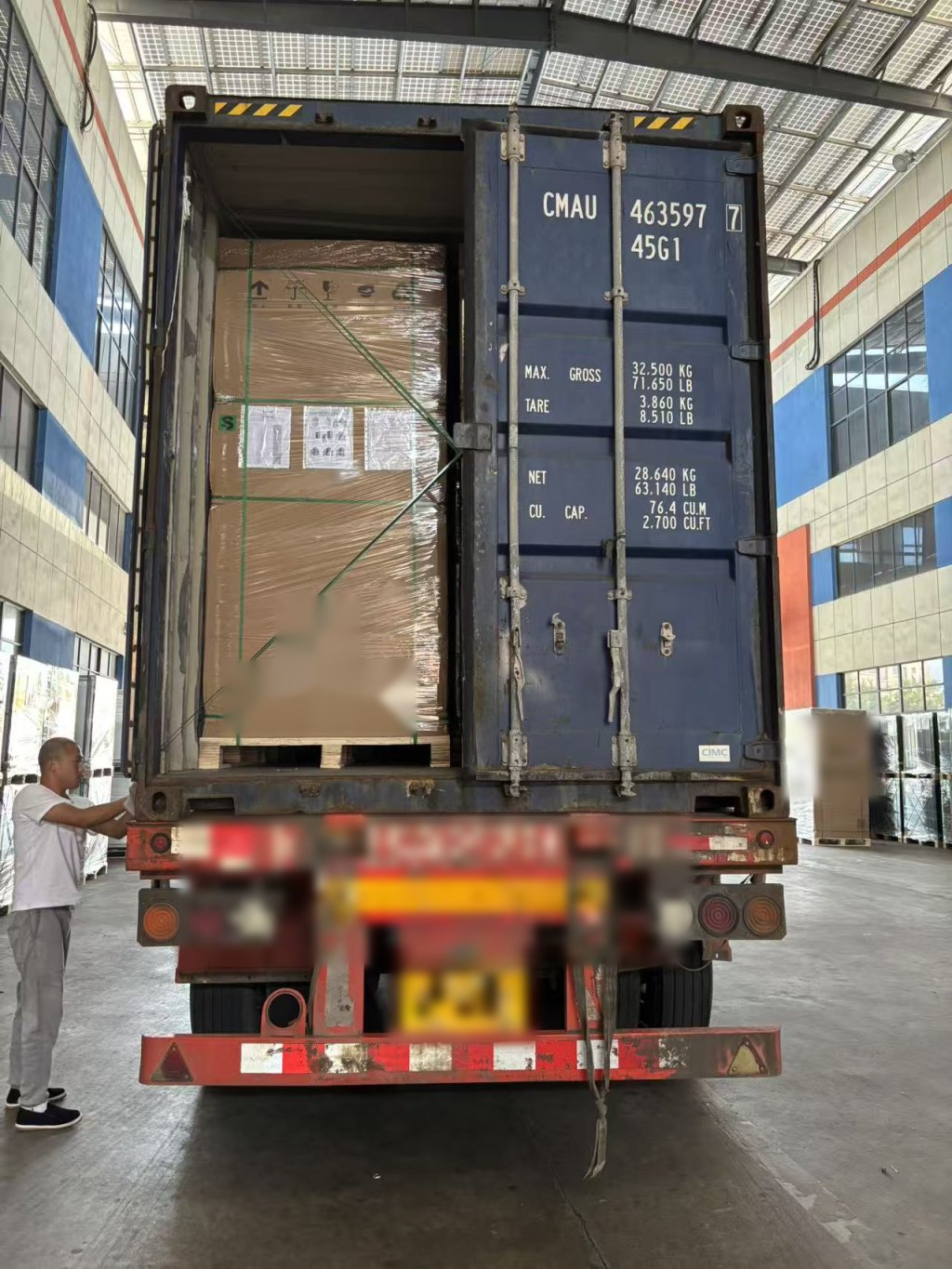
Ask any experienced importer about their worst shipping story and the odds favour lithium: a container held at port, a pallet rejected by the airline, or a client fined because the paperwork said “battery packs” while the box said “power bank samples”. Almost all of it traces back to one document family — UN 38.3 — and to how well the seller and buyer share the responsibilities that come with it.
Shipping documents get the battery to Europe; the EU battery passport is what lets it clear customs after 18 February 2027 — plan both tracks together.
This guide explains what UN 38.3 actually certifies, the complete document set for a lithium shipment, how state-of-charge rules differ between sea and air, and where buyers on FOB and CIF terms accidentally take on dangerous-goods liability they never intended to. It is the transport companion to our certifications guide.
What UN 38.3 Actually Tests
UN 38.3 is the United Nations Manual of Tests and Criteria subsection that every lithium cell and battery must pass before it may be transported — by any mode, anywhere in the world. It is not a quality mark; it is a survival standard. The eight tests simulate the abuses of transport:
- T1–T3: altitude, thermal and vibration — low-pressure simulation, temperature cycling from -40°C to +72°C, and vibration reproducing truck and aircraft transport.
- T4: shock and T5: external short circuit — mechanical impact and a short at less than 0.1 ohm; no fire, no rupture allowed.
- T6: impact/crush and T7: overcharge — mechanical abuse tolerance and charger-fault simulation.
- T8: forced discharge — cells driven to depletion to prove no thermal event.
Tests are run at successive production prototypes, and every new cell type must requalify. The output document you receive is the UN 38.3 Test Summary — since 2020 a mandatory, standardised summary that carriers and authorities can request on sight.
The Complete Document Set for a Lithium Battery Shipment
| Document | What it proves | Issued by |
|---|---|---|
| UN 38.3 Test Summary | Battery design passed all eight transport tests | Accredited test lab |
| MSDS / SDS | Chemistry, hazards, handling, emergency measures | Manufacturer |
| DG Declaration (DGD) | Shipment classified, packed, marked per IMDG/IATA DGR | Shipper of record |
| Packing certificate / photo set | UN-certified boxes, correct inner packaging, labels applied | Freight forwarder / factory |
| Class 9 labels & UN number marks | Correct outer marking (e.g. UN3480, UN3481) | Factory per packing instruction |
| Cargo aircraft only statement (air) | Confirms CAO-only eligibility where required | Shipper of record |
The two UN numbers matter when you book freight: UN 3480 is lithium-ion batteries shipped alone; UN 3481 is batteries packed with or inside equipment. The packing rules, quantity limits and paperwork differ between them, and a forwarder will ask which you have before quoting anything.
State of Charge: The Rule That Surprises First-Time Shippers
For air freight, lithium-ion cells and batteries must be at or below 30% state of charge (Section II and IA/IB under IATA DGR). You cannot simply “top them up before flight” — it is the opposite, and shippers must be able to demonstrate compliance. Sea freight has no SOC limit under IMDG, which is one reason ocean dominates battery logistics. Practically: a factory that regularly exports batteries has a discharge-and-verify workflow and can schedule production around it; one that ships batteries occasionally will discover this rule at the airport, at your expense.
Sea, Air or Rail: Choosing the Mode
| Mode | Typical transit | Constraint | Best for |
|---|---|---|---|
| Sea FCL | 20–40 days | Class 9 DG booking, limited carrying lines | Full containers of batteries — the default for solar+storage orders |
| Sea LCL | 25–45 days | Fewer forwarders accept DG consolidation | Pallet-quantity orders |
| Air | 5–10 days | SOC ≤30%, strict packing instructions, high cost | Urgent samples and small spares |
| Rail (China–EU) | 15–25 days | DG acceptance varies by route and season | EU-bound projects needing middle ground |
For mixed solar orders — modules, inverters, one pallet of batteries — the common solution is to split the shipment: batteries in a dedicated DG booking (or even a separate small container) and the non-hazardous goods on the cheapest consolidated service. Splitting costs a little more in freight and saves weeks of port time.
Packaging and Marks: What Inspectors Check First
Inspectors and airline acceptance staff work from a short list, and they check it in seconds: UN-certified outer packaging with its mark intact; correct Class 9 lithium label; the UN number and shipping name; inner packaging separating and cushioning each battery; and for UN 3480, the “cargo aircraft only” label when applicable. Photographs of every pallet, taken before the container door closes, are the cheapest insurance in this trade — when a port authority raises a query three weeks later, a timestamped photo set usually ends the conversation.
Who Carries the Risk on FOB, CIF and DDP Terms
Under FOB, the buyer nominates the forwarder — which means the buyer’s forwarder must be able to handle Class 9 dangerous goods. Sending batteries to a general-cargo forwarder “because they are cheaper” is the classic first-import mistake. Under CIF, the seller books the DG-capable freight and carries the export leg; under DDP, the seller also takes import clearance, which for lithium into strict jurisdictions (the EU especially, with its import regime under Regulation 2023/1542 — see our EU battery guide) is only workable with a vetted import partner. Match the Incoterm to the DG competence of whoever is actually booking the freight.
The Five Most Common Causes of Delay — and Their Fixes
- Test summary does not match the shipped model — fix: cross-check model numbers on the UN 38.3 summary, MSDS and packing list before the container is stuffed.
- Forwarder cannot take Class 9 — fix: confirm DG capability at booking, not at the port gate.
- SOC above 30% for air — fix: schedule discharge-and-verify into production planning.
- Missing or damaged marks — fix: require pre-closure photo sets as a condition of stuffing.
- Destination port restrictions — fix: verify the discharge port accepts Class 9 and any seasonal limits before chartering.
Frequently Asked Questions
Does UN 38.3 certification expire?
The test result does not carry an expiry date, but it is tied to the design type: any significant change to cells, protection circuitry or casing requires retesting. The Test Summary itself must be reissued when information changes, and carriers increasingly ask for summaries dated within recent years — a factory shipping current production will have both in order.
Can lithium batteries ship with solar panels in one container?
Yes, and it is standard practice — modules are non-hazardous, so the batteries travel as a declared Class 9 portion within the container, properly segregated and marked. The declaration covers the whole container’s dangerous-goods content, which is why the packing plan should be agreed before, not after, the container is loaded.
Who is the “shipper of record” for dangerous goods?
The entity whose name appears on the DG Declaration and who certifies the shipment is classified, packaged, marked and in proper condition. Under FOB with the buyer’s forwarder, that is usually the factory or its forwarder on the export leg — but the buyer as consignee still carries obligations at discharge and import. Ask your supplier explicitly who signs the DGD; “we will handle it” is not an answer.
What happens if a shipment is rejected at the port?
Typically the container is moved to a DG yard, the discrepancy is corrected (re-labelling, repacking or document amendment), and the shipment rebooks — at a cost of storage, drayage and rebooking fees that easily reaches four figures. Pre-shipment photo sets and a document checklist cost almost nothing, which is why we treat them as standard procedure for every battery container that leaves our partner factories.
Ship Your Batteries Without the Drama
Ordering batteries from us means the full transport document set — UN 38.3 test summary, MSDS, DG declaration support, packing photos — is prepared before the container closes, and we book freight with forwarders who actually carry Class 9. See the battery range or send us your requirements; answers within 24 hours.
Get a Quote for Your Solar Project
Tell us your destination market and requirement. We reply within 24 hours on business days with specifications, certificates and pricing — no obligation.
Get the 2026 EverRay Product Catalogue
25 pages · solar modules 440-735W, hybrid inverters 2-150kW, LiFePO4 batteries, home & C&I energy storage, solar pumps, lighting and PV cleaning