A 100kWh–500kWh C&I energy storage system is the workhorse size of commercial storage: big enough to shave a factory’s demand peaks, back up its production line or soak up rooftop solar, small enough to install without a substation upgrade. It is also the size range where sizing mistakes are most expensive — buy 100kWh for a 400kWh problem and the system pays for itself too slowly to excite anyone; buy 500kWh for a 100kWh problem and you have donated the difference to your supplier.
This guide turns sizing into arithmetic you can do on a napkin, breaks down where the money actually goes, and ends with the levers that move payback from eight years to four. If you are still deciding whether storage suits your business at all, read the C&I storage buyer’s guide first; here we assume the answer is yes and focus on how much.
What kW and kWh Actually Mean in a C&I Energy Storage System
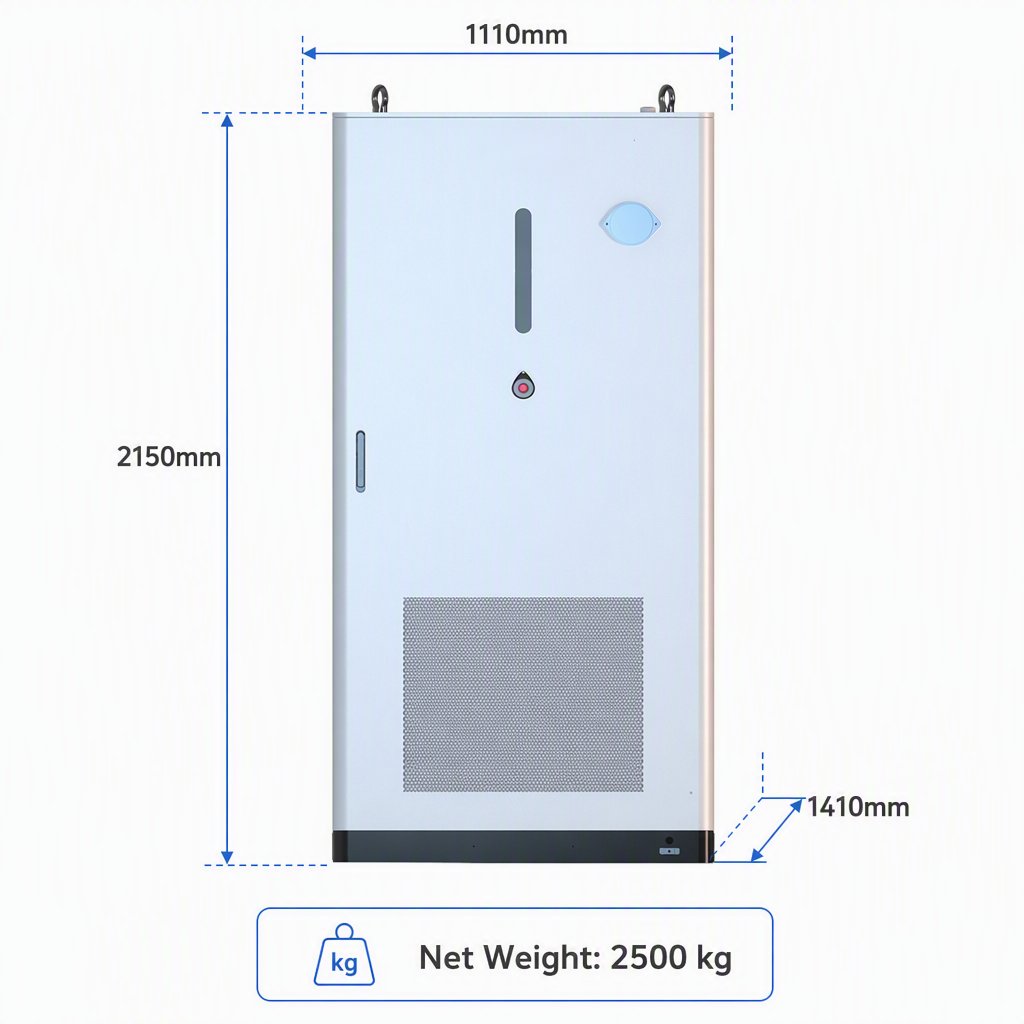
Two numbers describe every system. Energy capacity (kWh) is the size of the fuel tank — how much electricity it can hold. Power rating (kW) is the width of the pipe — how fast it can charge or discharge. A 200kW / 400kWh system can deliver 200kW for two hours. The ratio between them is the C-rate: 400kWh delivering 200kW is a 0.5C system. Commercial LFP chemistry is comfortable at 0.5C continuous, which is why most products in this class ship as matched pairs — a 100kW/215kWh cabinet, a 125kW/261kWh cabinet, and so on.
The sizing mistake to avoid is buying on kWh alone: if your peak problem is a 300kW spike for 20 minutes, a system that can only discharge 150kW misses the point no matter how big its tank.
The Three Sizing Scenarios
Scenario 1: Peak shaving and demand-charge reduction
In markets with demand charges or capacity tariffs (much of Latin America, Africa’s industrial estates, parts of Asia), the battery discharges when the factory’s meter spikes. Size it from your interval data: find the demand target you want to hold, multiply the excess above it by the hours it occurs. A plant that peaks at 480kW against a 300kW target for up to two hours needs roughly 360kWh of usable energy — and a power rating of at least 180–200kW, plus 15% margin for battery ageing.
Scenario 2: Backup for critical loads
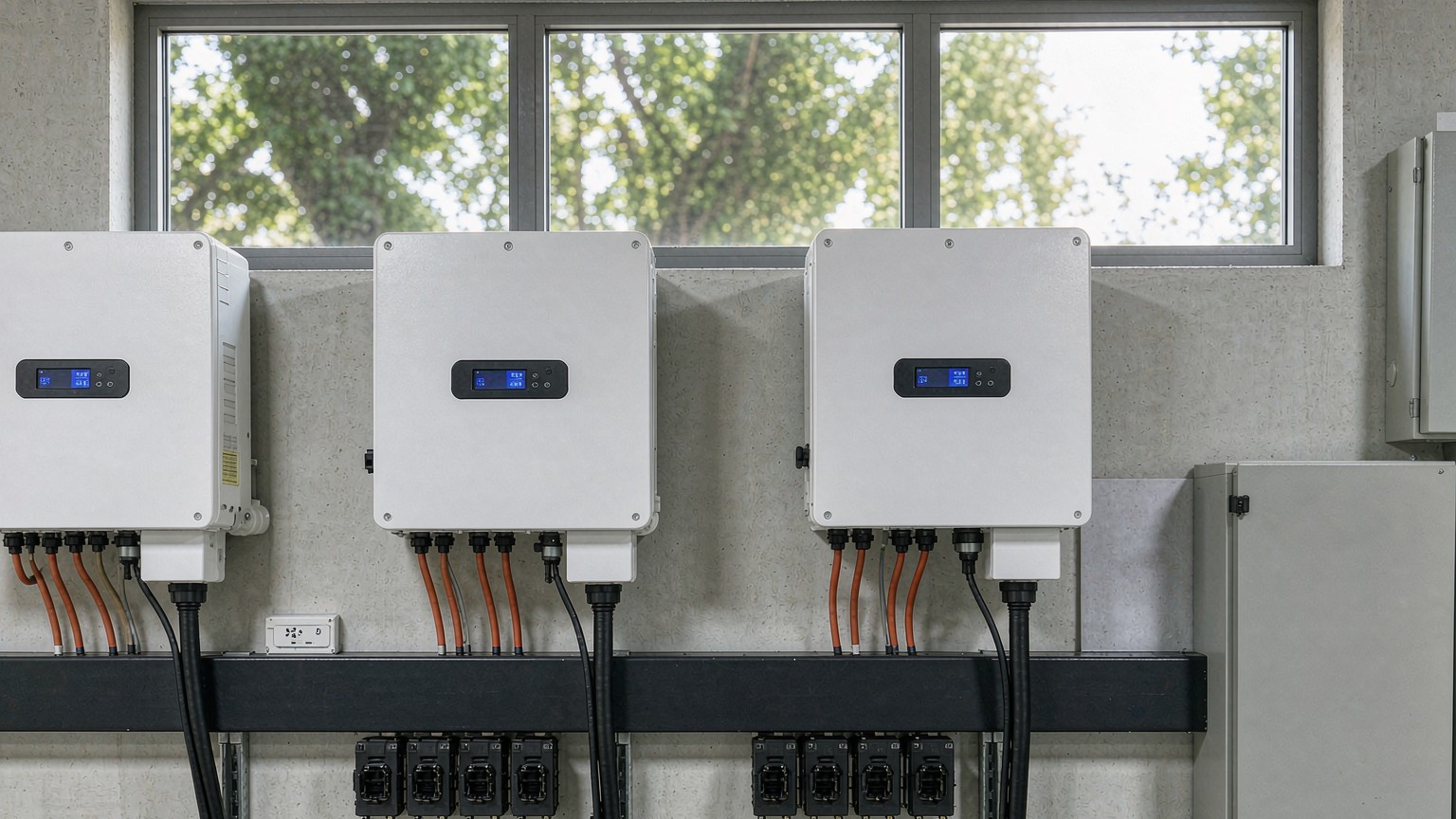
Here the question is not tariff but continuity. List the loads that must survive an outage — usually lighting, servers, refrigeration, one production line — note their combined kW and the hours of autonomy you require. A workshop with 80kW of critical load and four hours of autonomy needs about 320kWh usable. A hybrid or off-grid-capable PCS matters here, which is why we match storage cabinets with our hybrid inverter range when backup is the priority.
Scenario 3: Solar self-consumption
When a rooftop PV system is already exporting energy for free (or curtailed), the battery shifts the surplus to the evening. Size from the daily surplus curve: a 250kW rooftop producing 1,000kWh a day with 300kWh typically exported before 6pm justifies a 250–300kWh battery and a 150kW converter — enough to catch the midday hump and discharge it through the evening tariff window.
A Worked Example From Three Industries
| Site | Driver | Sizing result | Configuration |
|---|---|---|---|
| Plastics factory, 1.2MW peak | Demand charge above 800kW | 200kW × 2h + margin | 1 × 215kWh cabinet (100kW) + expansion |
| Cold-storage warehouse | Backup for refrigeration | 120kW × 4h | 500kWh liquid-cooled container, dual PCS |
| Textile mill with 400kW rooftop PV | Solar self-consumption | Shift 350kWh/day | 2 × 261kWh cabinets, AC-coupled |
Notice the pattern: the driver decides the shape (power-heavy for spikes, energy-heavy for autonomy or shifting), and the product follows the driver — never the reverse.
What Drives the Cost of a C&I Energy Storage System
| Cost block | Share | What moves it |
|---|---|---|
| Battery pack + BMS | 55–65% | Cell tier, cycle-life warranty, thermal design |
| PCS / hybrid inverter | 12–18% | Power rating, grid-code features, backup capability |
| Enclosure and thermal | 8–12% | Outdoor IP rating, air vs liquid cooling |
| EMS and metering | 4–6% | Open protocols vs vendor lock-in |
| Install, commissioning, permits | 10–20% | Site works, local electrician rates |
Quotation comparisons go wrong in the first row: two “215kWh” cabinets can use cells with a 3,000-cycle or a 8,000-cycle rating, and only the datasheet and warranty letter reveal which you bought. Our rule when quoting is to state cell brand, cycle-life warranty at defined depth of discharge, and the exact usable capacity — not the nominal one — because usable capacity after inverter and BMS reserves is typically 90–95% of nominal.
The Levers That Shorten Payback
- Stack revenue streams — a system sized for peak shaving that also provides backup and solar shifting earns from three problems at once; sizing for only one stream is the most common leave-on-the-table error.
- Right-size the power electronics — over-specifying the PCS wastes money on the most expensive per-kW component.
- Buy the expansion path, not the expansion — modular cabinets let you install 215kWh now and add a second unit when the tariff or the factory grows.
- Insist on remote monitoring — a system nobody watches degrades quietly; open-protocol EMS keeps your integrator honest.
- Check the local incentive stack — several markets subsidise commercial storage or tax it lightly; the hardware is identical, the business case is not.
Frequently Asked Questions
How big a C&I energy storage system does a mid-size factory need?
Most factories in the 100kWh–500kWh band are driven by either a demand target or 2–4 hours of critical backup. Pull one month of interval meter data, identify the excess above your target demand and the hours it persists — that arithmetic usually lands within one cabinet size of the right answer. Send us the load curve and we will return a sized configuration free of charge.
Can I start with one cabinet and expand later?
Yes, if you buy a modular architecture: stackable high-voltage cabinets are designed to parallel in blocks, sharing a PCS or each carrying its own. The two things to decide at day one are the communication bus (so new cabinets speak to the old) and the electrical space for a second unit. Retrofitting capacity into a closed architecture is where budgets die.
What maintenance does a commercial storage system need?
Very little, but not zero: annual thermal inspection, firmware updates, occasional torque checks on power terminations, and monitoring reviews. Systems in dusty or coastal environments need filter and enclosure checks twice a year. Budget roughly one technician-day per cabinet per year and the warranty stays intact.
How long is the typical payback period?
Anywhere from three to eight years depending entirely on the tariff structure: aggressive demand charges or big solar surpluses push it toward three, flat tariffs push it toward “never”. The sizing exercise above is really a payback exercise — which is why we insist on seeing your interval data before recommending a size rather than quoting a catalogue number.
Get Your C&I Energy Storage System Sized
Send us one month of interval data (a utility export or even photos of your meter log) plus your tariff, and we will return a sized configuration with payback arithmetic — including the honest case for a smaller system than you expected. If the project lands at the small end, the 30kW / 64kWh system guide covers that size in detail. See the C&I storage range or contact us; replies within 24 hours.
Get a Quote for Your Solar Project
Tell us your destination market and requirement. We reply within 24 hours on business days with specifications, certificates and pricing — no obligation.
Get the 2026 EverRay Product Catalogue
25 pages · solar modules 440-735W, hybrid inverters 2-150kW, LiFePO4 batteries, home & C&I energy storage, solar pumps, lighting and PV cleaning