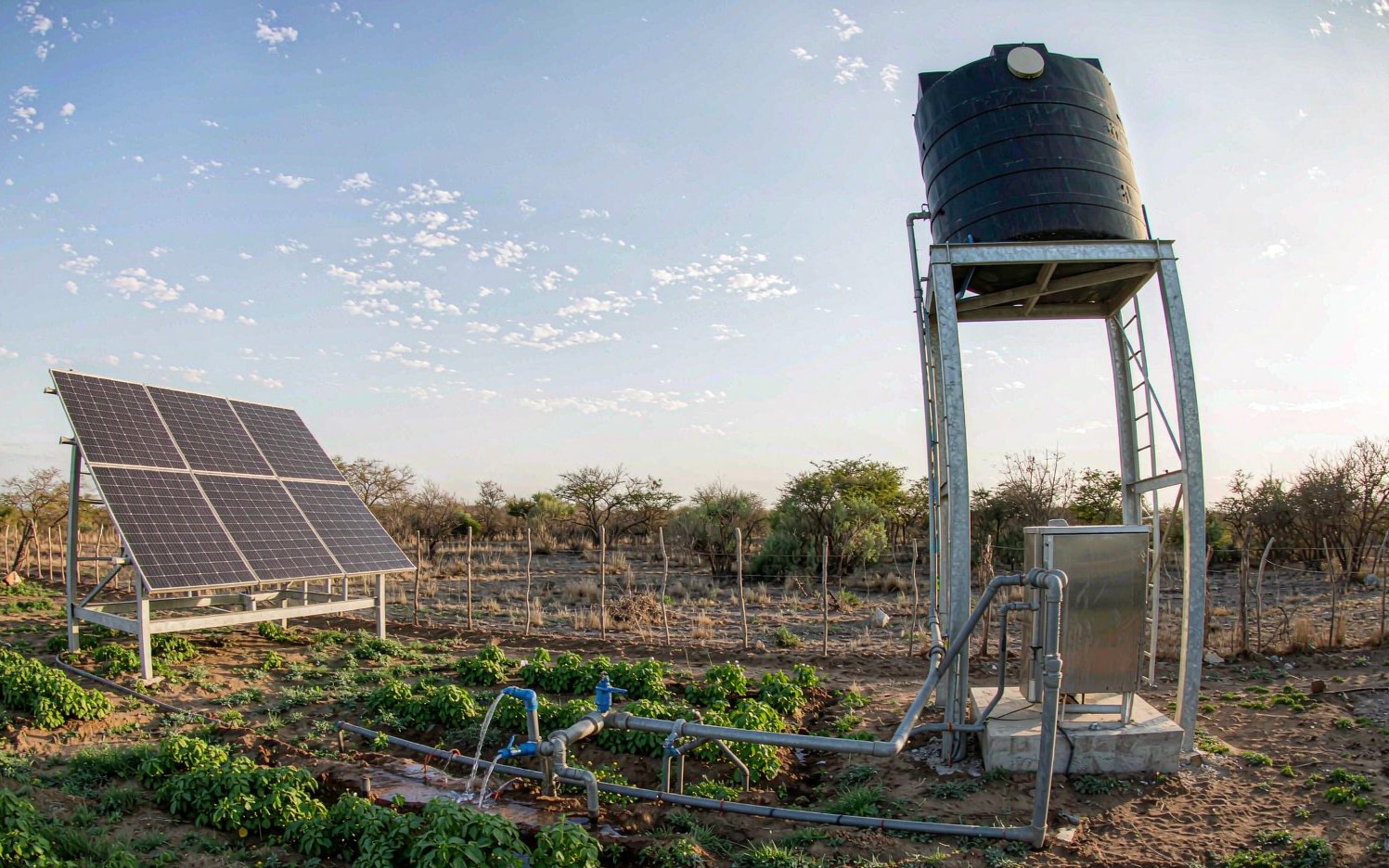
An agricultural solar water pump system lives or dies on two numbers that are decided before anyone opens a catalogue: total dynamic head and daily water requirement. Get those right and even a modest system transforms a farm — reliable water with no fuel, no grid and almost no running cost. Get them wrong and you own the world’s most expensive garden ornament. This guide walks through the sizing arithmetic with a worked example, then covers pump types, array matching and what changes between crops and climates. Our solar pump system range covers 0.37–11kW; this article covers how to choose within it.
Head and Flow: The Two Numbers That Decide Everything
Total dynamic head (TDH) is the total vertical distance the pump must lift water, plus friction losses in the pipes. Add three parts: the static lift from the water surface (not the well top — measure to the lowest seasonal water level) to the discharge point, the pressure head if the water feeds a tank or drip system (1 bar ≈ 10 metres of head), and friction loss, roughly 2–10% of the vertical lift for well-sized pipes — more if the pipe is undersized.
Daily flow is what your crop and household actually need per day, in cubic metres or litres. A rough planning basis: drip-irrigated vegetables 25–60m³/ha/day in season, field crops less, livestock a few litres per head per day, household use 0.5–1m³ per family. Your agronomist’s number beats any table; these are for orientation only.
Sizing a Solar Water Pump System in Five Steps
Worked example — a 3-hectare drip-irrigated vegetable plot with a 25-metre deep borehole, tank on a 4-metre stand:
- Step 1: Daily water need. 3ha × 40m³/ha = 120m³ per day at the height of the season.
- Step 2: Pumping window. With 5.5 peak sun hours, the pump must deliver 120 ÷ 5.5 ≈ 22m³ per hour.
- Step 3: Total dynamic head. 25m lift + 4m tank stand + 15m pressure head for the drip system + ~5m friction = ~49m. Round up — the pump curve, not the wish list, sets reality.
- Step 4: Hydraulic power. P = flow (l/s) × head (m) ÷ 367 ÷ efficiency. 6.1l/s × 49m ÷ 367 ÷ 0.55 ≈ 1.5kW hydraulic, so a 2.2–3kW pump with a matching controller covers it with margin.
- Step 5: Array sizing. Solar array ≈ 1.3–1.5× pump rating for a VFD-driven centrifugal pump — roughly 3.5–4.5kW of modules, arranged to match the controller’s MPPT window.
That is the entire calculation. Every professional proposal you receive is a version of these five steps; any supplier who skips them and quotes from power rating alone is selling hardware, not a system.
Submersible, Surface or Floating: Choosing the Pump Type
| Type | Water source | Typical heads | Watch-outs |
|---|---|---|---|
| Submersible (borehole) | Deep wells | 20–250m+ | Well diameter and sand content; protect against dry running |
| Surface centrifugal | Rivers, ponds, shallow wells | Up to ~15–30m lift | Priming and suction limits (≤7–8m physical lift) |
| Floating | Ponds, canals, reservoirs | Low–medium | Simplest install; waves and debris screening |
The classic error is using a surface pump on a deep well — no surface pump can lift water more than about eight metres physically, whatever the brochure implies. Below that, it is submersible territory.
Matching the Solar Array and Controller
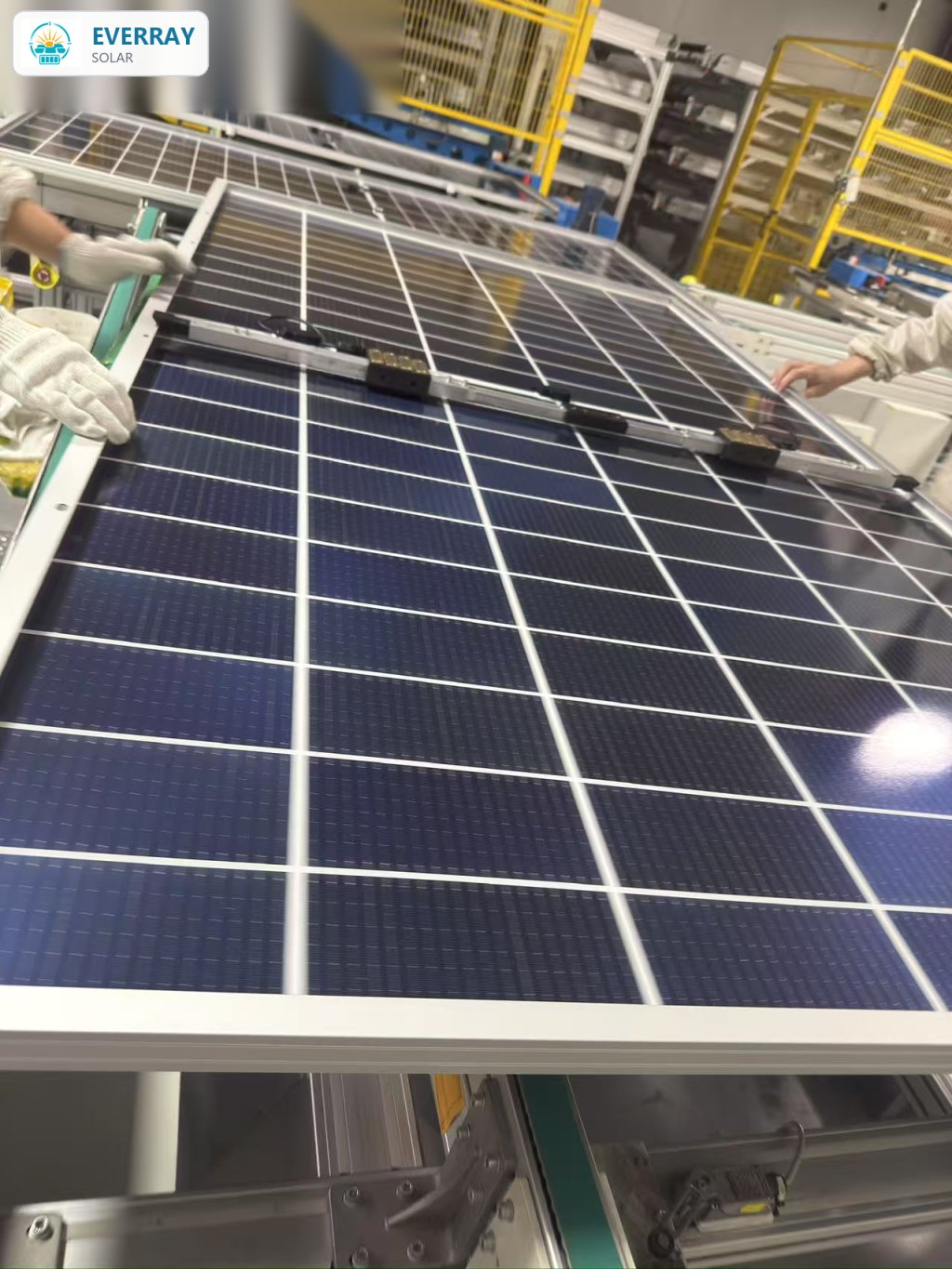
Three components turn the pump into a system: the array, the controller/VFD, and protection. Size the array to the controller’s MPPT voltage window — series strings configured so that cold-morning voltage stays under the maximum and afternoon current stays within rating. Choose a controller with dry-run protection, MPPT tracking and remote monitoring if the site is far from the operator — most “pump failures” reported in the field are low-water or array faults that a monitoring alert would have caught in minutes. Modules for pump sites should be the same quality tier as any rooftop project; see our module range for why Tier-1 cells matter just as much at 4kW as at 400kW.
What Changes Between Crops, Climates and Budgets
- Hot, arid regions — the pumping window widens but modules lose voltage in heat; oversize the array slightly and expect higher water demand per hectare.
- Seasonal cropping — size for the peak month, not the yearly average; a storage tank is cheaper than a bigger pump for buffering cloudy days.
- Drip vs flood irrigation — drip’s pressure head adds 10–20m to the TDH but cuts total water need by 30–50%; the system usually nets out smaller and cheaper.
- Fuel-hybrid sites — controllers with generator input let existing diesel pumps back up solar instead of being scrapped; hybridise first, replace later.
Frequently Asked Questions
How deep can a solar water pump system lift water?
Submersible solar pumps routinely handle heads of 100–250m with multi-stage designs; the practical limit is set by well yield and budget rather than technology. Surface pumps, by contrast, are limited to roughly 7–8 metres of physical suction lift regardless of power — if your water is deeper, the pump belongs underwater.
What happens on cloudy days?
The pump slows rather than stops — a solar pump delivers water proportionally to available sunlight, and a VFD-driven system still produces useful flow at 30–40% irradiance. The standard design answer is buffering: a storage tank sized for one to two days of demand turns a variable supply into a reliable one, at a fraction of the cost of oversizing the pump.
Can the system run without batteries?
Yes — most agricultural systems are battery-less by design, pumping directly from solar into a tank, which stores energy as elevation instead of chemistry. Batteries enter the picture only where night watering or pressure-independent supply is a hard requirement, and our battery range covers those cases. For pure irrigation, water-in-a-tank beats electrons-in-a-battery on cost every time.
How long does installation take?
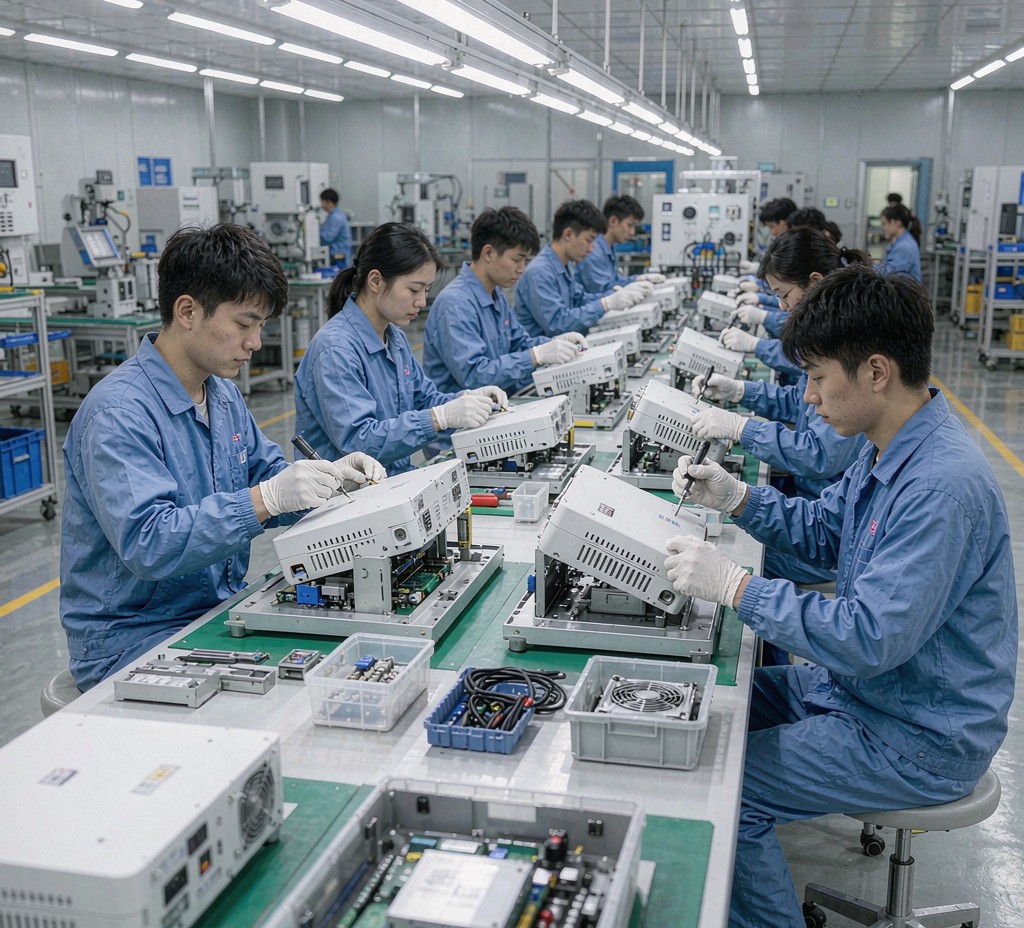
A typical 2–4kW system is a two-to-three-day job: borehole pump setting, array mounting, controller and wiring, then commissioning and flow verification. The factory supplies the matching set — pump, controller, array plan and cables — so site work is standard electrical and plumbing rather than engineering. Send us your borehole report and water need and we will return a sized configuration within 24 hours.
Get Your Solar Pump System Sized
Send us your borehole depth, static water level, target daily volume and crop type, and we will return the complete configuration — pump model, array layout and controller settings. Browse the solar pump range or contact us; answers within 24 hours.
Get a Quote for Your Solar Project
Tell us your destination market and requirement. We reply within 24 hours on business days with specifications, certificates and pricing — no obligation.
Get the 2026 EverRay Product Catalogue
25 pages · solar modules 440-735W, hybrid inverters 2-150kW, LiFePO4 batteries, home & C&I energy storage, solar pumps, lighting and PV cleaning